Balen Shah's Political Triumph: A New Era for Nepal
Synopsis
Balen Shah's unexpected victory against K P Sharma Oli in Jhapa-5 symbolizes a significant generational shift in Nepal's politics, reflecting the increasing demands for reform and youth leadership.
Key Takeaways
Balen Shah's victory represents a significant generational shift in Nepal's politics.
He secured the highest votes in parliamentary elections since 1991.
Shah's background in Structural Engineering influences his governance style.
His rise aligns with the demands of younger voters for accountability and reform.
Shah's strategic alliance with Lamichhane has reshaped the political landscape.
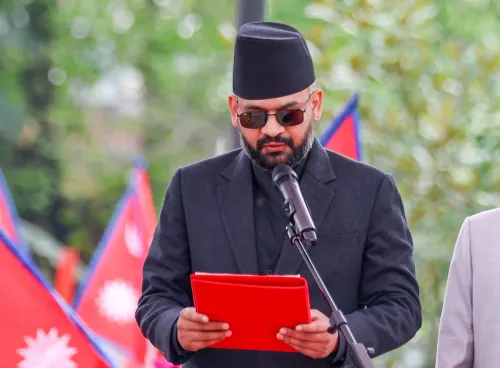
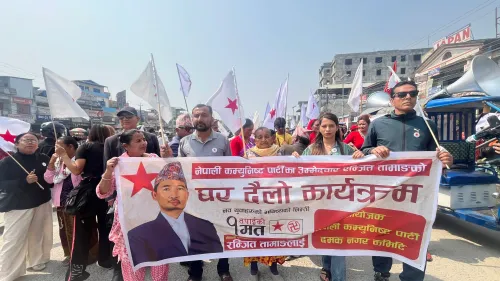
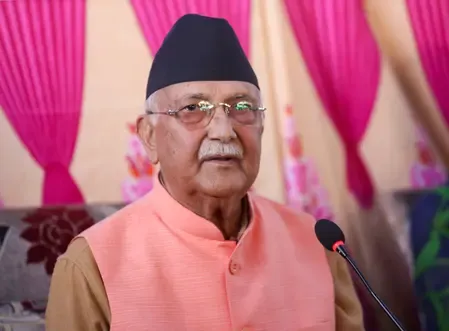
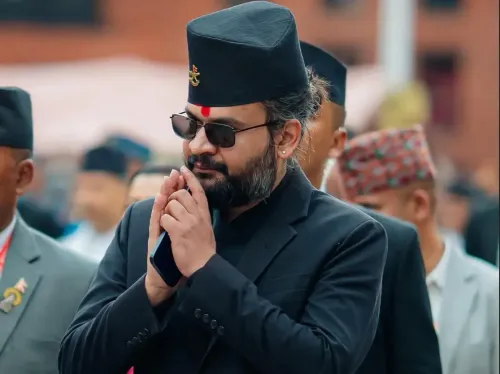
Kathmandu, March 7 (NationPress) When Balen Shah, the ex-Mayor of Kathmandu Metropolitan City, selected Jhapa-5 as his constituency to run against former Prime Minister K P Sharma Oli in Oli's stronghold, many analysts questioned this decision despite Shah's rising popularity as a rapper-turned-politician.
Yet, the election results revealed a different story on Saturday, as Shah triumphed over Oli by a staggering 49,614 votes, garnering 68,348 votes compared to Oli's 18,734. This marks the highest vote count achieved by any House of Representatives candidate in Nepal’s parliamentary elections since 1991.
Shah, a prime ministerial contender from the Rastriya Swatantra Party (RSP), a nascent political entity established by former media figure Rabi Lamichhane, has seen the party gain momentum, winning the most seats so far and leading in numerous constituencies for the 165 positions under the First-Past-the-Post electoral system.
His narrative embodies that of a new-generation politician, having recently entered the national political arena.
Born on April 27, 1990, in Kathmandu to a Madhesi family that prioritized education and culture, Shah completed his bachelor’s degree locally before obtaining a master’s in Structural Engineering from an Indian university.
This engineering background provided him with a hands-on perspective on infrastructure, urban development, and public works, significantly influencing his governance style during his mayoral term.
Prior to his political career, Shah had already made a name for himself in Nepal’s underground hip-hop scene.
As a rapper and lyricist, he was celebrated for his socially relevant lyrics that captured the challenges faced by Nepali society. His forthright expression through music earned him a loyal youthful following. His track 'Balidan', which underscores the disparity between the affluent and the underprivileged, particularly resonated with the youth, despite rap music's historical marginalization in Nepal's mainstream music culture.
Shah gained national attention when he announced his candidacy for Mayor of Kathmandu Metropolitan City as an independent in the 2022 local elections, where he claimed victory.
This victory is widely regarded as a pivotal moment in Nepal’s political landscape, inspiring Lamichhane, known for his confrontational interviewing style on television, to establish his political party, the Rastriya Swatantra Party (RSP).
Following his election as Mayor, Shah continued to project an image of a political maverick. He often engaged in social media disputes with then-Prime Minister Oli and other traditional political leaders, attracting significant public engagement and support in a matter of minutes.
As Mayor, Shah advocated for reforms addressing urban challenges, including waste management, oversight of illegal constructions, transparency in municipal governance, and the preservation of Kathmandu’s cultural heritage.
In light of increasing public frustration with conventional political parties—especially after several corruption scandals involving top officials—Shah's direct and confrontational leadership style regarding bureaucratic inefficiencies has made him a popular figure among supporters while drawing criticism from detractors.
Last September, Nepal witnessed what many termed a Gen-Z movement, leading to the downfall of Oli's government after unrest resulted in the deaths of 77 individuals and damages exceeding NPR 84 billion, as per government reports.
During the ensuing political void post-Oli's exit, Shah was perceived as a potential Prime Minister candidate, with numerous Gen-Z youth leaders advocating for his leadership. However, he chose to support the current interim Prime Minister Sushila Karki, who successfully managed the parliamentary elections.
In a strategic move shortly before the elections, Shah and Lamichhane decided to unite under a single political platform, a decision that has proven to be a significant advantage for the RSP, significantly altering the political landscape following the elections.
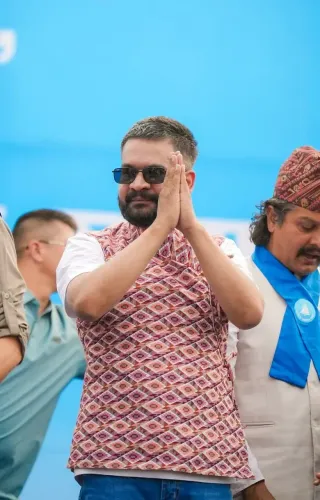
Shah’s ascent in national politics is broadly interpreted as a representation of generational change within Nepal’s political sphere, as younger voters increasingly call for reform, accountability, and stronger youth leadership in the nation.
Point of View
It's evident that Balen Shah's rise represents a significant departure from traditional political practices in Nepal. His victory reflects the desires of a younger electorate seeking reform and accountability, indicating a possible shift towards a more dynamic and engaged political landscape.
NationPress
2 Oct 2026
Frequently Asked Questions
What party does Balen Shah represent?
He is a candidate from the Rastriya Swatantra Party (RSP), a political party founded by Rabi Lamichhane.
What was the election outcome?
Balen Shah defeated former Prime Minister K P Sharma Oli by a margin of 49,614 votes, securing the highest number of votes in Nepal's parliamentary elections since 1991.
What reforms did Shah focus on as Mayor?
During his tenure, he emphasized urban reforms, including waste management, illegal structure regulation, and enhancing transparency in municipal operations.
What does Shah's victory signify?
His victory is seen as a symbol of generational change in Nepal's politics, reflecting the demands of younger voters for reform and accountability.