Bangladesh women lawyers protest BNP-linked assault, 'dancers' slur
Synopsis
Women lawyers at a Bangladesh district court formed a human chain demanding action against two BNP-linked lawyers — one accused of physically assaulting a female colleague, the other of calling women lawyers 'dancers' in a media interaction. The incident lands as UNICEF warns of a 2026 surge in gender-based violence across Bangladesh, and the opposition accuses the BNP government of a governance crisis.
Key Takeaways
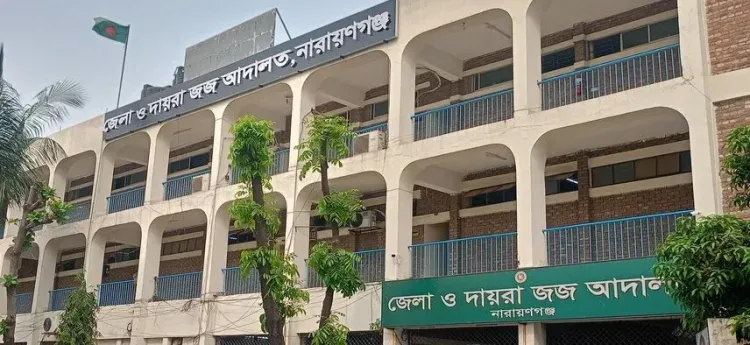
Women lawyers held a human chain protest on Sunday, 25 May at Narayanganj District Judge's Court , Bangladesh.
Advocate Amena Akter Shilpi alleged she was punched by Rafiqul Ahmed and Abu Al Yusuf Khan Tipu , a Narayanganj city BNP member secretary.
Tipu reportedly called female lawyers 'dancers' during a media interaction on Saturday, escalating outrage.
UNICEF last week flagged a surge in brutal and sexual violence against women and children across Bangladesh in 2026 .
The Awami League accused the Tarique Rahman -led BNP government of failing to address what it called a national crisis of governance and justice.
Several women lawyers in Bangladesh formed a human chain on Sunday, 25 May at the Narayanganj District Judge's Court, demanding swift punishment for two lawyers linked to the ruling Bangladesh Nationalist Party (BNP) government over the alleged physical assault of a female colleague and derogatory remarks targeting women legal professionals. The protest, organised under the banner of 'General Lawyers', reflects deepening anger over what demonstrators described as a pattern of impunity within the legal fraternity.
What Triggered the Protest
The immediate flashpoint was an alleged altercation over the eviction of hawkers from the court premises. Advocate Amena Akter Shilpi, the victim, alleged that Rafiqul Ahmed attacked her first during an argument over the eviction order. She stated that Abu Al Yusuf Khan Tipu, Narayanganj city BNP member secretary, subsequently joined in and punched her as well.
According to Shilpi, she had repeatedly clarified that the hawker removal was directed by the bar association president and secretary, and that she bore no personal responsibility for the action. 'At one stage, Rafiqul attacked me. Later, Advocate Abu Al Yusuf Khan Tipu also joined him and punched me,' she said, as reported.
The 'Dancers' Remark and Escalation
Tensions escalated further after Tipu reportedly described female lawyers as 'dancers' during a media interaction on Saturday — a remark that drew sharp condemnation from women in the legal community. The slur was seen as emblematic of a broader culture of contempt toward women professionals, not just a personal slight.
Jatiyatabadi Ainjibi Forum district unit joint convener Shamsun Noor Bandhan, who was present at the protest, called on both bar association leaders and the BNP central leadership to ensure a transparent investigation and speedy justice in the matter.
UNICEF Warning and Broader Context
The protest comes amid a documented surge in gender-based violence across Bangladesh. Last week, UNICEF flagged a growing number of reports of brutal and sexual violence against women and children across the country in 2026, calling for urgent nationwide strengthening of child and gender-based violence (GBV) prevention measures.
UNICEF Representative in Bangladesh, Rana Flowers, stated: 'The culture of impunity enjoyed by perpetrators must end, and the gaps in prevention, reporting, institutional safeguarding, child-friendly police and justice, community protection and social services must be addressed. There is also a need for psychosocial support for the women and children, with far stronger accountability of schools, madrasas, workplaces, neighbourhoods and care settings.'
Political Accusations Over Governance Failure
Earlier in May, the Awami League accused the Tarique Rahman-led BNP government of failing to contain what it described as a national emergency. The party claimed that women and children across Bangladesh are living under constant fear, with safety deteriorating in both public spaces and at home. 'This is no longer a ‘women’s issue’. It is a crisis of governance, justice, and national character,' the Awami League said in a statement.
With UNICEF, opposition parties, and civil society all raising alarms, pressure is mounting on the BNP administration to demonstrate credible accountability — beginning, protesters argue, with the Narayanganj case.
Point of View
Inaction risks handing the opposition a durable political narrative ahead of any future electoral reckoning.
NationPress
20 Sept 2026
Frequently Asked Questions
What happened at the Narayanganj District Judge's Court in Bangladesh?
Women lawyers staged a human chain protest on 25 May at the Narayanganj District Judge's Court, demanding action against two BNP-linked lawyers accused of assaulting a female colleague and making derogatory remarks about women legal professionals. The alleged assault occurred during a dispute over the eviction of hawkers from the court premises.
Who are the lawyers accused in the Narayanganj incident?
The two accused are Rafiqul Ahmed and Abu Al Yusuf Khan Tipu, the latter being the Narayanganj city BNP member secretary. Victim Amena Akter Shilpi alleged that Rafiqul attacked her first, and that Tipu subsequently punched her as well.
What derogatory remark sparked wider outrage?
Tipu reportedly referred to female lawyers as 'dancers' during a media interaction on Saturday, a remark that was widely condemned as an attack on the dignity of women in the legal profession and helped galvanise the protest the following day.
What has UNICEF said about violence against women in Bangladesh?
UNICEF last week warned of a growing number of reports of brutal and sexual violence against women and children across Bangladesh in 2026, calling for urgent strengthening of gender-based violence prevention measures. UNICEF Representative Rana Flowers specifically cited the need to end the culture of impunity enjoyed by perpetrators.
What is the political response to rising gender-based violence in Bangladesh?
The Awami League has accused the Tarique Rahman-led BNP government of failing to contain what it describes as a national emergency, stating that 'this is no longer a women's issue — it is a crisis of governance, justice, and national character.' The BNP central leadership has been called upon by protesters to ensure a transparent probe into the Narayanganj case.