Could Bangladesh's Proposed Microfinance Regulations Hinder Credit Access for the Poor?

Synopsis
The proposed Microfinance Bank Ordinance 2025 in Bangladesh aims to regulate microcredit, but experts warn it may limit access to credit for small NGOs and the poor. With high capital requirements, only a few large institutions may thrive, sidelining grassroots organizations vital for financial inclusion.
Key Takeaways
Proposed ordinance may marginalize small NGOs High capital requirements are a barrier Only large institutions might qualify Microfinance is vital for financial inclusion Need for a balanced, phased approach
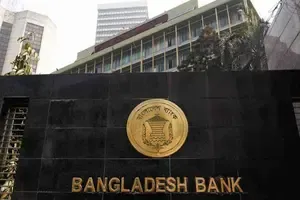
New Delhi, Jan 19 (NationPress) The proposed Microfinance Bank Ordinance 2025 in Bangladesh aims to transform the nation's microcredit framework into fully regulated microfinance banks under the oversight of the Bangladesh Bank. However, this initiative may inadvertently exclude numerous smaller NGOs and impoverished households from obtaining credit, according to a recent report.
The new microfinance banking regulations have faced significant backlash from 17 prominent Microfinance Institutions (MFIs) in Bangladesh, including BRAC (Building Resources Across Communities), ASA (Association for Social Advancement), and TMSS (Thengamara Mohila Sabuj Sangha), as reported by Finance Today.
Experts indicate that these regulations could centralize authority within a few large organizations, sidelining hundreds of smaller NGOs.
The draft ordinance sets steep capital requirements—BDT 500 crore in authorized capital and BDT 200 crore in paid-up capital—which critics argue are beyond the reach of most microfinance institutions.
According to the report, "In reality, only a select few large entities, such as BRAC, ASA, BURO Bangladesh, and TMSS, will meet these criteria. Smaller NGOs, even with their vast local connections, will be effectively shut out of participation."
Analysts advocate for a more gradual approach, suggesting a lower initial paid-up capital of BDT 50–100 crore to enable a greater number of organizations to operate as microfinance banks.
“A balanced strategy—one that incorporates flexible capital thresholds, phased compliance, and avenues for small NGOs to adapt incrementally—is urgently required,” the report emphasizes.
The report also underscores the essential role of microfinance in promoting financial inclusion in Bangladesh, where approximately 731 licensed MFIs operate across 25,000 branches, providing credit to over 45 million individuals.
Microfinance's inherent strengths have always been its proximity, trust, and adaptability, allowing for loans without conventional collateral and aiding the most vulnerable households.
In the fiscal year 2023, MFIs disbursed around BDT 2,49,000 crore (approximately $28 billion) in loans, achieving a remarkable 98 percent repayment rate, with nearly 91 percent of borrowers being women.
Critics argue that this policy primarily benefits large institutions, while the grassroots NGOs—who have empowered millions of impoverished families for decades—are marginalized.
The reforms "risk becoming a silent death knell for Bangladesh's small NGOs, while delivering a windfall for the largest organizations," the report cautions.
aar/na
Point of View
I emphasize that while the intent to regulate microfinance is commendable, the execution must consider the grassroots realities. Financial inclusion is vital, and any policy that risks sidelining smaller NGOs could have detrimental effects on the very communities it aims to support.
NationPress
30 Sept 2026
Frequently Asked Questions
What are the proposed changes in the Microfinance Bank Ordinance 2025?
The ordinance aims to convert the microcredit system into fully regulated microfinance banks under the supervision of Bangladesh Bank, imposing high capital thresholds that may exclude smaller NGOs.
Who are the major stakeholders opposing this ordinance?
Seventeen leading Microfinance Institutions (MFIs), including BRAC, ASA, and TMSS, have criticized the proposed regulations due to their potential negative impact on smaller organizations.
What is the potential impact of these regulations on poor households?
The regulations could limit access to credit for poor households, as many small NGOs that provide essential financial services may be marginalized.
What alternatives do analysts suggest?
Analysts recommend a phased approach with lower initial paid-up capital requirements to allow more organizations to participate in the microfinance sector.
How significant is microfinance in Bangladesh's economy?
Microfinance plays a crucial role in financial inclusion in Bangladesh, with 731 licensed MFIs serving over 45 million people.