Bangladesh's Democratic Decline: The Rise of Extremism
Synopsis
Bangladesh's electoral landscape is shifting, with the BNP's recent victory highlighting deep-rooted issues of political exclusion and institutional imbalance. As secular voices are suppressed, extremist groups find new grounds to thrive. This article explores the implications of these developments on the nation's democratic future.
Key Takeaways
Political exclusion is a pressing issue in Bangladesh's democracy.
The recent ban on the Awami League raises concerns about institutional balance.
Media freedom is under threat, impacting journalistic integrity.
Rising extremism poses a significant risk to democratic engagement.
Restoring trust in institutions is crucial for the future of democracy.
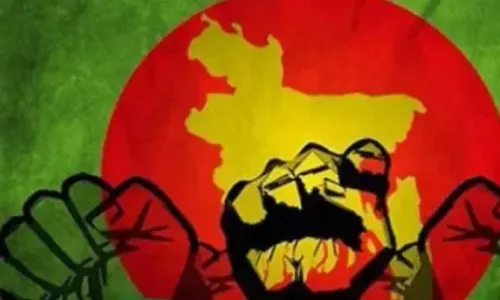
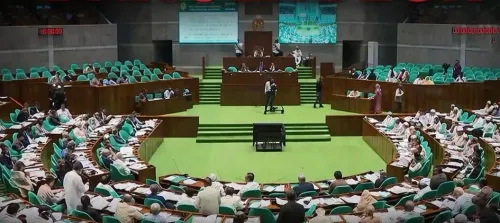
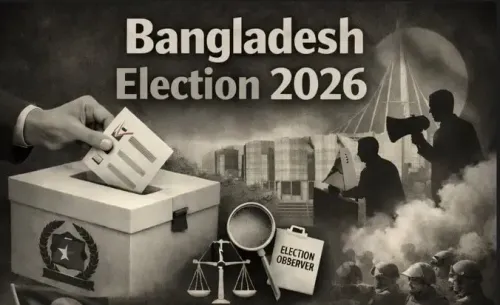
Dhaka: The re-emergence of electoral politics in Bangladesh has not alleviated the profound uncertainties regarding its democratic trajectory. The Bangladesh Nationalist Party's (BNP) triumph on February 12 may have established a government, yet it has failed to address the escalating issues of political exclusion, institutional imbalance, and the alarming reduction of democratic freedoms.
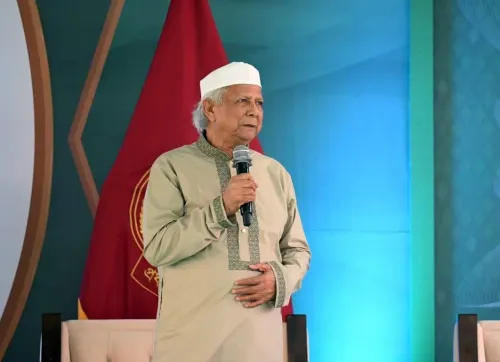
Central to these issues is the marginalization of significant political players from the democratic process. The Awami League, a historically pivotal party, along with various secular political entities, was barred from contesting in the elections. This ban was a consequence of an extensive order by the interim government, led by Muhammad Yunus, which prohibited all Awami League activities under the Anti-Terrorism Act pending judicial proceedings at the International Crimes Tribunal (ICT).
The subsequent suspension of the Awami League's registration by the Election Commission marked one of the most significant political exclusions in Bangladesh's history. However, the contraction of democratic space extended beyond political parties.
The legal foundation for this exclusion was bolstered by a May 2025 amendment to the Anti-Terrorism Act, broadening governmental powers to not only ban organizations but also to restrict their activities entirely. Although governments may rationalize such measures under extraordinary circumstances, their broad application raises alarming questions about proportionality, due process, and political neutrality.
Developments regarding media freedom are equally concerning. International observers and human rights advocates have reported instances of harassment, legal action, and administrative obstacles faced by journalists. Despite Muhammad Yunus acknowledging that some actions were taken too quickly, meaningful reforms are still awaited.
Deutsche Welle highlighted a report outlining widespread journalist persecution during this period, revealing that over 354 journalists faced harassment, 74 violent incidents occurred, 113 criminal cases were initiated, and press credentials for 167 journalists were revoked. Officials from the interim government dismissed the findings as “misleading disinformation,” but such refutations have become increasingly common.
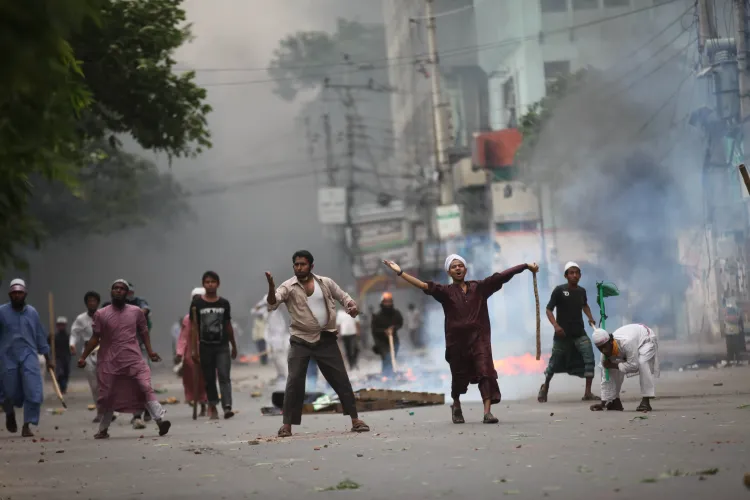
This environment has fostered uncertainty and fear among media professionals. Collectively, these developments contribute to a growing belief that Bangladesh’s political and institutional landscape is becoming less inclusive. Ironically, while independent journalists and secular political factions face oppression, extremist Islamist groups have gained more leeway. Ansar Al Islam, the Bangladesh affiliate of Al Qaeda, has openly condoned the murder of secular writers and bloggers, branding them as “enemies of Islam.” Concurrently, Islamist political factions are increasingly vocal in demanding sharia-based governance, with some invoking the Taliban’s model.
Historically, Bangladesh’s resistance to extremism has been rooted in its diverse political culture, active civil society, and relatively free media. Undermining these foundations risks generating a void in public discourse, which extremist groups could exploit.
On December 29, 2025, Ben Saul, Special Rapporteur on human rights and fundamental freedoms while countering terrorism; Matthew Gillett, Vice-Chair on communications for the Working Group on Arbitrary Detention; and Margaret Satterthwaite, Special Rapporteur on the independence of judges and lawyers at the Office of the High Commissioner for Human Rights (OHCHR), addressed a letter to Muhammad Yunus, expressing alarm over the Awami League's prohibition through amendments to the Anti-Terrorism Act of 2009 and the International Crimes (Tribunals) Act of 1973.
The letter asserted that these actions “reportedly impose unnecessary and disproportionate restrictions on the rights to freedom of association, peaceful assembly, expression, and participation in public affairs, and affect the right to a fair trial, contrary to Bangladesh’s obligations under the International Covenant on Civil and Political Rights (ICCPR).”
The OHCHR indicated: “While we do not wish to prejudge the accuracy of these allegations, we are concerned that the reported restrictions on the activities of the Awami League and its leadership — including bans and limitations impacting their communications, and legislative measures enabling the suspension, dissolution, or asset seizure of organizations — may constitute unnecessary and disproportionate interference with the rights to freedom of association, peaceful assembly, expression, and participation in public life, as protected under Articles 19, 21, 22, and 25 of the ICCPR, ratified by Bangladesh on September 6, 2000. These measures may risk entrenching restrictions on political pluralism and democratic engagement.”
Despite a clear request for a response, Muhammad Yunus' administration opted for silence rather than accountability. In light of a thorough and formal communication from United Nations human rights authorities, such silence is consequential. It reflects not only a reluctance to engage but a deeper unwillingness to justify actions that are accused of infringing upon fundamental freedoms. Consequently, the government allows the serious claim that its policies impose “unnecessary and disproportionate restrictions” on essential democratic rights, including freedom of association, peaceful assembly, expression, political participation, and the right to a fair trial to persist unchallenged.
Recent developments indicate that certain Islamist organizations have become increasingly vocal, pushing for a stricter ideological framework for the state. While these groups do not represent mainstream sentiment, their capacity to function within a constrained political setting is a growing concern.
Simultaneously, the role of the International Crimes Tribunal is evolving. Initially established to prosecute crimes committed during the 1971 Liberation War, the tribunal has long been a symbol of Bangladesh’s commitment to historical justice. However, its expanding focus on contemporary political figures has led to debates about its credibility and long-term function.
Proponents of the government's strategy argue that accountability must encompass recent political events, including those related to the unrest of 2024. Critics, however, warn that the perceived politicization of judicial processes threatens to erode public trust and weaken institutions that were once highly regarded.
For India, these developments transcend internal matters within Bangladesh. As Dhaka’s closest neighbor and a crucial regional ally, New Delhi has a vested interest in a stable, democratic, and pluralistic Bangladesh. Political instability or ideological radicalization in Bangladesh has historically had ripple effects, impacting border security, regional collaboration, and counterterrorism initiatives.
The overarching challenge for Bangladesh lies in achieving a balance between accountability and inclusivity. The consolidation of democracy requires more than merely conducting elections; it necessitates the engagement of diverse political voices, adherence to the rule of law, and the safeguarding of fundamental freedoms, including press freedom.
Fortunately, Bangladesh possesses strong societal foundations and a history of resilience. However, the current direction suggests a need for recalibration. Restoring faith in institutions, ensuring a fair political battleground, and protecting space for dissent are vital steps toward averting further polarization.
Without these measures, the threat remains that political exclusion could exacerbate divisions — and in such an environment, extremism often finds its opportunity. The decisions made today will determine not just Bangladesh’s democratic future but also the stability of the broader region.
History shows: extremism does not emerge in a vacuum — it flourishes when democratic space is intentionally restricted. By marginalizing secular politics, intimidating journalists, and obscuring the line between justice and retribution, Bangladesh risks enabling the very forces it once sought to contain. If corrective actions are not undertaken now, the current political contraction could evolve into tomorrow’s security crisis.
(The author is an award-winning journalist, writer, and editor of the newspaper Blitz, specializing in counterterrorism and regional geopolitics. The views expressed are personal)
Point of View
I emphasize the importance of accountability and inclusivity in fostering a stable democracy. The ongoing suppression of secular voices raises alarms about the future of democratic engagement in the country.
NationPress
15 Oct 2026
Frequently Asked Questions
What is the current political situation in Bangladesh?
Bangladesh is facing significant political exclusion and institutional imbalance, particularly following the recent elections where major parties were barred from participation.
How has media freedom been affected in Bangladesh?
Media freedom has deteriorated, with reports of harassment and legal actions against journalists leading to a climate of fear and uncertainty.
What are the implications of rising extremism in Bangladesh?
The suppression of secular politics has allowed extremist groups to gain influence, posing a threat to the nation's democratic framework.
What role does the International Crimes Tribunal play in current politics?
The tribunal, originally focused on historical justice, is now being scrutinized for its expanding role in contemporary political issues, raising concerns about its credibility.
What can be done to restore democracy in Bangladesh?
Restoring democracy requires ensuring a level political playing field, promoting inclusivity, and protecting fundamental freedoms, including press freedom.