Are ISI, Smuggling Networks, and PoK Terrorists Using Bangladesh to Execute Republic Day Attacks?

Synopsis
Amidst flourishing terror networks in Pakistan-occupied Kashmir, the ISI is reportedly collaborating with smuggling syndicates in Bangladesh to facilitate terrorist infiltration into India. With Republic Day approaching, the implications of this operation are significant for national security.
Key Takeaways
ISI is relocating operatives to Bangladesh .
Collaboration with smuggling networks is ongoing.
Upcoming Republic Day poses increased threat.
Trained terrorists from PoK are selected for infiltration.
Security forces are heightened in response.
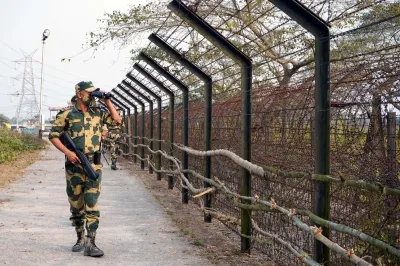
New Delhi, Jan 19 (NationPress) Despite the ongoing presence of terror launchpads in Pakistan-occupied Kashmir (PoK), the ISI has been relocating several operatives to Bangladesh. Their goal is to facilitate infiltration into India via the Bangladesh border, as reported by intelligence agencies.
Indian intelligence has uncovered a significant conspiracy orchestrated by the ISI in anticipation of Republic Day on January 26. Due to increased difficulty for terrorists attempting to cross the Line of Control (LoC), the ISI is now focusing on the route through Bangladesh, an official disclosed.
Another source revealed that the ISI has been collaborating with individuals involved in cattle smuggling, counterfeit currency operations, and human trafficking. These smuggling networks will assist terrorists in crossing into India from Bangladesh, added the official.
These syndicates, well-acquainted with the routes into India from Bangladesh, have been contacted by Pakistan to advance their lethal agenda before Republic Day. An official from the Intelligence Bureau mentioned that terrorists would initially utilize the sea route from Pakistan to enter Bangladesh.
The ISI is poised to exploit the recent exemptions granted by the Yunus government in 2024, which lifted mandatory inspections for Pakistani shipments and eliminated security clearance needs for Pakistani visa applicants.
These decisions have greatly benefited the ISI, allowing for the unhindered transportation of arms, ammunition, and terrorists into Bangladesh without security checks, according to officials. This scheme has been underway since October 2025.
Ibtisam Elahi Zaheer, an aide to Lashkar-e-Taiba chief Hafiz Saeed, has visited Bangladesh to engage with key figures in various smuggling networks. An official indicated that the ISI orchestrated his visit to ensure coordination with other terrorist factions and crime syndicate leaders in Bangladesh. Zaheer, a seasoned operative, has a long-standing relationship with the ISI and has played a pivotal role in Lashkar-e-Taiba activities.
Additionally, Zaheer, who is a cleric known for his anti-India rhetoric, is seen as an ideal candidate to spearhead the extensive terror operation planned for India, according to officials.
Indian agencies are on high alert. Officials note that while attacks by Pakistani terrorists are commonplace, this particular scheme is distinct. The planned attack aims to not only inflict harm but also to deliver a powerful message to Pakistani youth, who have been hesitant to join groups like Lashkar-e-Taiba and Jaish-e-Mohammed. Both organizations are struggling to recruit, making a significant attack necessary to reinvigorate their ranks, an official stated.
Following the collapse of the Sheikh Hasina government, Pakistani influence in Bangladesh has surged, bolstered by ties with Jamaat-e-Islami and favorable conditions set by the Yunus administration.
Furthermore, the ISI has established multiple terror cells and is overseeing targeted assaults on minority communities. This upcoming attack is crucial for the ISI as it serves as a litmus test for their operations in Bangladesh. The agency aims to shift a substantial portion of its activities there, allowing terrorists to target both the northeastern states and West Bengal.
Moreover, the ISI intends to capitalize on the deployment of numerous security personnel for upcoming elections in West Bengal and Assam, viewing this as an opportune moment to strike against India.
An official remarked that the selection of terrorists from PoK rather than Bangladesh is strategic, as these individuals are already extensively trained. The ISI only needs to provide instructions for infiltration, allowing them to be ready for immediate action, making them ideal for the planned attack.
Point of View
It is imperative to recognize the escalating threat posed by these terror networks. The collaboration between the ISI and smuggling syndicates highlights a sophisticated strategy that requires our utmost vigilance and a united front in defense of national security.
NationPress
27 Sept 2026
Frequently Asked Questions
What is the ISI's role in these planned attacks?
The ISI is orchestrating the infiltration of terrorists into India through Bangladesh, leveraging smuggling networks for this purpose.
Why is Bangladesh being used as a route?
Bangladesh offers a less monitored entry point into India, especially following recent exemptions by the Yunus government that eased security checks.
What is the significance of Republic Day in this context?
Republic Day serves as a symbolic target for these attacks, aiming to deliver a message both domestically and internationally.
Who are the key players in this operation?
Key figures include operatives from the ISI, smuggling syndicates, and known terrorists like Ibtisam Elahi Zaheer.
How is India responding to this threat?
Indian intelligence agencies are on high alert and are actively monitoring potential infiltration routes and terror activities.