Is BARC Establishing a Massive 3,000-Acre R&D Campus in Andhra Pradesh?
Synopsis
Discover how the Bhabha Atomic Research Centre is set to transform the landscape of nuclear research and technology with a new 3,000-acre campus in Andhra Pradesh. This ambitious project promises to enhance India's capabilities in clean energy solutions and international collaborations.
Key Takeaways
BRC is establishing a 3,000-acre R&D campus.
Project located in Anakapalli district , Andhra Pradesh.
Focus on nuclear research and energy technologies .
International collaboration with Rosatom is underway.
Emphasis on clean energy solutions .
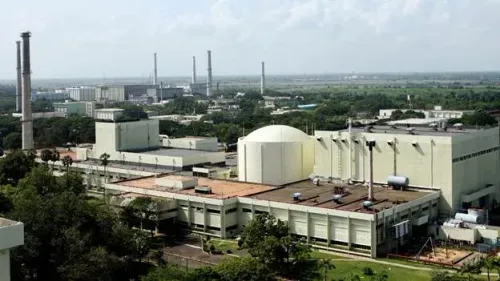
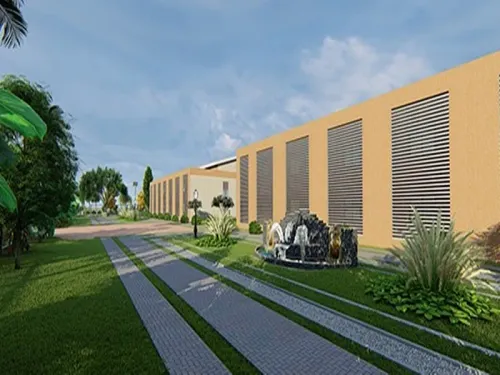
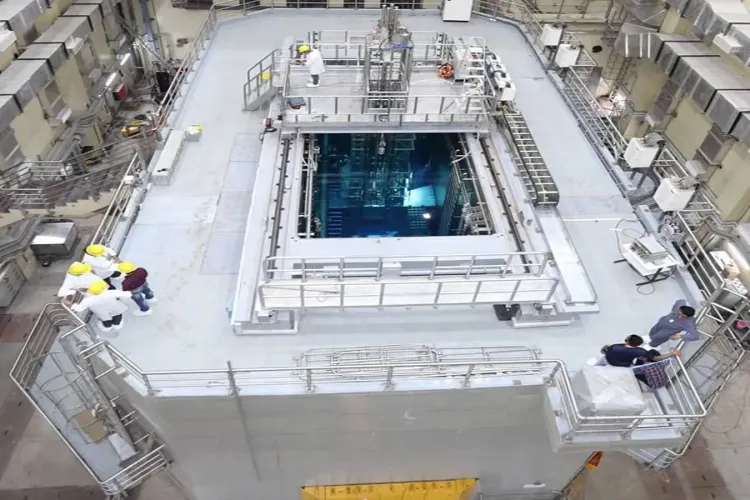
New Delhi, Dec 14 (NationPress) The Bhabha Atomic Research Centre (BARC) is moving forward with plans to construct a substantial research and development campus in Andhra Pradesh, as part of India’s extensive initiative to enhance nuclear science and advanced reactor technology.
The envisioned campus will be located in Anakapalli district and will encompass nearly 3,000 acres.
Documents reviewed by the Ministry of Environment, Forest and Climate Change indicate that BARC has requested approval from the Andhra Pradesh government to convert 148.15 hectares of forest land for this project.
Earlier this month, an Expert Appraisal Committee within the ministry evaluated the proposal and has recommended it for “in-principle” approval, facilitating the diversion of the initial land parcel for the new campus.
Officials have reported that over 1,200 hectares (approximately 3,000 acres) of revenue land has already been secured for the BARC project.
The forest land earmarked for diversion is adjacent to the acquired area and lies between the project site and the coastline, rendering it essential for the completion of the layout of the proposed campus.
This new facility is anticipated to bolster BARC’s growing responsibilities in nuclear research, reactor innovation, and advanced energy technologies.
This development coincides with the government’s increasing focus on domestic nuclear innovation and sustainable energy solutions.
Earlier this month, the government informed Parliament that BARC has commenced design and development of small modular reactors, including the 200 MWe Bharat Small Modular Reactor, a 55 MWe small modular reactor, and a high-temperature gas-cooled reactor intended for hydrogen production.
These reactors are expected to be constructed initially at Department of Atomic Energy locations for technology demonstration, with construction anticipated to begin following project approvals.
The Centre has also emphasized the increasing international collaboration in the nuclear sector.
Discussions have occurred between India’s Department of Atomic Energy and Russia’s Rosatom to explore partnerships on both large and small nuclear power projects, including the potential construction of Russian-designed small modular reactors in India and localizing equipment manufacturing.
Point of View
I view this initiative by BARC as a pivotal step in reinforcing India’s position in the global nuclear landscape. This project stands to not only enhance our technological capabilities but also reflects a commitment to sustainable energy sources, aligning with national interests and international collaboration.
NationPress
1 Oct 2026
Frequently Asked Questions
What is the size of the new BARC campus?
The new BARC campus is planned to cover nearly 3,000 acres in Anakapalli district, Andhra Pradesh.
Why is the forest land being diverted?
The diversion of 148.15 hectares of forest land is necessary to facilitate the layout of the new campus, which is adjacent to the acquired revenue land.
What is the purpose of the new facility?
The facility will support BARC's expanding role in nuclear research, reactor development, and advanced energy technologies.
Which reactors are being developed by BARC?
BARC is working on designing small modular reactors, including the 200 MWe Bharat Small Modular Reactor and a high-temperature gas-cooled reactor for hydrogen production.
Is there international cooperation involved?
Yes, discussions are ongoing between India's Department of Atomic Energy and Russia's Rosatom for collaboration on nuclear power projects.