Ganga erosion crisis: Bengal CM Adhikari pushes for permanent fix at Delhi meet
Synopsis
West Bengal's new Chief Minister Suvendu Adhikari is in Delhi pressing for a permanent fix to Ganga riverbank erosion — a crisis that cost over ₹16,083 crore in flood damage between 2021 and 2023, displaced hundreds of families in Malda and Murshidabad, and is being worsened by a 2018 inter-agency pact that remains unimplemented. The real test is whether Tuesday's meeting produces action, not another study.
Key Takeaways
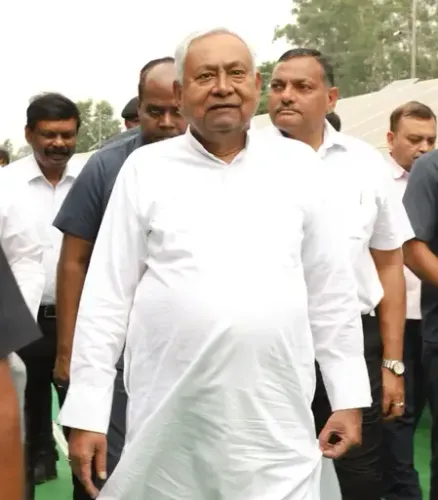
West Bengal CM Suvendu Adhikari attended a Union Ministry of Jal Shakti meeting in New Delhi on 27 October 2026 to seek a permanent solution to Ganga riverbank erosion .
Worst-affected districts are Malda , Murshidabad , and Nadia ; in Taranagar village alone, over 120 families reportedly lost homes to erosion.
Total flood damage in West Bengal between 2021 and 2023 exceeded ₹16,083 crore , affecting over 40 lakh people and killing 188 .
A 2018 agreement between West Bengal, a water resources agency, and NHPC to tackle erosion has not yet been fully implemented.
A Central Water Commission–IIT Roorkee study found erosion of 4,289.32 hectares in a 50-km stretch upstream of the Farakka Barrage between 1970 and 2010 .
Policymakers are pushing for a basin-wide approach involving West Bengal , Bihar , and Jharkhand , including potential dredging near Rajmahal .
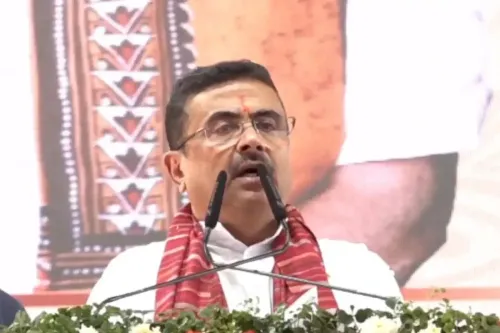
West Bengal Chief Minister Suvendu Adhikari travelled to New Delhi on Tuesday, 27 October 2026, for a high-stakes meeting convened by the Department of Water Resources under the Union Ministry of Jal Shakti, with inter-state coordination on Ganga riverbank erosion at the top of the agenda. The meeting carries particular urgency for the border districts of Murshidabad, Malda, and Nadia in West Bengal, where what was once a seasonal threat has hardened into a chronic humanitarian and developmental crisis.
Scale of the Crisis
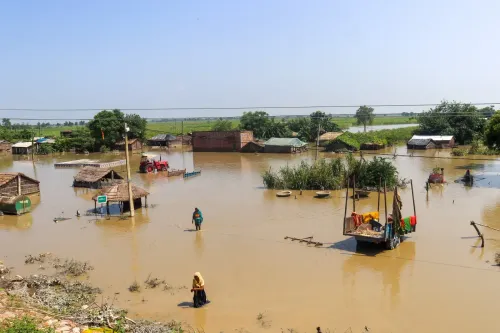
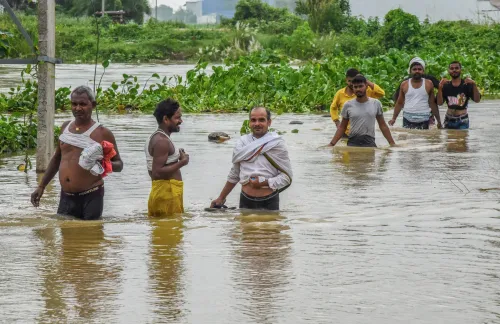
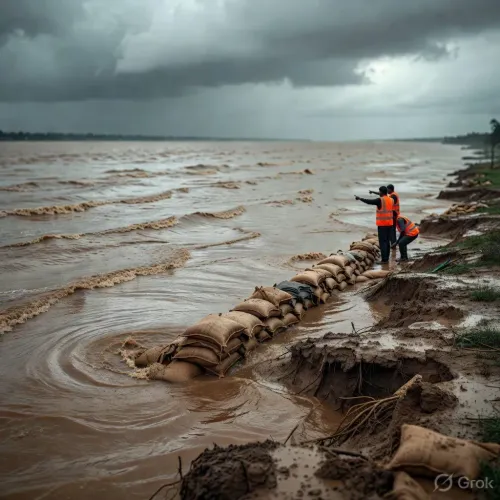
Every monsoon, the Ganga-Padma river system — the Ganga on the Indian side, the Padma once it crosses into Bangladesh — reshapes vast stretches of Malda and Murshidabad, swallowing farmland, homes, schools, temples, and roads, and eroding the economic security of thousands of families. In Murshidabad's Lalgola region, entire settlements have reportedly been threatened by advancing erosion. In Taranagar village alone, more than 120 families reportedly lost their homes over a prolonged period, a pattern mirrored across dozens of riverine communities in the region.
Officials have warned that in Malda, recurring erosion over decades could have consequences extending well beyond village displacement — threatening administrative infrastructure, border-area stability, and long-term agricultural viability. As per a Rajya Sabha reply by the Ministry of Jal Shakti, total flood damage in West Bengal between 2021 and 2023 stood at over ₹16,083 crore, affecting a population of over 40 lakh people and claiming 188 lives.
What Chief Minister Adhikari Is Seeking
Ahead of the Delhi visit, West Bengal Chief Secretary Manoj Agarwal conducted an on-ground inspection of Malda's affected areas on Sunday to brief the Chief Minister on ground realities. According to reports, Adhikari intends to secure a credible and permanent solution at the meeting, with an emphasis on coordinated action across West Bengal, Bihar, and Jharkhand.
Adhikari reportedly flagged that an agreement reached in 2018 between the West Bengal government, a relevant water resources agency, and the National Hydroelectric Power Corporation Limited (NHPC) to address riverbank erosion has not yet been fully implemented. He is pressing for a concrete, time-bound roadmap to operationalise the stalled plan.
The Upstream Dimension: Silt, Dredging and Inter-State Dynamics
State officials have pointed to heavy silt deposition in stretches near Rajmahal in neighbouring Jharkhand as a contributing factor, arguing that altered river hydraulics are pushing floods and erosion further downstream into Malda. This has put dredging and inter-state river management firmly on the agenda.
The Farakka Barrage has also featured in the wider debate. According to a statement made in the Lok Sabha this April, a morphological study of the Ganga using remote sensing techniques covering 1970–2010, conducted by the Central Water Commission through IIT Roorkee, found erosion of 4,289.32 hectares and deposition of 724 hectares in a 50-km reach upstream of the barrage. The Farakka Barrage Project undertakes riverbank protection and anti-erosion works within a jurisdiction extending up to 12.5 km upstream and 6.9 km downstream of the structure. Experts, however, reportedly differ on the extent of the barrage's role relative to natural river processes.
A Basin-Wide Problem, Not a District-Level One
Officials and policymakers increasingly characterise the erosion crisis as a basin-wide issue rather than a problem confined to individual districts. The Ganga in Bengal's alluvial plains is, as noted in official observations, a 'meandering river' — highly dynamic by nature. Heavy monsoon discharge weakens banks; the subsequent ebb causes land to collapse. This cycle of flooding, silt deposition, and channel migration is progressively consuming agricultural land, settlements, roads, schools, and public infrastructure year after year.
Notably, the Centre's technical committee has already completed a detailed morphological study and proposed integrated mitigation measures. The challenge now is political and administrative: translating those recommendations into coordinated, funded action across three states.
What Comes Next
For Adhikari, who inherited this long-running crisis from previous administrations, the Delhi meeting represents one of the first high-profile tests of his government's ability to secure Centre-state cooperation on a pressing livelihood issue. Policymakers and affected communities in Malda and Murshidabad will be watching closely for tangible commitments — not just study mandates — to emerge from Tuesday's deliberations.
Point of View
And it points to the chronic gap between central technical studies and on-ground action. Chief Minister Adhikari's push for coordination is legitimate, but inter-state river management in India has historically stalled at jurisdictional fault lines. Without a binding implementation framework with named deadlines and financial accountability, Tuesday's meeting risks producing the one thing these communities cannot afford: another round of documentation.
NationPress
27 Oct 2026
Frequently Asked Questions
Why is the Ganga riverbank erosion in West Bengal considered a crisis?
Ganga riverbank erosion in Malda, Murshidabad, and Nadia has evolved from a seasonal problem into a chronic humanitarian crisis, destroying farmland, homes, schools, and roads every monsoon. Between 2021 and 2023, flood damage in West Bengal exceeded ₹16,083 crore, affecting over 40 lakh people and causing 188 deaths, according to a Ministry of Jal Shakti reply in the Rajya Sabha.
What is the purpose of West Bengal CM Suvendu Adhikari's Delhi visit on 27 October?
Chief Minister Adhikari travelled to New Delhi for a Department of Water Resources meeting under the Union Ministry of Jal Shakti, aimed at identifying a lasting solution to Ganga erosion and improving coordination among West Bengal, Bihar, and Jharkhand. He is specifically seeking full implementation of a 2018 agreement with NHPC that has reportedly remained stalled.
What was the 2018 agreement on Ganga erosion, and why has it not been implemented?
In 2018, the West Bengal government reached an agreement with a relevant water resources agency and the National Hydroelectric Power Corporation Limited (NHPC) to address riverbank erosion. According to reports citing Adhikari, the agreement has not yet been fully implemented, and he is pushing for a concrete plan to activate it.
What role does the Farakka Barrage play in Ganga erosion in Bengal?
The Farakka Barrage has been linked in various studies to changes in sediment movement and river behaviour that have intensified erosion in parts of Malda and Murshidabad. A Central Water Commission study through IIT Roorkee found erosion of 4,289.32 hectares in a 50-km stretch upstream of the barrage between 1970 and 2010. Experts reportedly differ, however, on how much of the erosion is attributable to the barrage versus natural river processes.
Which states are involved in addressing Ganga erosion, and what solutions are being discussed?
West Bengal, Bihar, and Jharkhand are the three states involved in discussions on a basin-wide approach to Ganga erosion. Key measures under consideration include dredging near Rajmahal in Jharkhand — where silt deposition is reportedly altering downstream river hydraulics — and integrated anti-erosion works coordinated across state boundaries.