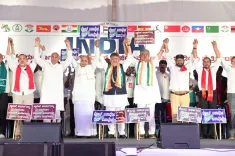
Bengal's fractured opposition: Why INDIA bloc unity keeps unravelling
Synopsis
West Bengal's political history reads like a revolving door of unlikely alliances — Congress with TMC, Congress with the Left, TMC with the BJP, then against it. The latest flare-up between Adhir Ranjan Chowdhury and Mamata Banerjee is not a fresh crisis; it is the latest episode of a structural contradiction that has defined Bengal's opposition for decades.
Key Takeaways
Adhir Ranjan Chowdhury reportedly refused to moderate his criticism of CM Mamata Banerjee despite improving INDIA bloc ties at the national level.
Chowdhury was replaced as WBPCC president after his defeat in the 2024 Lok Sabha election ; analysts link his remarks partly to that personal setback.
New WBPCC chief Subhankar Sarkar is reportedly more open to coalition-building against the BJP .
West Bengal's opposition has cycled through Congress–Left rivalry, TMC–BJP alliance, Congress–TMC partnership, and eventually a Congress–Left front — all driven by electoral compulsions.
The Left Front ruled Bengal for approximately 34 years from 1977 before the Congress–TMC combine ended its dominance.
The discord underscores a broader structural challenge for the INDIA bloc as state-level grievances and political memory collide with the demands of national opposition unity.
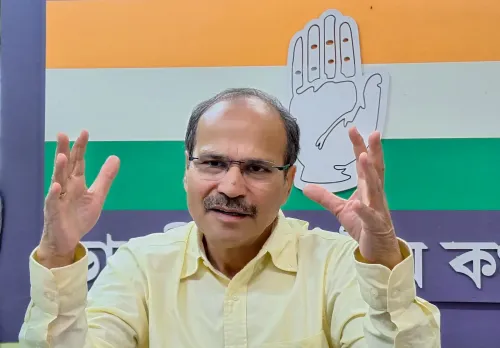
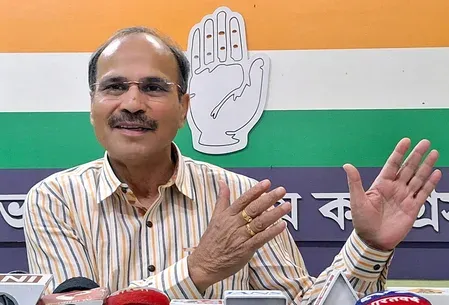
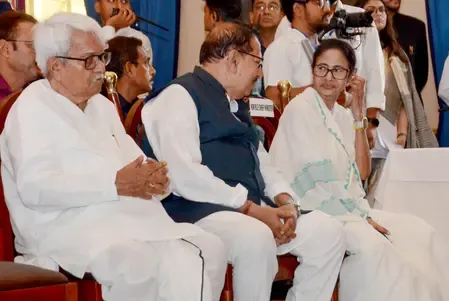
Fresh discord within the INDIA bloc in West Bengal has once again laid bare the enduring fragility of opposition unity in a state where political realignments have historically been driven by electoral arithmetic rather than ideological common ground. The latest flashpoint centres on senior Congress leader Adhir Ranjan Chowdhury, who reportedly refused to soften his criticism of Chief Minister Mamata Banerjee despite signals of improving ties among opposition parties at the national level.
Chowdhury's Grievance and Its Roots
Chowdhury cited years of what he described as political poaching and intimidation by the All India Trinamool Congress (TMC), maintaining that his lived political experience left little room for reconciliation with Banerjee's party. Some analysts attribute his remarks, made on Wednesday, partly to personal grievance: he was replaced as West Bengal Pradesh Congress Committee (WBPCC) president shortly after his defeat in the 2024 Lok Sabha election. His tenure had been defined by a confrontational posture toward the TMC, and his exit was widely seen as a bid by the Congress to reorganise and broaden its coalition-building options in the state.
His successor, Subhankar Sarkar, is reportedly regarded as more inclusive and open to partnerships aimed at checking the Bharatiya Janata Party (BJP)'s expansion in Bengal — a contrast that underscores the internal fault lines the Congress must navigate.
West Bengal's Long History of Shifting Alliances
The current friction is not an aberration; it is consistent with a decades-long pattern. Before 1977, the Congress was the dominant political force in West Bengal, returning to uninterrupted power in 1972 after intermittent periods of President's Rule. The Left Front, led by the Communist Party of India (Marxist), then swept to a historic victory in 1977, beginning a rule that would last approximately 34 years. Congress became the principal opposition, and the two camps remained in intense confrontation for much of that period.
It was within this environment that Mamata Banerjee rose through the Congress ranks before growing frustrated with what she perceived as the party's failure to mount an effective challenge to the Left. In 1998, she broke away to establish the Trinamool Congress, alleging that sections of the Congress leadership had developed a covert understanding with the CPI(M) that allowed Left dominance to persist.
The Alliance Merry-Go-Round
What followed was a series of alignments that would have seemed implausible at the time each one began. Banerjee initially allied with the BJP, then a minor force in Bengal, describing it as a natural partner in the fight against communist rule. As political conditions shifted, she distanced herself from the BJP and moved closer to the Congress, with the Left Front serving as a shared adversary. By the late 2000s, the Congress–TMC electoral understanding proved decisive, buoyed by widespread public anger over incidents in Singur and Nandigram.
Once in power, however, numerous Congress leaders and workers crossed over to the Trinamool, significantly weakening the Congress's organisational base — precisely the period Chowdhury now points to when accusing Banerjee of dismantling the Congress machinery in the state. Even the communists levelled similar allegations, and that shared grievance eventually produced what was once considered unthinkable: a Congress–Left alliance, forged on shared weakness and a common objective to resist both TMC dominance and BJP expansion.
Why Opposition Unity Remains Elusive
As the BJP expanded its footprint eastward, the political equation in West Bengal shifted again, prompting Banerjee to reach out to erstwhile rivals. This cyclical pattern illustrates a fundamental tension in Bengal politics — and indeed in Indian opposition politics more broadly — between political memory and political necessity. Parties that have inflicted deep wounds on each other are repeatedly asked to subordinate those grievances to immediate electoral interests.
The result, according to some observers, is an opposition coalition perpetually vulnerable to eruptions from within. This comes amid a broader national debate about whether the INDIA bloc can maintain coherence as state-level compulsions and individual leaders' histories pull its constituent parties in divergent directions. With West Bengal assembly elections on the horizon, the pressure to present a unified front will only intensify — as will the competing pressures that make unity so difficult to sustain.
Point of View
Not the disease. The real problem is that the INDIA bloc in West Bengal is an alliance of parties that have each, at various points, accused the others of existential betrayal — and those accusations are not entirely wrong. No amount of national-level signalling can dissolve that institutional memory. What Bengal actually reveals is that the INDIA bloc's coherence is thinner than it appears: it holds at the top but frays wherever a local leader has real grievances and nothing left to lose. If the Congress genuinely wants to rebuild in Bengal, it has to decide whether that means working with or against Banerjee — and Chowdhury's replacement with a 'pliant' WBPCC chief suggests the high command has quietly chosen the former, even if it cannot say so publicly.
NationPress
5 Nov 2026
Frequently Asked Questions
Why is Adhir Ranjan Chowdhury criticising Mamata Banerjee despite INDIA bloc ties?
Chowdhury has cited years of alleged political poaching and intimidation by the TMC as reasons he cannot reconcile with Banerjee. Some analysts also note that he was replaced as WBPCC president after losing his 2024 Lok Sabha seat, adding a personal dimension to his criticism.
What is the history of Congress–TMC relations in West Bengal?
The Congress and TMC formed a decisive electoral alliance in the late 2000s, capitalising on anger over Singur and Nandigram to end 34 years of Left Front rule. After the TMC came to power, however, many Congress leaders defected to Trinamool, severely weakening the Congress's organisational base and souring relations.
Who is the new West Bengal Pradesh Congress Committee president?
Subhankar Sarkar was appointed WBPCC president after Chowdhury's exit following the 2024 Lok Sabha election. He is reportedly regarded as more inclusive and amenable to building opposition partnerships against the BJP.
Why does opposition unity repeatedly break down in West Bengal?
Bengal's opposition parties — the Congress, the Left, and the TMC — have each been bitter rivals at different points, with deep institutional memories of poaching, violence, and betrayal. Electoral compulsions periodically push them together, but those same grievances tend to resurface when individual leaders see little political cost in voicing them.
What does this mean for the INDIA bloc ahead of West Bengal elections?
The discord highlights the difficulty of translating national opposition coordination into durable state-level unity. With West Bengal assembly elections approaching, the bloc's constituent parties face competing pressures — the need for a unified anti-BJP front versus unresolved state-level rivalries that have accumulated over decades.