INDIA bloc alliance in Bengal civic polls looks unlikely amid rivalry
Synopsis
West Bengal's civic elections are shaping up as a test of whether the INDIA bloc can translate national-level solidarity into ward-level coordination — but decades of TMC-Left-Congress rivalry, fractured splinter groups, and historically poor vote-transfer rates make a unified opposition front look more aspirational than achievable.
Key Takeaways
West Bengal civic body elections, including the Kolkata and Howrah Municipal Corporations , are likely in the last week of November 2026 , with results expected around early December .
The BJP , after winning the state Assembly poll and subsequent bypolls, plans to contest independently.
TMC spokesperson Kunal Ghosh did not rule out an opposition understanding but said it has 'still not been discussed.' The Left Front (CPI-M) risks ideological blurring if it aligns formally with the TMC , which its cadres have long accused of political violence.
Splinter groups — the Democratic Trinamool Congress and the NCPI — are expected to contest separately, further complicating opposition arithmetic.
Analysts consider a targeted, local-level tactical understanding more plausible than a statewide grand alliance.
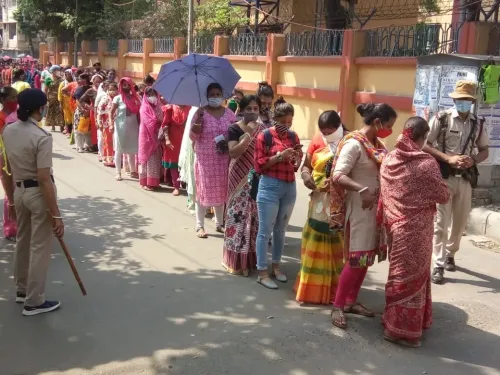
The prospect of a unified INDIA bloc alliance ahead of West Bengal's urban civic body elections — including the Kolkata Municipal Corporation and Howrah Municipal Corporation, likely in the last week of November 2026 — remains remote, with deep ideological fault lines, ward-level rivalries, and uncertain vote transferability standing in the way. The Bharatiya Janata Party (BJP), buoyed by a convincing Assembly poll win and subsequent bypoll victories, is set to contest independently, while opposition parties weigh whether to unite against what critics describe as a BJP juggernaut.
The Historical Backdrop
Mamata Banerjee founded the All India Trinamool Congress (TMC) after breaking away from the Indian National Congress, later contesting Lok Sabha elections as part of the BJP-led National Democratic Alliance (NDA) and serving in then Prime Minister Atal Bihari Vajpayee's Cabinet. She led the TMC out of the NDA twice — first in March 2001, and again after the 2004 Lok Sabha elections, when she was her party's sole winner.
The TMC subsequently aligned with the Congress-led United Progressive Alliance (UPA), and Banerjee served as Union Railway Minister from 2009 to 2011 under then Prime Minister Manmohan Singh. It was during this period that she led a coalition to dismantle the Left Front's 34-year hold on West Bengal, becoming Chief Minister in 2011. After she parted ways with the Congress once more, the state Congress chose to ally with the very Left Front it had lost power to in 1977 — burying historic rivalry to confront a common adversary.
The New Political Equation
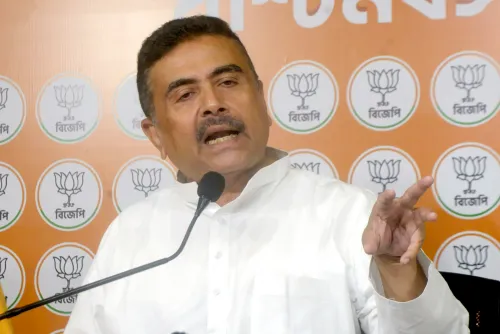
West Bengal politics has since consolidated around a TMC–BJP binary, with the Congress and Left struggling to recover relevance. However, after Banerjee's party lost the recent Assembly election and Suvendu Adhikari took oath as Chief Minister, she called on all 'anti-BJP' parties, student organisations, and civil society groups to unite — notably extending that appeal to include the Left parties for the first time, a move analysts describe as a bid for political survival.
Notably, this marks a significant rhetorical shift for a leader who had consistently positioned herself against the Communists for over two decades.
What TMC Spokesperson Said
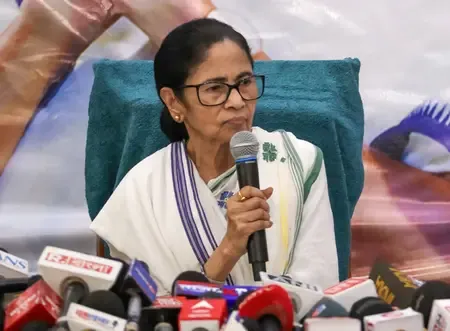
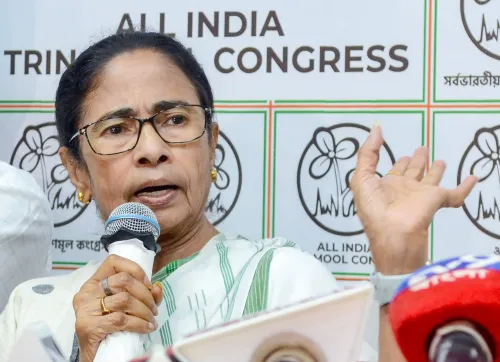
TMC spokesperson and legislator Kunal Ghosh did not rule out an opposition understanding when asked by reporters in Kolkata. Pointing to the national-level INDIA bloc framework, Ghosh acknowledged the possibility of a likely understanding among opposition parties in the state but stressed that it had 'still not been discussed' at any formal level. His remarks signal cautious openness rather than a firm commitment.
Why a Grand Alliance Faces Long Odds
On paper, a consolidated opposition front could prevent the multi-cornered contests that have occasionally split anti-BJP votes in urban wards. However, the structural barriers are formidable. The Left Front, particularly the Communist Party of India (Marxist) — CPI(M), risks blurring its ideological identity by aligning too closely with the TMC, whose cadres it has long accused of political violence and authoritarian governance. Many Left activists fear such cooperation would further erode their independent base.
Compounding the challenge, splinter groups cloud the opposition arithmetic. The Democratic Trinamool Congress is likely to contest independently, while the Nationalist Citizens Party of India (NCPI) — which reportedly attracted around 20 rebel TMC parliamentarians — is said to be seeking a tie-up with the BJP. The state BJP leadership has reportedly rejected that approach.
Seat-sharing in municipal elections is also inherently complex. Ward-level contests are driven by hyper-local calculations, personal networks, and neighbourhood leadership structures that rarely respond to top-down alliance directives. Historical precedent is cautionary: when the Congress and Left previously aligned, vote transfers did not materialise as a bloc in many constituencies. Supporters who viewed the other party as their primary rival abstained or drifted — in some cases backing TMC candidates. Similarly, observers warn that anti-incumbency voters may gravitate toward the BJP if they perceive a Banerjee-led opposition pact as opportunistic rather than principled.
What to Expect
Analysts broadly consider a targeted, tactical understanding in select municipalities more plausible than a statewide grand alliance. Results are expected around early December 2026. How the opposition configures itself in the weeks ahead will test whether the fear of BJP expansion can override decades of mutual hostility — and whether national-level INDIA bloc solidarity can translate into coherent ward-level coordination in Bengal.
Point of View
And West Bengal is perhaps the sharpest proof of that gap. Mamata Banerjee's sudden embrace of the Left — the very force she spent a decade dismantling — looks less like ideology and more like arithmetic desperation after her Assembly loss. The deeper problem is that decades of cadre-level hostility do not dissolve because state leaders issue a joint statement; ward bosses in Kolkata still remember 2011, and CPI(M) workers still remember what followed. Without credible seat-sharing and a mechanism to enforce vote discipline at the booth level, an INDIA bloc in Bengal civic polls risks being a press conference that becomes a multi-cornered contest — which is exactly what the BJP needs.
NationPress
23 Oct 2026
Frequently Asked Questions
When are the West Bengal civic body elections scheduled?
The West Bengal urban civic body elections, including those for the Kolkata Municipal Corporation and Howrah Municipal Corporation, are likely to be held in the last week of November 2026, with results expected around early December.
Is the INDIA bloc likely to contest the Bengal civic polls as a united front?
A full statewide INDIA bloc alliance appears remote. While TMC spokesperson Kunal Ghosh has not ruled out an understanding, he confirmed it has not been formally discussed. Analysts consider targeted, local-level arrangements more realistic than a grand alliance.
Why is a TMC–Left–Congress alliance so difficult to form?
Decades of bitter rivalry, cadre-level hostility, and the Left's concerns about ideological dilution make a formal alliance hard to sustain. Historical evidence also shows that even when party leaderships agree, vote transfers to former adversaries often do not materialise on the ground.
How does Mamata Banerjee's political position factor into a potential alliance?
After losing the state Assembly election and with Suvendu Adhikari sworn in as Chief Minister, Banerjee has called on all anti-BJP forces — including the Left, which she had long opposed — to unite. This marks a significant shift, driven by what observers describe as the political pressures of opposition.
What is the BJP's position going into the civic elections?
The BJP plans to contest independently, boosted by its Assembly election win and subsequent bypoll victories. The state BJP leadership has reportedly rejected an alliance offer from the Nationalist Citizens Party of India (NCPI), which some 20 rebel TMC parliamentarians had reportedly joined.