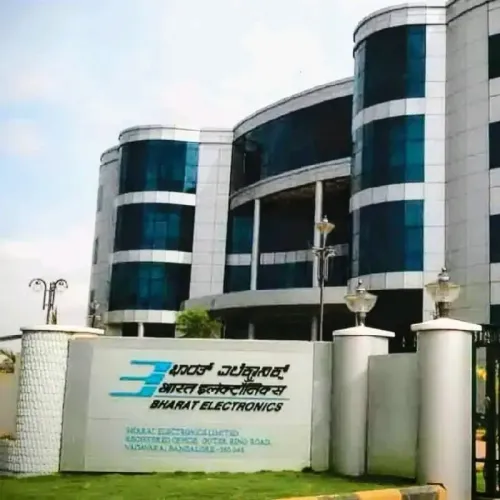
Did BHEL Achieve a Threefold Increase in Q3 Net Profit?
Synopsis
BHEL has recorded an outstanding performance in Q3 FY26, achieving a net profit of Rs 382.49 crore, reflecting a threefold increase. With significant growth in revenues and the introduction of new Labour Codes, the company is poised for future developments that may impact its financial trajectory. Discover more about BHEL's impressive results and the implications of the new regulations.
Key Takeaways
BHEL achieved a net profit of Rs 382.49 crore in Q3 FY26, a significant increase from the previous year.
Revenue from operations rose by 16.4% to Rs 8,473.10 crore.
The power segment contributed Rs 6,322.36 crore to revenue.
New Labour Codes effective from November 21, 2025, may impact future financials.
Labour Codes aim to enhance worker welfare and ensure better wages.
New Delhi, Jan 19 (NationPress) The state-owned engineering powerhouse Bharat Heavy Electricals Limited (BHEL) announced a remarkable increase in its standalone net profit, which surged to Rs 382.49 crore in the third quarter of 2025-26 (October-December), marking over a three-fold rise from Rs 124.77 crore during the same period last year.
BHEL’s revenue from operations climbed by 16.4 percent year-on-year, reaching Rs 8,473.10 crore. This growth is attributed to solid performance in the power and industrial sectors. The company also demonstrated sequential improvement over Q2 FY26, showcasing enhanced operating efficiency.
In the third quarter, BHEL's revenue from the power segment was Rs 6,322.36 crore, while the industrial segment reported Rs 2,150.74 crore.
BHEL has acknowledged that the new Labour Codes effective from November 21, 2025 may influence future financial outcomes.
The government has introduced these four Labour Codes to simplify existing labour laws, aiming to ensure better wages, safety, social security, and improved welfare for India's workforce.
The Labour Codes comprise the Code on Wages, 2019, Industrial Relations Code, 2020, Code on Social Security, 2020, and the Occupational Safety, Health and Working Conditions Code, 2020, which will streamline 29 existing labour laws.
Under the Code on Social Security, 2020, all workers, including gig and platform workers, will receive social security benefits, ensuring coverage that includes PF, ESIC, and insurance. Previously, such coverage was limited.
The Code on Wages, 2019 guarantees that all workers will receive a minimum wage, ensuring financial security through timely payments. Previously, minimum wages were applicable only to specific sectors, leaving many workers unprotected.
Additionally, the Labour Codes mandate that employers provide free annual health check-ups for all workers over 40 years of age, promoting a culture of preventive healthcare—something that was not legally required before.
Point of View
It's clear that BHEL's impressive financial results showcase resilience in the face of economic challenges. The company's growth, coupled with the implementation of new Labour Codes, indicates a transformative phase for India's workforce. Such developments can enhance employee welfare while positioning BHEL for sustained growth. We are committed to keeping our audience informed on these significant shifts in the industrial landscape.
NationPress
6 Sept 2026
Frequently Asked Questions
What was BHEL's net profit in Q3 FY26?
BHEL reported a net profit of Rs 382.49 crore in the third quarter of FY26.
How much did BHEL's revenue from operations increase?
BHEL's revenue from operations increased by 16.4 percent year-on-year to Rs 8,473.10 crore.
What are the new Labour Codes introduced by the government?
The new Labour Codes include the Code on Wages, 2019; Industrial Relations Code, 2020; Code on Social Security, 2020; and Occupational Safety, Health and Working Conditions Code, 2020.
How will the new Labour Codes affect workers?
The new Labour Codes ensure better social security coverage, minimum wage rights, and health benefits for workers, including gig and platform workers.
What is the significance of BHEL's performance?
BHEL's performance reflects strong operational efficiency and positions the company favorably within the competitive landscape of the engineering sector.