BIS launches IS 20201:2026 standard for community seed banks across India
Synopsis
India's Bureau of Indian Standards has quietly released what could become a foundational tool for seed sovereignty — IS 20201:2026, a first-of-its-kind certifiable management standard for community seed banks. With climate change threatening traditional crop varieties and smallholder livelihoods, this framework could determine whether India's indigenous seed wealth survives the next generation of agriculture.
Key Takeaways
The Bureau of Indian Standards (BIS) published IS 20201:2026 on 11 June 2026 , establishing a management framework for Community Seed Banks (CSBs) across India.
The standard covers the full seed bank lifecycle: collection, viability testing, storage, documentation, quality assurance, and risk management.
It is a voluntary, certifiable management system standard, available for free download from the BIS portal.
The National Food Security and Nutrition Mission (NFSNM) provides a one-time grant of ₹50 lakh for establishing community seed banks.
The draft was developed under the ICAR-National Bureau of Plant Genetic Resources with inputs from four national bodies including the National Biodiversity Authority .
The standard reinforces the Protection of Plant Varieties and Farmers' Rights Act, 2001 and the Biological Diversity Act, 2002 .
The Bureau of Indian Standards (BIS) has published a new Indian Standard — IS 20201:2026 — establishing a comprehensive management framework for Community Seed Banks (CSBs) across India, according to an official statement issued on Thursday, 11 June 2026. The standard introduces a structured, certifiable operating protocol aimed at conserving indigenous seed varieties and strengthening agricultural resilience in the face of climate change.
What IS 20201:2026 Covers
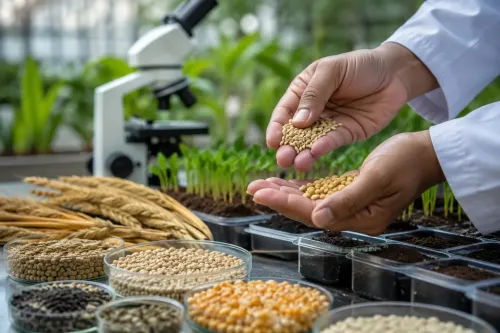
The standard lays out rigorous end-to-end requirements for seed bank operations, spanning organisational arrangements, seed collection and acquisition, viability testing, cleaning, drying, storage, documentation, quality assurance, seed regeneration practices, risk management, and continual improvement. By standardising these processes, CSBs can function as reliable, decentralised repositories where local farmers collect, store, and exchange high-quality, locally adapted seeds.
Notably, the standard is voluntary and certifiable — meaning seed banks and cooperative societies can seek formal certification against its requirements. It is available for free download from the official BIS portal.
Why It Matters for Indian Agriculture
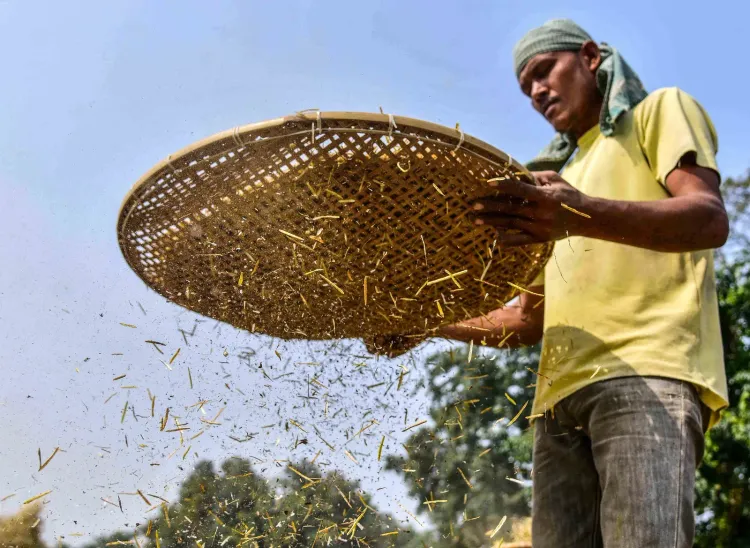
India's native seed varieties represent a strategic agricultural resource, carrying traits such as natural drought tolerance, disease resistance, and high nutritional value — characteristics that commercial hybrid varieties often lack. With the agriculture sector increasingly exposed to erratic precipitation, rising temperatures, and prolonged droughts, the preservation of these traditional varieties has taken on renewed urgency.
Standard-compliant CSBs are designed to protect the livelihoods of smallholder farmers, build grass-roots resilience, and ensure continued access to crop varieties adapted to local conditions. This is particularly significant given that climate-induced crop failures disproportionately affect marginal and small farmers who cannot easily access or afford commercial seed replacements.
Policy Alignment and Government Backing
The initiative aligns with the government's commitment to preserving agricultural biodiversity and supporting sustainable farming. It reinforces existing central schemes, including the National Food Security and Nutrition Mission (NFSNM), which provides a one-time assistance of ₹50 lakh for establishing community seed banks. The standard also dovetails with statutory protections under the Protection of Plant Varieties and Farmers' Rights Act, 2001 and the Biological Diversity Act, 2002.
Who Developed the Standard
The draft was developed under the convenorship of the ICAR-National Bureau of Plant Genetic Resources, with critical inputs from the National Biodiversity Authority, the Protection of Plant Varieties and Farmers' Rights Authority, Rythu Sadhikara Samstha, and the BAIF Development Research Foundation. The multi-stakeholder development process lends the standard both scientific credibility and on-ground relevance.
What Comes Next
All community seed banks, cooperative societies, and agricultural stakeholders have been strongly encouraged to adopt the guidelines. With the standard now publicly available at no cost, its uptake will depend on awareness outreach and state-level agricultural extension support. How quickly CSBs across India's diverse agro-climatic zones adopt and seek certification under IS 20201:2026 will determine its real-world impact on food security and seed sovereignty.
Point of View
But its impact hinges entirely on adoption — and India has a long history of well-designed agricultural frameworks that never reached the last mile. The real challenge is not the standard itself but the extension machinery needed to bring smallholder-run seed banks in remote agro-climatic zones into compliance. With climate stress accelerating, the window to institutionalise indigenous seed conservation is narrowing. A voluntary standard without a credible state-level rollout plan risks becoming another policy document that impresses on paper but changes little on the ground.
NationPress
29 Jul 2026
Frequently Asked Questions
What is BIS IS 20201:2026?
IS 20201:2026 is a new Indian Standard published by the Bureau of Indian Standards (BIS) that establishes a comprehensive management framework for Community Seed Banks (CSBs) in India. It is a voluntary, certifiable standard covering the full lifecycle of seed bank operations, from collection and storage to quality assurance and risk management.
Why has BIS introduced a standard for community seed banks?
India's indigenous seed varieties carry critical traits — drought tolerance, disease resistance, high nutrition — that are under threat from climate change and the spread of commercial hybrid seeds. A standardised framework ensures that community seed banks operate consistently and reliably, protecting these varieties and the smallholder farmers who depend on them.
Who developed the IS 20201:2026 standard?
The draft was developed under the convenorship of the ICAR-National Bureau of Plant Genetic Resources, with inputs from the National Biodiversity Authority, the Protection of Plant Varieties and Farmers' Rights Authority, Rythu Sadhikara Samstha, and the BAIF Development Research Foundation.
How can community seed banks access IS 20201:2026?
The standard can be downloaded free of cost from the official BIS portal. All community seed banks, cooperative societies, and agricultural stakeholders have been encouraged to adopt its guidelines.
What government support exists for setting up community seed banks?
The National Food Security and Nutrition Mission (NFSNM) provides a one-time financial assistance of ₹50 lakh for establishing community seed banks. Additional protections are available under the Protection of Plant Varieties and Farmers' Rights Act, 2001 and the Biological Diversity Act, 2002.