BJP district committees in Bengal to coordinate with administration on central schemes
Synopsis
The BJP in West Bengal is building a district-level coordination structure to bridge its organisational machinery with the new state administration — with centrally-sponsored schemes as the primary target. Political observers see echoes of the Left Front's 34-year model, but the real test is whether the party can maintain the institutional separation that the previous TMC regime reportedly eroded.
Key Takeaways
BJP central observer Sunil Bansal directed the formation of district-level core committees in West Bengal on 15 May .
Committees will include district presidents , observers , general secretaries , Lok Sabha members , and legislators from each organisational district.
Primary objective: ensure smooth implementation of centrally-sponsored development schemes across all districts.
Political observers compare the model to the CPI(M)-led Left Front's 34-year coordination framework in Bengal.
The previous TMC government under Mamata Banerjee was criticised for blurring the line between party and administration.
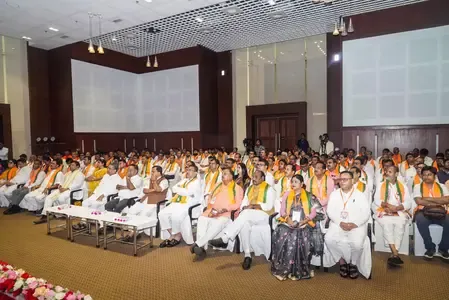
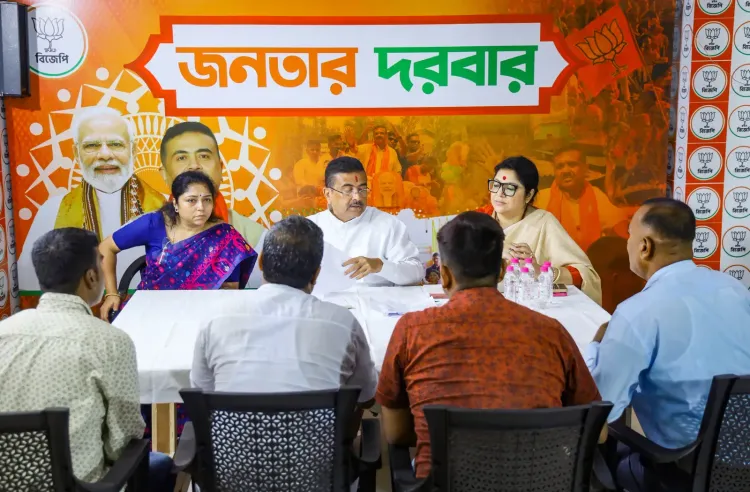
The Bharatiya Janata Party (BJP) in West Bengal is setting up district-level core committees across the state to coordinate directly with the new state administration, with a primary focus on ensuring smooth delivery of centrally-sponsored development schemes. The move follows a directive issued on 15 May by Sunil Bansal, the party's central observer for Bengal, who instructed units to complete the formation of these committees at the earliest.
Structure of the District-Level Committees
According to party insiders, the names of representatives for each district-level core committee have already been finalised. Each committee will draw members from district presidents, observers, general secretaries, Lok Sabha members, and legislators from the respective organisational districts.
The committees are designed to serve a dual function: channelling directives from the party's central and state leadership down to elected representatives, while simultaneously allowing MPs and legislators to report back on ground-level administrative developments within their districts.
Why Central Schemes Are the Focus
Party insiders say the second — and more consequential — purpose of these committees is to bridge the gap between the BJP's organisational machinery and the district administration, particularly for the implementation of centrally-sponsored schemes. With the BJP now in power in the state, ensuring that Union government programmes reach beneficiaries efficiently has become a political as well as administrative priority.
'The elected public representatives would be able to update the party leadership about the administrative activities within the organisational districts at the same core committee meetings. This will ensure effective district-level development activities,' a state-level party leader said.
Echoes of the Left Front Model
Political observers in Kolkata have drawn comparisons between this approach and the functioning of the Communist Party of India (Marxist) (CPI(M))-led Left Front during its 34-year rule in West Bengal. Under that regime, CPI(M) district committees coordinated with district administrations through their elected representatives — though a formal boundary between party and administration was maintained.
Policy announcements were made by CPI(M) leadership from the party's headquarters at Alimuddin Street in central Kolkata, while administrative decisions were communicated by Chief Ministers — the late Jyoti Basu and the late Buddhadeb Bhattacharya — from the Writers' Buildings secretariat.
Contrast With the Trinamool Era
That separation between party and administration was, according to observers, effectively dismantled during the previous All India Trinamool Congress (TMC) government. Former Chief Minister and TMC supremo Mamata Banerjee was seen as consolidating both political and administrative announcements — first from Writers' Buildings and later from Nabanna — blurring the institutional distinction.
'It seems that the BJP is taking the initiative to rebuild that boundary between the political and administrative courts,' a city-based political observer noted, adding that while any government's decisions will naturally reflect its ruling party's policies, a clear institutional separation remains important.
What Comes Next
With committee compositions reportedly finalised, the BJP's district-level coordination framework in Bengal is expected to become operational shortly. How effectively it translates into on-ground delivery of central schemes — and whether it avoids the party-administration overreach that critics attributed to the previous regime — will be closely watched by both political analysts and beneficiary communities across the state.
Point of View
At its core, a state-capture architecture dressed in administrative language — and that is not necessarily a criticism. Every ruling party needs transmission belts between its political will and bureaucratic execution. The more pointed question is whether these committees will enforce delivery accountability or become patronage nodes. The Left Front ran a version of this for 34 years; it delivered welfare but also entrenched a party-state that became its own undoing. The BJP's stated intent to rebuild the party-administration boundary is worth noting, but intent and institutional design are different things. Without independent grievance redress and transparent scheme-tracking, the committees risk replicating the very opacity they claim to be correcting.
NationPress
10 Oct 2026
Frequently Asked Questions
What are the BJP's district-level core committees in West Bengal?
They are newly formed party bodies at the district level in West Bengal, designed to coordinate between the BJP's organisational structure and the state administration. Their primary focus is ensuring the smooth implementation of centrally-sponsored development schemes across all districts.
Who directed the formation of these committees?
Sunil Bansal , the BJP's central observer for West Bengal, issued the directive on 15 May , instructing party units to complete the committee formations at the earliest.
How do these committees compare to the Left Front model?
Political observers note similarities with the CPI(M)-led Left Front's 34-year approach, where district committees coordinated with local administrations through elected representatives. However, the Left Front maintained a formal separation between party and administrative announcements — a line the BJP says it intends to uphold.
Why are centrally-sponsored schemes specifically highlighted?
With the BJP now governing West Bengal, ensuring Union government programmes reach beneficiaries efficiently is both a political and administrative priority. The committees are seen as a direct mechanism to plug implementation gaps that may have existed under the previous TMC government.
Who will be members of these district-level core committees?
Each committee will include district presidents, observers, general secretaries, Lok Sabha members, and state legislators from the respective organisational districts, giving it both organisational and elected-representative representation.