Did the TN BJP Chief Just Expose DMK's Anti-Hindu Agenda with the HC Ruling on Thiruparankundram Deepam?

Synopsis
In a significant political clash, BJP's Nainar Nagenthran criticizes the DMK government for alleged attacks on Hindu traditions, following a High Court ruling that allows the lighting of a sacred lamp. This decision is framed as a broader defense of religious rights and judicial integrity in Tamil Nadu.
Key Takeaways
The High Court's ruling allows the lighting of the deepam on Thiruparankundram Hill.
BJP accuses DMK of undermining Hindu practices.
The verdict is seen as a defense of religious rights.
Nagenthran warns of public backlash against the DMK's alleged anti-Hindu stance.
The judiciary plays a crucial role in maintaining constitutional freedoms.
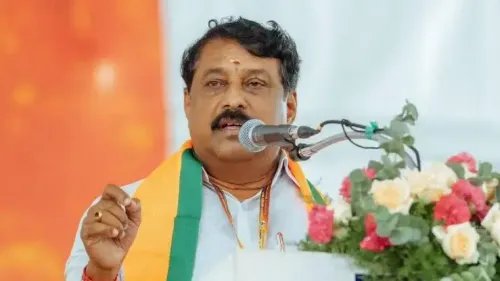
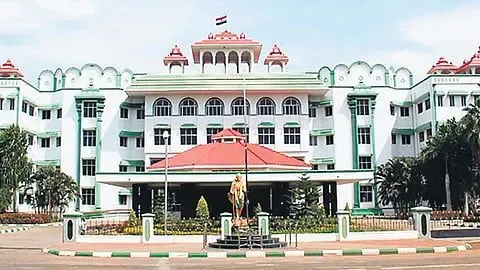
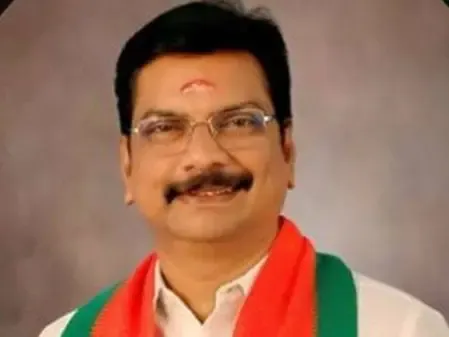
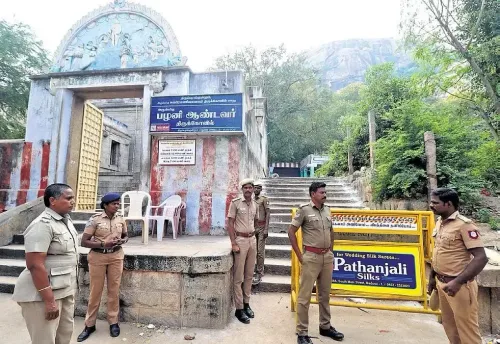
Chennai, Jan 6 (NationPress) The state president of the Bharatiya Janata Party (BJP) in Tamil Nadu, Nainar Nagenthran, sharply criticized the ruling DMK government on Tuesday, expressing his approval of the Madurai Bench of the Madras High Court's ruling that allows for the lighting of the deepam at the Deepathoon on Thiruparankundram Hill.
Nagenthran accused the state administration of consistently undermining Hindu religious customs under the pretense of upholding law and order.
In his remarks, he commended the High Court for rejecting the DMK government's request to prevent the lighting of the lamp, asserting that the judiciary had once again upheld justice and constitutional principles.
He stated that the ruling has provided great relief to devotees and reinforced the belief that the Deepathoon rightfully belongs to the Thiruparankundram Subramania Swamy Temple.
“This court decision serves as a strong condemnation of the state government for exploiting law and order concerns for its political convenience,” Nagenthran remarked.
He emphasized that framing traditional and long-standing religious practices as potential sources of public disorder was both misleading and unacceptable. According to him, the ruling categorically dismissed the DMK government's claims and revealed what he called its “manufactured narrative” concerning public order.
The BJP leader alleged that despite facing multiple legal defeats regarding Hindu religious practices, the DMK government has persisted in what he termed a continuous anti-Hindu agenda.
He pointed out that the state administration showed little respect for court directives and continually revived the same arguments through appeals. “Even after being admonished several times by the judiciary, the government has exhibited no intention to correct its course,” he claimed.
With a politically charged statement, Nagenthran asserted that the DMK's perceived antagonism towards Hindu beliefs reflected an arrogance of power that the public would not tolerate.
“A government that continually disrespects faith, ignores constitutional propriety, and challenges judicial authority will ultimately face repercussions from the electorate,” he warned.
He concluded by stating that the verdict was not just a legal victory for devotees, but also a broader affirmation of religious rights and judicial balance in the state. This decision, he argued, highlights the judiciary's role in protecting constitutional freedoms while ensuring that long-standing traditions are not suppressed for political motives.
Point of View
It is essential to approach this issue with a balanced perspective. The recent comments from BJP's Nainar Nagenthran highlight a growing tension between political parties over religious practices. While the judiciary's role in upholding constitutional values is crucial, the political discourse surrounding these issues requires careful navigation to ensure that it does not escalate into divisive rhetoric.
NationPress
27 Sept 2026
Frequently Asked Questions
What was the Madurai Bench of the Madras High Court's ruling regarding the deepam?
The court ruled in favor of allowing the lighting of the deepam at the Deepathoon atop Thiruparankundram Hill, rejecting the DMK government's appeal to block it.
What are the accusations made by BJP against the DMK government?
The BJP has accused the DMK government of targeting Hindu religious practices and misusing law and order concerns for political gain.
How did Nainar Nagenthran react to the court's verdict?
Nagenthran welcomed the verdict, stating it provided relief to devotees and reaffirmed the rights of the Thiruparankundram Subramania Swamy Temple.
What impact does this ruling have on religious rights in Tamil Nadu?
The ruling is seen as a reaffirmation of religious rights, emphasizing the judiciary's role in protecting constitutional freedoms and long-standing traditions.
What does Nagenthran mean by 'manufactured narrative'?
He refers to the DMK government's portrayal of religious practices as threats to public order, which he considers misleading.