BJP defends Election Commission row: 'Deliberations sign of healthy democracy'
Synopsis
A media report claiming two Election Commissioners formally objected to panel decisions handed the Opposition fresh ammunition — but BJP's Sambit Patra flipped the script, arguing that internal disagreement is exactly what a healthy democracy looks like. The exchange sharpens a deeper battle over who controls the narrative on India's electoral institutions.
Key Takeaways
BJP MP Sambit Patra defended the Election Commission of India on 23 September 2026 , calling commissioner deliberations a sign of healthy democracy.
A media report had claimed two Election Commissioners 'objected on record' to several decisions by the poll panel.
Patra cited the Special Intensive Revision (SIR) data from West Bengal , noting maximum voter deletions occurred in 20 seats — 13 held by TMC , one by Congress , and six by BJP .
The SIR process was cleared by a unanimous decision of all three Election Commissioners, according to Patra.
Patra noted the NDA won the 2014 , 2019 , and 2024 Lok Sabha elections before current CEC Gyanesh Kumar was appointed.
The BJP accused the Congress of systematically attacking constitutional institutions after repeated electoral defeats since 2014 .
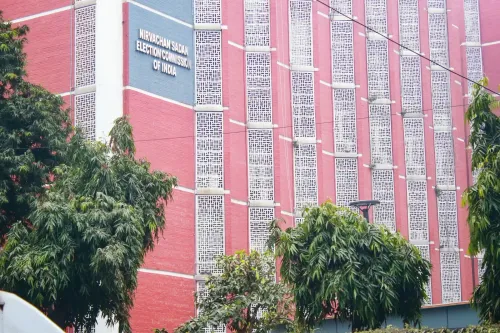
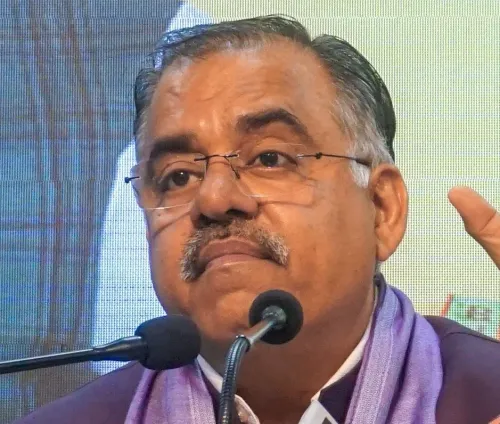
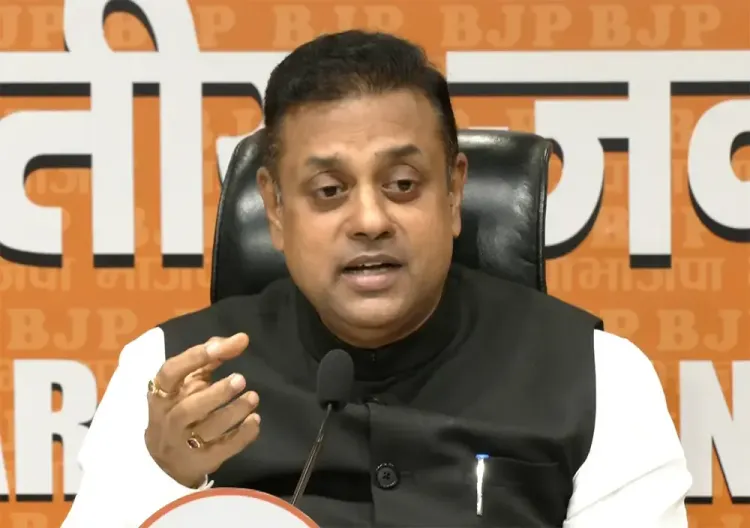
Bharatiya Janata Party (BJP) spokesperson and Member of Parliament Sambit Patra on Wednesday, 23 September defended the Election Commission of India (ECI) amid a media report claiming that two Election Commissioners had 'objected on record' to several decisions taken by the poll panel. Addressing a press conference in New Delhi, Patra argued that internal deliberations among the three commissioners were proof of a functioning democracy, not a flaw in the institution.
BJP's Core Defence of the ECI
Patra cited the media report directly to turn the Opposition's argument on its head. 'According to the media report, there have been official deliberations between the three Election Commissioners, which is a sign of a healthy democracy,' he said.
He pushed back against what he described as a contradictory Opposition stance: 'If the three Election Commissioners do not communicate with each other, do not exchange views or consult one another, and simply keep agreeing with each other, then the Opposition parties say, 'This is a dictatorship.' They say, 'This government appointed all three of them, and they simply keep saying yes to everything.' By Patra's reading, disagreement within the commission validates its independence rather than undermining it.
Attack on the Opposition's 'Vote Chori' Allegation
Patra directly addressed Opposition allegations of 'vote chori' (vote theft), focusing on the Special Intensive Revision (SIR) process — a voter roll exercise at the centre of the controversy. Referring to the same media report, he pointed to SIR-related voter deletions in West Bengal, saying the maximum deletions occurred in 20 Assembly seats — 'of which 13 were won by Mamata Banerjee's All India Trinamool Congress (TMC), one by the Indian National Congress (Congress), and six by the BJP.'
'If we (BJP) have stolen votes, then how did some other party win on these seats?' Patra asked. He also underlined that the SIR was initiated only after a unanimous decision by all three Election Commissioners — 'They were all on the same page,' he asserted.
Historical Election Record Cited
To rebut the broader claim of electoral manipulation, Patra noted that the National Democratic Alliance (NDA) had already won the 2014, 2019, and 2024 Lok Sabha elections before Gyanesh Kumar was appointed as Chief Election Commissioner (CEC) and before the SIR process began. He also cited several state assembly victories in the same pre-appointment window as further evidence that the BJP's electoral track record predates any alleged institutional influence.
Congress Accused of 'Defaming Constitutional Institutions'
Patra levelled a broader political charge, arguing that since the Narendra Modi government first came to power in 2014, Opposition parties — and particularly the Congress — had systematically sought to delegitimise constitutional bodies after consecutive electoral defeats. 'They did not fall on a battlefield, but in the democratic arena. Their existence came under threat because they were not chosen by the people. After that, particularly the Congress party realised that it could not win elections, and so the biggest weapon in its hands was to 'kill the institutions of the country',' Patra claimed.
He added: 'This is not about benefiting the Bharatiya Janata Party, but about ensuring that even the poorest mother in the country continues to have strong faith in the Constitution.' Critics from the Opposition are likely to contest this framing, arguing that legitimate scrutiny of the ECI's internal processes is distinct from institutional delegitimisation.
What This Row Is About
The controversy stems from a media report — attributed to a leading newspaper — suggesting that two of the three Election Commissioners had formally objected to certain decisions made by the poll panel. The report has reignited a long-running political debate about the independence and composition of the ECI, particularly following legislative changes to the commissioners' appointment process. The BJP's response signals that the party intends to defend the commission's record aggressively rather than allow the narrative to settle around internal discord. How the ECI itself responds — and whether it addresses the media report directly — will be closely watched in the coming days.
Point of View
Specifically, did the two commissioners object to, and were those objections addressed? Citing past election wins as evidence against manipulation is logically useful but not conclusive — it speaks to outcomes, not process. The deeper issue is structural: the 2023 amendment that changed how Election Commissioners are appointed remains contested in the Supreme Court, and any internal dissent within the ECI, however routine, will be read through that lens. The BJP is right that deliberation is not dictatorship — but that argument only lands cleanly if the commission proactively discloses what was deliberated.
NationPress
23 Sept 2026
Frequently Asked Questions
What is the Election Commission row that the BJP was responding to?
A media report claimed that two of India's three Election Commissioners had 'objected on record' to certain decisions taken by the poll panel. The BJP dismissed the row on 23 September 2026, with MP Sambit Patra arguing that such deliberations are a normal feature of democratic institutions.
What is the Special Intensive Revision (SIR) and why is it controversial?
The Special Intensive Revision (SIR) is a voter roll revision exercise conducted by the Election Commission of India. It has become controversial because Opposition parties allege it has been used to delete legitimate voters, a charge the BJP contests by pointing to deletion data from constituencies won by non-BJP parties, including TMC and Congress.
What did Sambit Patra say about the West Bengal voter deletion data?
Patra said the maximum voter deletions under SIR occurred in 20 Assembly seats in West Bengal — 13 held by Mamata Banerjee's TMC, one by Congress, and six by the BJP. He used this data to challenge the 'vote chori' allegation, arguing the BJP could not have benefited from deletions concentrated in Opposition-held seats.
Why does the BJP cite the 2014, 2019, and 2024 election wins in this context?
The BJP argues that its three consecutive Lok Sabha victories all predate the appointment of current Chief Election Commissioner Gyanesh Kumar and the SIR process, making it difficult to attribute those wins to any alleged institutional manipulation under the current setup.
What is the broader political debate around the Election Commission of India?
The ECI's independence has been a recurring political flashpoint, intensifying after a 2023 law changed the appointment process for Election Commissioners by removing the Chief Justice of India from the selection panel. The Supreme Court is examining that change. Any sign of internal dissent within the ECI is viewed by the Opposition as evidence of compromised institutional autonomy.