BJP leaders' Garba remarks spark row in Madhya Pradesh ahead of Navratri
Synopsis
Weeks before Sharad Navratri, two BJP legislators in Madhya Pradesh have called for barring non-Hindus from Garba events and demanded identity checks at pandals — reviving a recurring controversy that critics say deepens communal fault lines around a widely celebrated festival. The BJP state leadership has stayed silent.
Key Takeaways
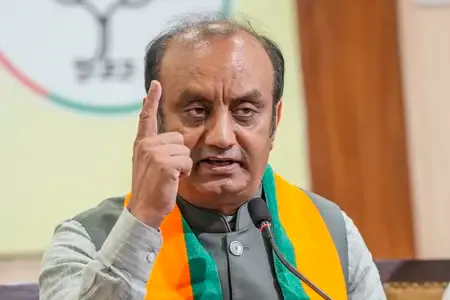
BJP MLA Usha Thakur demanded identity verification at Garba venues and called for barring non-Hindus from Garba pandals in Madhya Pradesh .
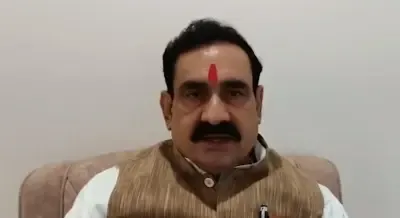
BJP MLA Rameshwar Sharma sparked a separate row, saying Muslim men could attend Garba only if they came 'permanently,' chanted 'Jai Shri Ram,' and applied a tilak.
Congress MLA Arif Masood condemned Sharma's remarks as offensive.
Sharad Navratri 2026 is scheduled to begin on 11 October , and the controversy is expected to intensify ahead of the festival.
The BJP state leadership has not issued any clarifying or distancing statement following the remarks.
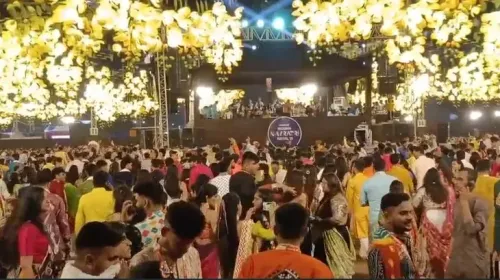
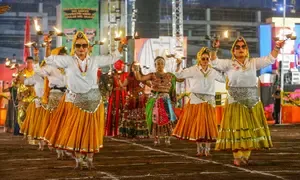
A political controversy over the participation of non-Hindus in Garba events has erupted in Madhya Pradesh ahead of Sharad Navratri, after successive remarks by Bharatiya Janata Party (BJP) legislators reignited a familiar debate around religious identity and access to Hindu festivals. The row centres on calls for identity verification at Garba venues and demands to bar non-Hindus from pandals.
What the BJP MLAs Said
Mhow MLA Usha Thakur backed Hindu organisations demanding restrictions on Garba participation, arguing that the traditional dance must retain its religious character. 'This demand of the Hindu organisations is very appropriate. Garba should never be professional. Garba is a festival of worshipping the power of Goddess Durga,' Thakur said.
Thakur alleged that some individuals enter Garba venues by concealing their identity — including by wearing a tilak and tying a kalava (sacred thread) — and claimed such persons mislead Hindu women. She called for formal identity checks at Garba pandals and demanded that non-Hindus be barred from entry. She also urged the Sanatani community to study scriptures and said women should be prepared to 'protect religion, culture and the nation.'
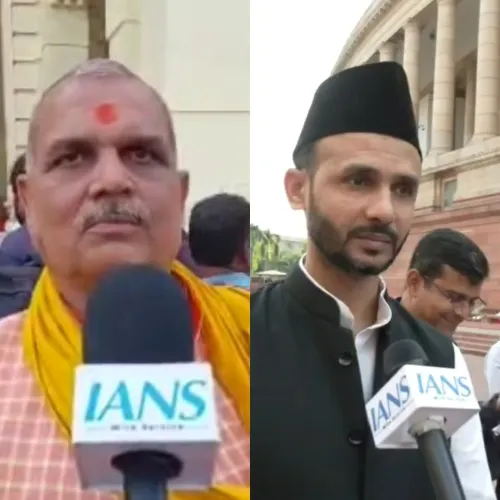
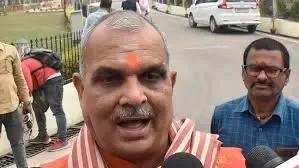
Her remarks came a day after BJP MLA Rameshwar Sharma sparked a separate controversy at a public programme in Bhopal. Sharma questioned why Muslim men wished to attend Garba without their sisters or daughters and said participation would be permissible only if they came 'permanently,' chanted 'Jai Shri Ram,' and applied a tilak. He further warned against attempts to turn Garba into a spectacle and invoked the term 'Love Jihad,' saying the youth were ready to retaliate.
Opposition Response
Congress MLA Arif Masood criticised Sharma's remarks, describing the language as offensive. The Congress has not yet issued a formal party-level statement, but Masood's response signals that the issue is likely to be pressed in political forums in the run-up to the festival.
Context and Pattern
This is not the first time the question of non-Hindu participation in Garba has entered political discourse in Madhya Pradesh or elsewhere in India. Similar controversies have surfaced during Navratri seasons in recent years, often driven by statements from ruling-party legislators or Hindu nationalist organisations, and frequently coinciding with campaign cycles or electoral calendars. Notably, the remarks this year come weeks before Sharad Navratri, which is scheduled to begin on 11 October 2026.
Critics argue that repeated statements of this nature, particularly by elected representatives, risk deepening communal polarisation around a widely celebrated festival. Supporters of the restrictions contend that Garba, as a religious observance linked to Goddess Durga, should be governed by the norms of the community that practices it.
What Happens Next
With Sharad Navratri still weeks away, the controversy is expected to intensify as local Hindu organisations and political actors stake out positions. Whether the Madhya Pradesh government issues any administrative guidance on participation norms at Garba venues remains to be seen. The BJP state leadership has not issued a clarifying statement distancing itself from or endorsing the remarks.
Point of View
Generating heat without the party leadership weighing in either way. The silence from the top is itself a calculation. What gets lost in the cycle is any substantive discussion of what, if any, lawful administrative framework governs access to public or semi-public festival spaces — a question courts have occasionally been asked to adjudicate. For Madhya Pradesh, a state the BJP has governed for most of the past two decades, the recurrence of this row each autumn raises a pointed question: is this drift, or is it deliberate mobilisation?
NationPress
22 Sept 2026
Frequently Asked Questions
What did BJP MLA Usha Thakur say about Garba participation?
Thakur backed Hindu organisations' demands for restrictions on Garba participation, called for identity verification at Garba venues, and demanded that non-Hindus be barred from entering Garba pandals. She also alleged that some individuals disguise their identities by wearing a tilak and tying a sacred thread to gain entry.
What did BJP MLA Rameshwar Sharma say about Muslim men attending Garba?
Sharma said Muslim men could attend Garba only if they came 'permanently,' chanted 'Jai Shri Ram,' and applied a tilak. He also warned against using Garba events for what he described as 'Love Jihad' and said the youth were ready to retaliate.
When does Sharad Navratri 2026 begin?
Sharad Navratri 2026 is scheduled to begin on 11 October. The nine-night Hindu festival is celebrated across India and is marked by Garba and other devotional events.
How has the opposition responded to the BJP leaders' remarks?
Congress MLA Arif Masood described Rameshwar Sharma's language as offensive. The Congress has not yet issued a formal party-level statement, but the remarks are expected to be raised in political forums ahead of the festival.
Has this controversy occurred before in Madhya Pradesh?
Yes. Disputes over non-Hindu participation in Garba have surfaced in Madhya Pradesh and other states during previous Navratri seasons, often driven by statements from BJP legislators or Hindu nationalist organisations. The pattern of pre-Navratri controversy recurs with notable regularity.