Jamshedpur Navratri row: identity checks at Dandiya-Garba events spark debate
Synopsis
Jamshedpur's Navratri celebrations have become a flashpoint over identity checks and non-Hindu participation at Dandiya-Garba events. With MLA Saryu Roy publicly questioning whether non-believers should be admitted and Hindu organisations demanding stricter verification, the local dispute mirrors a wider, recurring national tension between religious tradition and inclusive public culture.
Key Takeaways
Identity cards were checked at Dandiya and Garba Night events in Jamshedpur during Navratri , sparking a city-wide controversy.
Jamshedpur West MLA Saryu Roy publicly questioned whether non-Hindus should be permitted to participate in religiously themed events.
A dispute at an amusement park in Bistupur over an alleged name discrepancy briefly caused commotion at a Dandiya venue.
The Hindu Utsav Samiti and other organisations have demanded mandatory identity verification and clearer administrative guidelines.
Religious groups have also raised objections to the commercialisation of Dandiya events, citing the spread of DJ party culture at religious celebrations.
The district administration has not yet issued formal guidelines as of 16 October 2026 .
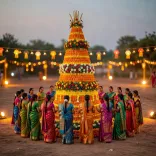
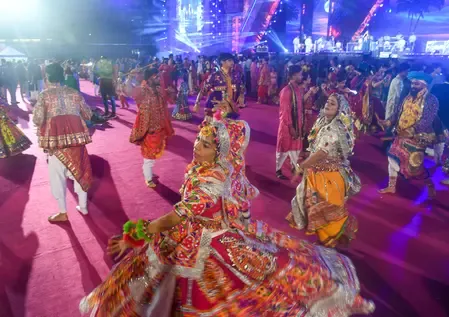
A sharp controversy has broken out in Jamshedpur, Jharkhand, over Dandiya and Garba Night events held during Navratri, centring on identity verification at event entrances, the participation of non-Hindus, and what organisers describe as the commercialisation of a religious festival. The dispute has drawn in a sitting legislator, Hindu organisations, and the district administration, widening into a broader debate over religious traditions and social harmony in the steel city.
What Triggered the Controversy
The controversy escalated after identity cards were reportedly checked at the entrances of several Dandiya and Garba events across the city during Navratri. According to media reports, a dispute arose at an event held at an amusement park in Bistupur after an alleged discrepancy emerged between the name given by a youth and the name on his identity card. The incident briefly caused commotion at the venue.
The Hindu Utsav Samiti and allied organisations have sought mandatory verification at such events, citing apprehensions that some individuals may attempt to enter by concealing their identities.
What Jamshedpur West MLA Saryu Roy Said
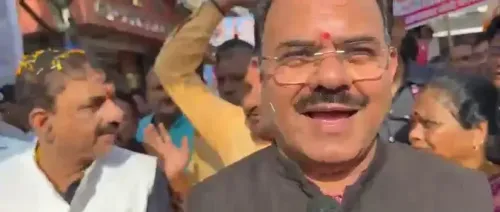
Jamshedpur West MLA Saryu Roy described Dandiya as a Hindu religious celebration and called on the administration to weigh the potential impact of such events on social harmony. In a social media post, Roy stated that Garba and Dandiya are directly linked to Navratri and the worship of Goddess Durga. He said some residents had approached him seeking his intervention to secure administrative permission for a Dandiya Night event, following which he drew the attention of the relevant officials to the matter.
Roy also urged organisers not to reduce a religious festival to 'merely an entertainment event', and asked the administration to consider whether participation in such events can be granted to those who, in his words, have no faith in the Hindu religion or do not worship Goddess Durga. He further raised questions about the potential impact on social harmony, referencing religious identity and family beliefs.
Commercialisation Concerns and Religious Organisations' Demands
Beyond participation, religious organisations have separately raised objections to what they describe as the commercialisation of traditional Dandiya celebrations. Some groups have alleged that events are increasingly resembling DJ parties and nightclub culture, diluting their religious character.
These organisations have urged the district administration to issue clear guidelines for such programmes and to strengthen identity verification and security arrangements at venues.
Administration Faces a Delicate Balancing Act
The district administration now finds itself navigating competing pressures: maintaining law and order, preserving social harmony, and responding to demands from religious organisations for stricter controls. The episode is not isolated — similar controversies over identity checks at Garba and Dandiya events have surfaced in several other Indian cities in recent years during Navratri, reflecting a recurring national pattern where cultural celebrations intersect with questions of religious identity and public access.
Critics argue that identity-based exclusion from public cultural events raises concerns about inclusivity and communal relations, while proponents contend it is a matter of preserving the sanctity of a religious tradition. As of 16 October 2026, no formal administrative order or guideline has been issued by the Jamshedpur district administration, and the debate continues to widen.
Point of View
If formalised as administrative policy, would raise serious constitutional questions about equality in public spaces. The commercialisation grievance is more sympathetic and widely shared, but bundling it with demands for religious screening muddies a legitimate cultural concern. The administration's silence so far amounts to tacit permission for the pressure to build — a posture that rarely ends with tensions cooling.
NationPress
16 Oct 2026
Frequently Asked Questions
What is the Jamshedpur Dandiya-Garba controversy about?
The controversy in Jamshedpur centres on identity checks being conducted at Dandiya and Garba Night events during Navratri, with some organisations and MLA Saryu Roy questioning whether non-Hindus should be allowed to participate. A separate but related dispute concerns the commercialisation of these traditionally religious celebrations.
What did MLA Saryu Roy say about Dandiya and Garba events?
Saryu Roy, the Jamshedpur West MLA, described Dandiya as a Hindu religious celebration and asked the district administration to consider whether participation could be granted to those who do not profess the Hindu faith or worship Goddess Durga. He also urged organisers not to reduce the religious festival to a mere entertainment event.
What happened at the Bistupur amusement park event?
According to media reports, a dispute arose at a Dandiya event held at an amusement park in Bistupur after an alleged discrepancy was noticed between the name a youth provided and the name on his identity card. The incident briefly caused commotion at the venue.
What are Hindu organisations demanding from the administration?
The Hindu Utsav Samiti and other organisations have demanded mandatory identity verification at Dandiya and Garba events, clearer administrative guidelines for such programmes, and stronger security arrangements. They have also raised concerns about events adopting a DJ party format that they say undermines the religious character of Navratri celebrations.
Has the Jamshedpur administration responded to the controversy?
As of 16 October 2026, no formal guidelines or administrative orders have been issued by the Jamshedpur district administration. Officials face the challenge of balancing demands from religious organisations with their mandate to maintain law and order and prevent the controversy from escalating further.