BJP: Kejriwal Fears Chadha Will Expose AAP Secrets After 7 MPs Quit
Synopsis
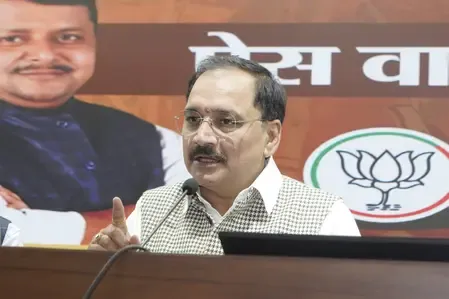
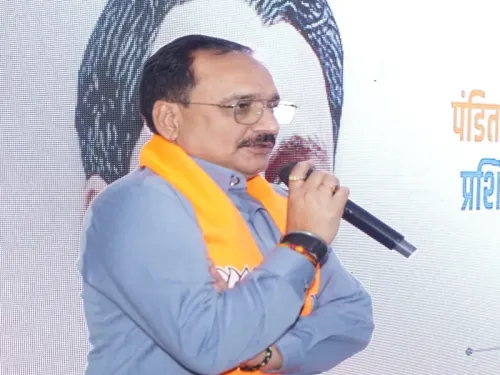
Delhi BJP chief Virendra Sachdeva claims Kejriwal's panic over Raghav Chadha and six AAP MPs joining BJP is rooted in fear — not political loss. Sachdeva alleges Chadha holds explosive secrets on AAP's foreign funding, liquor scam, and Punjab corruption, while calling the 'Right to Recall' demand an unconstitutional gimmick.
Key Takeaways
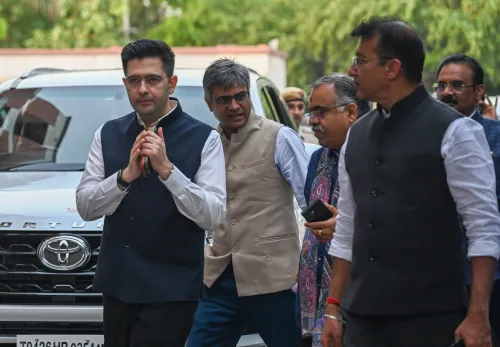
Raghav Chadha and six other AAP Rajya Sabha MPs initiated the process of joining BJP on Friday, April 25, 2025 .
Delhi BJP President Virendra Sachdeva alleged that Kejriwal fears Chadha will expose secrets related to AAP's foreign funding , the Delhi liquor scam , and Punjab corruption .
Punjab CM Bhagwant Mann's demand for a 'Right to Recall' MPs was dismissed by Sachdeva as unconstitutional, as no such provision exists in the Indian Constitution .
Sachdeva raised fresh allegations about 'Sheesh Mahal 2' — a bungalow in Delhi's Lodhi Estate — where Kejriwal allegedly used a private company for beautification after receiving government renovation funds.
The original 'Sheesh Mahal' controversy involved alleged misuse of over Rs 60 crore of public money in renovating Kejriwal's official Chief Minister's residence.
Sachdeva claimed Kejriwal has been avoiding direct media interaction since Friday, instead deploying Sanjay Singh , Bhagwant Mann , and Saurabh Bharadwaj to handle the fallout.
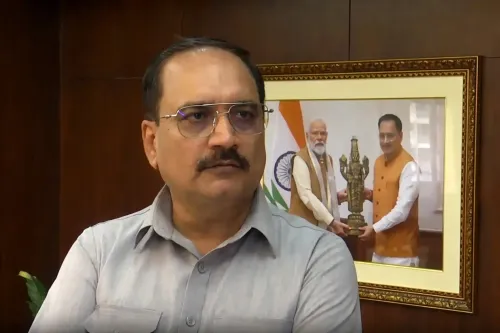
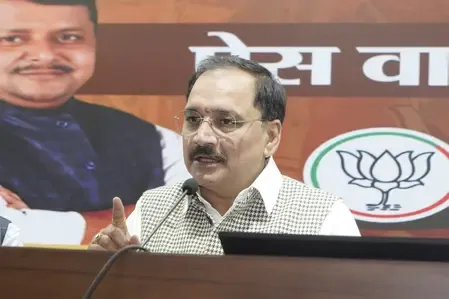
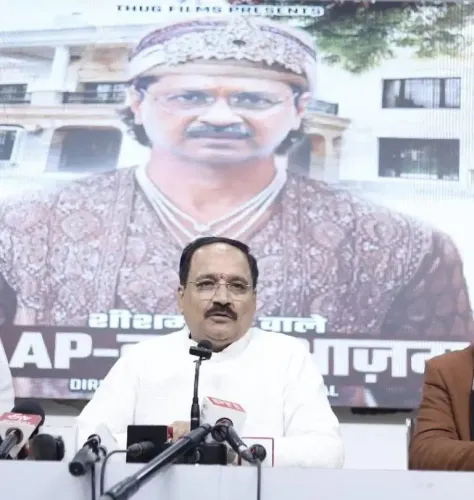
New Delhi, April 25: Delhi BJP President Virendra Sachdeva on Saturday launched a sharp attack on AAP National Convenor Arvind Kejriwal, alleging that his visible frustration following the exit of seven Rajya Sabha MPs — including Raghav Chadha — stems not from political loss but from fear of explosive revelations. Sachdeva claimed Chadha possesses critical knowledge of alleged financial and administrative irregularities committed during Kejriwal's tenure as Delhi Chief Minister, and that Kejriwal is desperate to prevent these secrets from surfacing.
AAP's 'Right to Recall' Demand Slammed as Unconstitutional Gimmick
Punjab Chief Minister Bhagwant Singh Mann had sought an appointment with President Droupadi Murmu to demand the "recall" of the seven MPs who initiated the process of joining the BJP on Friday, April 25. Sachdeva dismissed this move as a political stunt, categorically stating that no provision exists in the Indian Constitution for recalling elected Members of Parliament.
"Talking about a non-existent Right to Recall is nothing but a gimmick to intimidate MPs who chose to follow their conscience," Sachdeva said, adding that Kejriwal has been deliberately avoiding direct media interaction since Friday, instead deploying MP Sanjay Singh, Mann, and Saurabh Bharadwaj as proxies to mount pressure on the departing legislators.
This comes amid a broader pattern of AAP's internal turbulence. The party, which once positioned itself as an anti-corruption movement, has faced sustained allegations of financial misconduct — most prominently the Delhi liquor policy scam of 2023, which resulted in Kejriwal's arrest and subsequent bail proceedings that drew national attention.
What Sachdeva Says Kejriwal Is Actually Afraid Of
The Delhi BJP chief went beyond the surface-level political narrative, alleging that AAP's top brass — including Kejriwal, Sanjay Singh, and Saurabh Bharadwaj — are not grieving the loss of long-time colleagues but are gripped by fear of what those colleagues might now disclose.
Sachdeva specifically listed four sensitive areas he claims Chadha and the other MPs could shed light on: AAP's foreign funding sources, alleged links with terrorist organisations, fund collection mechanisms in Punjab, and details of the Delhi liquor scam. These are serious charges, and while BJP has raised them before, the departure of senior insiders gives them renewed political weight.
Notably, all seven MPs who quit are described by Sachdeva as "reputed and well-educated individuals" who had reportedly been feeling suffocated within the party structure — particularly after corruption allegations against Punjab ministers became public. Their simultaneous resignation signals a coordinated and considered decision, not an impulsive break.
The 'Sheesh Mahal 2' Controversy: New Allegations Against Kejriwal
Sachdeva also raised fresh allegations surrounding what he termed "Sheesh Mahal 2" — a reference to a government bungalow in Delhi's Lodhi Estate that Kejriwal allegedly occupied for a period after vacating his official Chief Minister's residence, popularly dubbed "Sheesh Mahal".
In the original Sheesh Mahal case, Sachdeva alleged that over Rs 60 crore of public money was misused in renovation and furnishing of Kejriwal's official residence. In the newer case, he claimed that after receiving a fresh house allotment and government renovation funds, Kejriwal had additional beautification and furnishing work carried out through a private company — which Sachdeva described as "setting a new benchmark of corruption."
The Sheesh Mahal controversy had previously become a significant electoral issue during the 2025 Delhi Assembly elections, with BJP using it extensively in campaign messaging. The BJP's landslide victory in those elections is widely attributed, in part, to public anger over perceived AAP hypocrisy on austerity — a party that rose to power promising frugal governance but faced allegations of lavish spending by its leadership.
Seven MPs and the Bigger Political Realignment
The defection of Raghav Chadha and six other AAP Rajya Sabha MPs represents one of the most significant internal ruptures in the party's history. AAP, founded in 2012 out of the Anna Hazare-led anti-corruption movement, built its identity on moral politics and clean governance. The simultaneous departure of seven Upper House members fundamentally challenges that narrative.
For BJP, the political gains are multi-layered. Beyond the immediate optics of AAP's collapse, absorbing these MPs — several of whom have national profiles — strengthens the party's presence in the Rajya Sabha and potentially provides insider testimony on AAP's governance record in both Delhi and Punjab.
For AAP, the stakes are existential in the short term. With Kejriwal no longer Chief Minister of Delhi following the party's defeat in early 2025, and Punjab being its only major state in power, any further erosion of credibility or leadership could accelerate the party's political decline ahead of the 2027 Punjab Assembly elections.
What Happens Next
Political observers will be watching closely whether the seven MPs formally complete their induction into BJP, and whether any of them make public statements detailing their reasons for leaving AAP. Any such disclosures could trigger fresh legal and political scrutiny of AAP's finances and governance record.
Meanwhile, AAP's move to seek a Presidential audience over the "Right to Recall" — a constitutionally non-existent mechanism — is likely to be rejected on procedural grounds, potentially deepening the party's credibility crisis. The coming weeks will test whether AAP can stabilise its leadership narrative or whether this defection marks the beginning of a larger unravelling.
Point of View
Born from an anti-corruption agitation, now faces its most credible insiders potentially testifying against its own governance record. Kejriwal's decision to send proxies to the media rather than face questions himself speaks volumes about the depth of political damage. If even a fraction of the alleged disclosures — on foreign funding, liquor scam details, or Punjab's financial irregularities — materialise publicly, AAP's viability as a national alternative faces a reckoning it may not survive intact.
NationPress
1 Oct 2026
Frequently Asked Questions
Why did Raghav Chadha and six AAP MPs quit the party?
Raghav Chadha and six other AAP Rajya Sabha MPs initiated the process of joining BJP on April 25, 2025. Delhi BJP chief Sachdeva stated they had been feeling suffocated within AAP for a long time, particularly after the 2023 Delhi liquor scam and Punjab corruption allegations came to light.
What is the 'Right to Recall' demand made by AAP?
Punjab CM Bhagwant Mann sought a meeting with President Droupadi Murmu to demand the 'recall' of the seven MPs who left AAP. However, BJP's Sachdeva pointed out that no such provision exists in the Indian Constitution, calling it a political gimmick to intimidate the departing MPs.
What is the 'Sheesh Mahal 2' controversy involving Kejriwal?
Delhi BJP chief Sachdeva alleged that Kejriwal occupied a government bungalow in Lodhi Estate — dubbed 'Sheesh Mahal 2' — and had private beautification and furnishing work done through a private company after receiving government renovation funds. The original 'Sheesh Mahal' controversy involved alleged misuse of over Rs 60 crore in public funds.
What secrets does BJP claim Raghav Chadha could reveal about AAP?
Delhi BJP President Sachdeva alleged that Chadha has knowledge of AAP's foreign funding sources, alleged links with terrorist organisations, fund collection in Punjab, and details of the Delhi liquor scam. These claims have not been independently verified but carry heightened political significance given Chadha's senior position in AAP.
How significant is this defection for AAP as a political party?
The exit of seven Rajya Sabha MPs simultaneously is one of the most serious internal crises in AAP's history since its founding in 2012. With AAP already out of power in Delhi after losing the 2025 Assembly elections, this defection further weakens the party ahead of the crucial 2027 Punjab elections.