BJP's Sachdeva: Kejriwal Turned AAP Into Personal Dictatorship
Synopsis
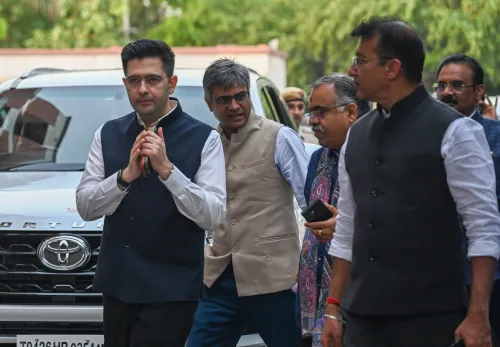
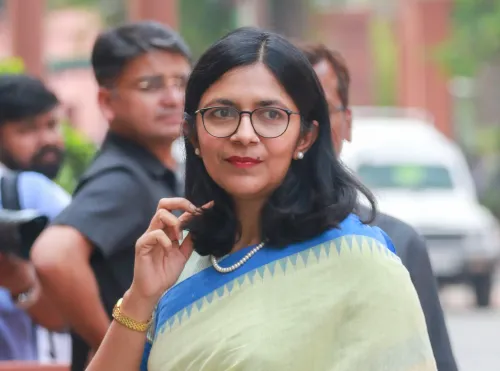
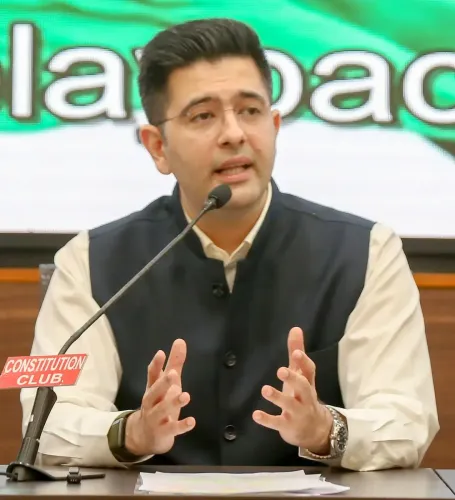
In a stunning political earthquake, 7 of AAP's 10 Rajya Sabha MPs — including Organisation General Secretary Sandeep Pathak, Raghav Chadha, and Swati Maliwal — merged with BJP on April 24. Delhi BJP chief Sachdeva called it proof that Kejriwal transformed a reform movement into a one-man dictatorship, raising urgent questions about AAP's survival.
Key Takeaways
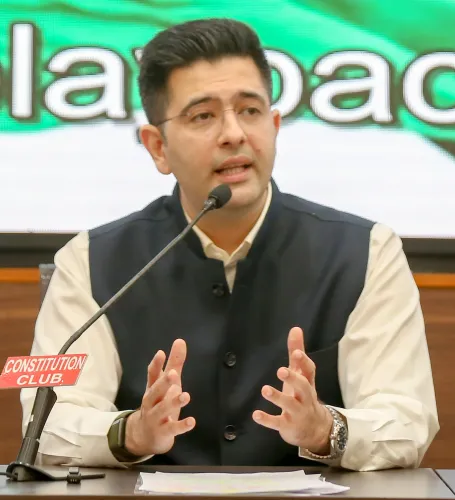
Seven of AAP's ten Rajya Sabha MPs , including Sandeep Pathak , Raghav Chadha , and Swati Maliwal , formally merged with the BJP on April 24, 2025 .
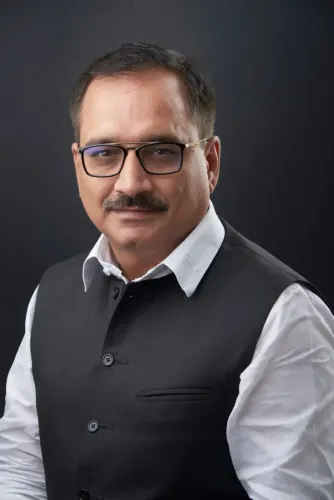
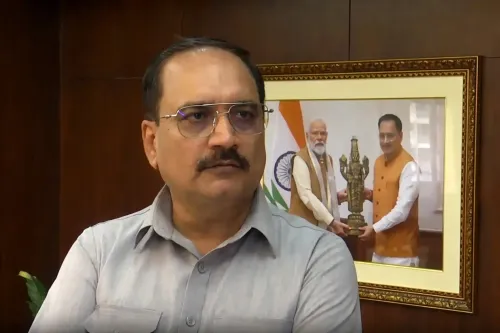
Delhi BJP President Virendra Sachdeva accused Arvind Kejriwal of transforming from a party convener into a dictator, driving away founding members through misuse of power and corruption.
Sandeep Pathak 's resignation as AAP's Organisation General Secretary is seen as the most symbolically devastating blow, indicating ideological abandonment at the party's core.
Sachdeva alleged that Kejriwal has been exploiting Punjab 's industry and farmers for over four years to fund political expansion in Gujarat and Goa , while the state's youth suffer from drug addiction.
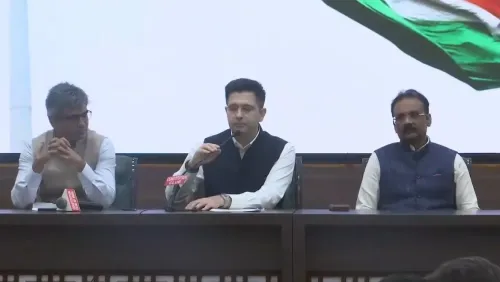
BJP spokesperson Praveen Shankar Kapoor criticised AAP MP Sanjay Singh for calling the departing leaders traitors, noting that Chadha , Pathak , and Maliwal each dedicated 15 years to the party.
The defections come after AAP lost power in Delhi in the February 2025 Assembly elections , raising urgent questions about the party's survival as a national political force.
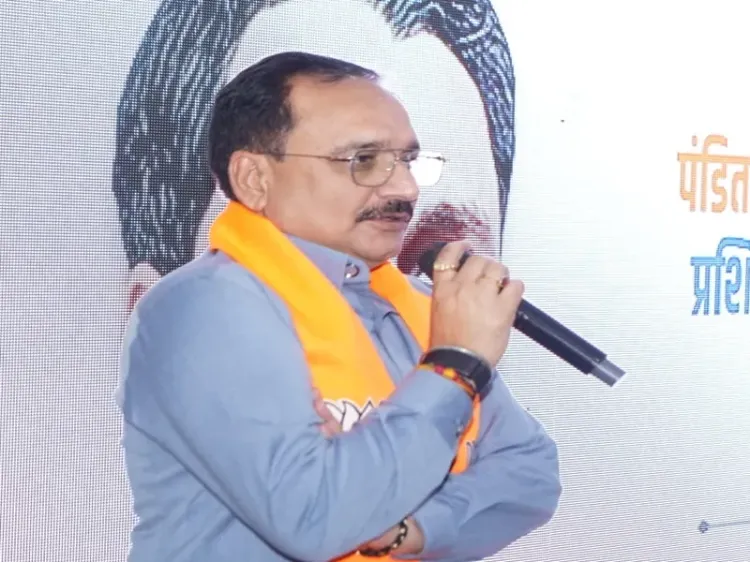
New Delhi, April 24: Delhi BJP President Virendra Sachdeva launched a scathing attack on Aam Aadmi Party convener Arvind Kejriwal on Friday, April 25, accusing him of transforming a once-promising political movement into a personal autocracy. Sachdeva's remarks came on the same day that seven of AAP's ten Rajya Sabha MPs — including prominent figures Raghav Chadha, Sandeep Pathak, and Swati Maliwal — formally announced their merger with the Bharatiya Janata Party, marking one of the most dramatic collapses of a regional political outfit in recent Indian political history.
Sachdeva's Broadside: From Convener to Dictator
Virendra Sachdeva said that Kejriwal had originally positioned himself as a crusader for political change when he founded the Aam Aadmi Party, but swiftly mutated from a party convener into an unchecked dictator. He argued that Kejriwal weaponised power and dragged the party into a vortex of corruption, driving away its own founding members one by one.
Sachdeva noted that founding figures ranging from Shashi Bhushan to Raghav Chadha had progressively distanced themselves from Kejriwal — a pattern, he said, that is impossible to dismiss as coincidence. The Delhi BJP President described Kejriwal's decade-long governance of Delhi as a calculated model of exploitation designed primarily to expand his personal political footprint.
Punjab Angle: Industry, Farmers, and the Drug Crisis
Sachdeva escalated his attack by alleging that for more than four years, Kejriwal has been systematically exploiting Punjab's industrial base and farming community to bankroll political campaigns in Gujarat and Goa. He further alleged that Punjab's youth are being pushed deeper into drug addiction under AAP's watch — a charge that resonates strongly given that Punjab has consistently ranked among India's most drug-affected states, according to government and civil society data.
This context is significant. AAP swept to power in Punjab in March 2022 on a core promise of eliminating the drug menace within the state. Critics and opposition parties have repeatedly questioned the party's delivery on this commitment, citing persistent reports of drug trafficking and addiction in border districts.
Sandeep Pathak's Exit: A Symbolic Blow to AAP's Core
Of all the departures, Sachdeva highlighted the resignation of Sandeep Pathak — AAP's Organisation General Secretary — as the most symbolically devastating. He argued that the Organisation General Secretary is, by definition, the custodian of a party's ideological soul, and that Pathak's exit signals that both the party and its convener have fundamentally abandoned their founding principles.
Pathak was not merely an administrator — he was the architect of AAP's organisational expansion across multiple states. His departure, alongside Raghav Chadha and Swati Maliwal, strips AAP of three of its most recognisable faces outside Delhi. Sachdeva called on Kejriwal to introspect and fundamentally reassess his leadership style in light of these mass defections.
BJP Spokesperson Targets Sanjay Singh's Response
Delhi BJP spokesperson Praveen Shankar Kapoor weighed in on AAP MP Sanjay Singh's press conference following the exodus, describing visible frustration and agitation on Singh's face. Kapoor criticised Singh for labelling former colleagues — Raghav Chadha, Sandeep Pathak, and Swati Maliwal — as traitors and invoking the party's supposed favours to them.
Kapoor pointedly noted that these three leaders had each dedicated 15 years of their lives to building AAP and Kejriwal's political career, only to be publicly insulted at the moment of their departure. He called it a reflection of the culture of ingratitude that has come to define the party's leadership.
Bigger Picture: What This Means for AAP's National Ambitions
This mass defection arrives at a particularly vulnerable moment for AAP. The party, which once harboured serious national ambitions and positioned itself as a pan-India alternative to both the BJP and the Congress, now faces an existential crisis of credibility. Having lost power in Delhi in the February 2025 Assembly elections, the departure of 7 out of 10 Rajya Sabha MPs further erodes its upper house presence and legislative influence.
Notably, the three departing MPs — Chadha, Pathak, and Maliwal — were not peripheral figures. They represented AAP's youth-driven, reform-oriented brand. Their exit raises serious questions about whether the party can retain relevance in Punjab, its only remaining state government, ahead of the next state elections. Political analysts suggest that the BJP's absorption of these MPs is as much a strategic move to weaken AAP in Punjab as it is an ideological realignment.
With AAP now reduced to a rump in the Rajya Sabha and under mounting pressure in Punjab, all eyes will be on whether Kejriwal can arrest the organisational freefall — or whether further defections are imminent in the weeks ahead.
Point of View
Participatory politics has, ironically, become a case study in centralised control and alleged one-man rule. The departure of Sandeep Pathak — the organisational spine of AAP — is the most damning indictment yet, because it suggests the rot is not peripheral but structural. For Indian democracy, the larger lesson is sobering: anti-establishment movements that fail to institutionalise internal democracy are condemned to replicate the very authoritarian tendencies they once promised to dismantle.
NationPress
28 Sept 2026
Frequently Asked Questions
Why did 7 AAP Rajya Sabha MPs join the BJP in April 2025?
Seven of AAP's ten Rajya Sabha MPs, including Sandeep Pathak, Raghav Chadha, and Swati Maliwal, announced their merger with the BJP on April 24, 2025, citing disillusionment with Arvind Kejriwal's leadership style and alleged corruption within the party. BJP leaders framed the move as a rejection of Kejriwal's authoritarian control over AAP.
Who is Sandeep Pathak and why does his resignation matter?
Sandeep Pathak served as AAP's Organisation General Secretary and was the principal architect of the party's expansion into states like Punjab, Gujarat, and Goa. His resignation is considered especially significant because, as the custodian of party ideology and structure, his exit signals a fundamental breakdown in AAP's organisational integrity.
What did Delhi BJP President Virendra Sachdeva say about Kejriwal?
Virendra Sachdeva accused Kejriwal of transforming from a party convener into a party dictator, alleging he misused power, encouraged corruption, and exploited Punjab's resources to fund political campaigns in other states. Sachdeva also alleged that AAP's governance has contributed to Punjab's worsening drug crisis.
How many Rajya Sabha MPs does AAP have left after the defections?
After the departure of seven MPs, AAP is left with only three Rajya Sabha members, significantly weakening its legislative presence in the upper house of Parliament. This comes shortly after the party also lost power in Delhi in the February 2025 Assembly elections.
What is the political impact of AAP's Rajya Sabha MPs joining BJP?
The defection strengthens BJP's numerical position in the Rajya Sabha while critically undermining AAP's national standing and its ability to influence legislation. It also raises serious questions about AAP's future in Punjab, its only remaining state government, ahead of the next assembly elections.