BJP Declares Firm Stand as Impeachment of CEC Gyanesh Kumar is Dismissed; Opposition Critiques Democratic Oversight
Synopsis
In a pivotal moment for Indian democracy, the Rajya Sabha Chairman's refusal to accept the Opposition's impeachment motion against CEC Gyanesh Kumar has sparked significant debate. While the BJP views this as a robust defense of constitutional integrity, the Opposition claims it undermines democratic principles.
Key Takeaways
Rajya Sabha Chairman's decision to reject the impeachment motion signifies a strong political stance.
The BJP and Shiv Sena view this as a defense of constitutional integrity.
The Opposition claims the rejection undermines democratic processes.
This incident marks a historic moment with a large number of MPs backing the impeachment motion.
Legislative provisions were crucial in the motion's formulation.
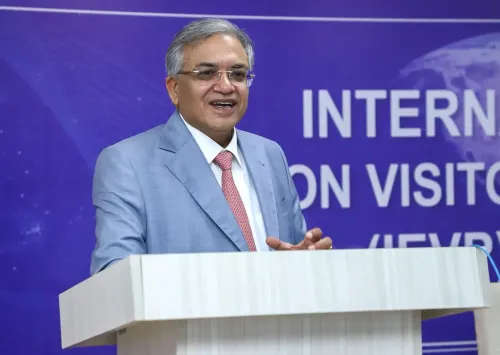
New Delhi, April 7 (NationPress) In a significant development, Rajya Sabha Chairman C.P. Radhakrishnan has dismissed the Opposition's impeachment motion against Chief Election Commissioner Gyanesh Kumar. This decision has been hailed by the BJP and Shiv Sena as a robust response to those allegedly exploiting constitutional provisions for political purposes. In contrast, the Opposition has voiced concerns that the democratic process has been sidelined.
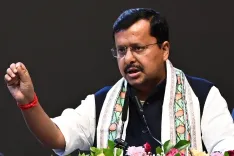
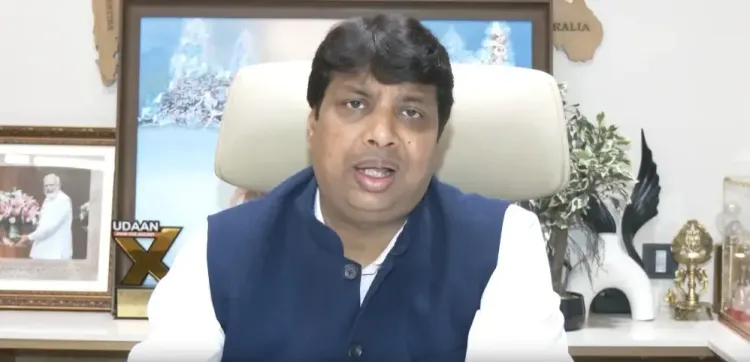
BJP leader Rohan Gupta emphasized that this action sends a clear signal that constitutional processes must not be manipulated for political advantage. He stated, “This is a strong response to those who profess to uphold the Constitution while engaging in self-serving politics. Just because something contradicts personal interests doesn't imply that the Constitution is under threat. Accusations should be substantiated with evidence, not leveraged for political gain,” Gupta remarked in a conversation with IANS.
Shiv Sena's Shaina NC echoed these views, criticizing the Opposition for relying heavily on rhetoric rather than factual evidence.
“The Opposition has merely resorted to rhetoric. Gyanesh Kumar has acted without wrongdoing; there has been no bias or partiality, only transparency,” Shaina NC asserted.
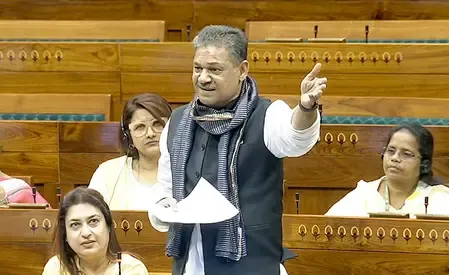
Conversely, Opposition leaders condemned the dismissal, labeling it a setback for democratic norms. RJD leader Manoj Jha remarked, “The impeachment motion was not simply dismissed; it highlights that the democratic process has been overlooked. Our Constitution allows for extraordinary measures in exceptional circumstances, and this is indeed an extraordinary situation. Historical observations from the Supreme Court affirm that parliamentary democracy must not be undermined or treated as a relic.”
This marks the inaugural instance where a notice for the removal of the Chief Election Commissioner was filed, gathering signatures from 130 Lok Sabha MPs and 63 Rajya Sabha members.
Members were informed that a motion notice dated March 12, 2026, signed by 63 Rajya Sabha members under Article 324(5) of the Indian Constitution, in conjunction with Article 124(4) and Section 11(2) of the Chief Election Commissioner and Other Election Commissioners (Appointment, Conditions of Service and Term of Office) Act, 2023, along with the Judges (Inquiry) Act, 1968, had been submitted seeking Kumar’s removal.
After a thorough and impartial evaluation of all pertinent aspects, the Rajya Sabha Chairman exercised the authority under Section 3 of the Judges (Inquiry) Act, 1968, resulting in the non-admittance of the motion notice.
Additionally, Lok Sabha Speaker Om Birla also rejected the Opposition's motion aimed at the removal of Chief Election Commissioner Gyanesh Kumar, utilizing the powers granted to him under the Judges (Inquiry) Act, 1968, to dismiss the motion.
Point of View
This incident highlights the ongoing tension between political parties regarding democratic processes. The BJP's defense of constitutional integrity contrasts sharply with the Opposition's claims of sidelining democratic norms, reflecting a growing divide in Indian politics.
NationPress
16 Sept 2026
Frequently Asked Questions
What sparked the impeachment motion against CEC Gyanesh Kumar?
The Opposition initiated the impeachment motion against CEC Gyanesh Kumar, alleging misuse of constitutional provisions for political gain.
How did the BJP respond to the rejected impeachment motion?
The BJP, along with Shiv Sena, termed the rejection a strong response to political exploitation of constitutional mechanisms.
What did the Opposition leaders say about the dismissal?
Opposition leaders criticized the dismissal as a blow to democratic procedures and claimed it overlooked essential democratic principles.
What is the significance of the motion being signed by multiple MPs?
The motion was notably signed by 130 Lok Sabha MPs and 63 Rajya Sabha members, marking a significant political action in seeking the CEC's removal.
What legislative provisions were cited in the motion?
The motion referenced Article 324(5) of the Constitution and various acts concerning the appointment and conditions of service of Election Commissioners.