Brazil court orders probe into foreign election meddling by Meta, X
Synopsis
Brazil's Supreme Federal Court has named Meta and Elon Musk's X in a Federal Police probe over alleged algorithm manipulation in the presidential election — with the investigation also eyeing foreign funding links to US conservative group Rockbridge Network and possible ties to Brazil's critical minerals sector. The order, issued days after Lula's runoff win, sets up a landmark test of platform accountability in Latin America's largest democracy.
Key Takeaways
Brazil's Supreme Federal Court ordered the Federal Police to investigate foreign interference in the presidential election on 28 October .
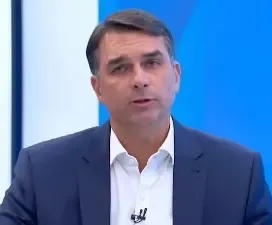
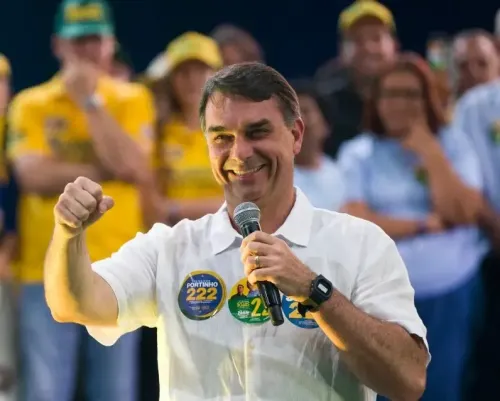
The probe targets alleged algorithmic manipulation on platforms owned by Meta and Elon Musk's X , reportedly to favour Flavio Bolsonaro over President Lula .
Rockbridge Network , a US-based conservative group reportedly linked to the Republican Party, is under scrutiny for allegedly funnelling funds to Bolsonaro's campaign — a violation of Brazilian electoral law.
The investigation also covers political ad buys via foreign platforms such as Polymarket and potential ties to foreign interests in Brazil's critical minerals and rare earths sector.
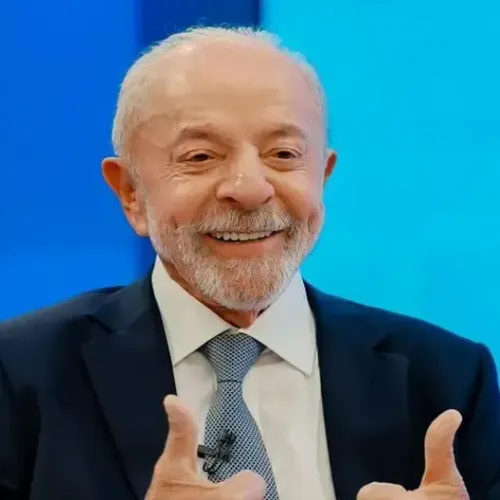
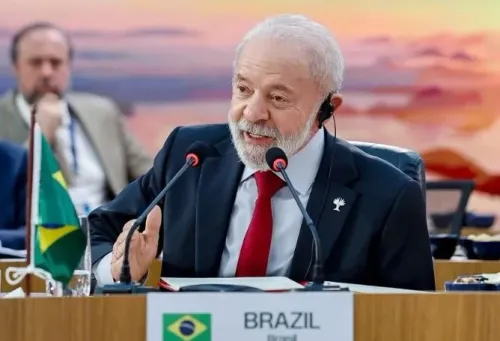
Lula da Silva won the runoff to secure a fourth presidential term, defeating Liberal Party candidate Bolsonaro who had led after the first round.
Brazil's Supreme Federal Court has directed the Federal Police to launch a formal investigation into possible foreign interference in the country's presidential election, following signs that algorithms on major digital platforms were deliberately skewed to influence the outcome. The order was issued by Justice Flavio Dino on 28 October, days after incumbent President Luiz Inácio Lula da Silva of the Workers' Party (PT) defeated Liberal Party candidate Flavio Bolsonaro in a runoff vote to secure a fourth term in office.
What the Court Order Covers
Justice Dino stated that evidence points to an 'intensification in indications of foreign interference in the electoral process.' The probe specifically targets alleged algorithmic manipulation on platforms owned by Meta — the parent company of WhatsApp, Facebook, and Instagram — and X, the social media platform owned by tech billionaire Elon Musk. According to the court order, the manipulation reportedly benefited Bolsonaro's campaign while handicapping Lula's.
The investigation will also examine the purchase of political advertising and election-related bets placed through foreign platforms, including the prediction market Polymarket. Critically, the probe extends to potential links between political financing and foreign economic interests in Brazil's critical minerals and rare earths sector — a detail that adds a significant geopolitical dimension to the case.
Foreign Funding Allegations and Key Suspects
Justice Dino flagged that Bolsonaro's campaign may have received foreign funding, which is prohibited under Brazilian electoral law. Suspicion centres on alleged dealings between the Rockbridge Network — a US-based conservative organisation reportedly tied to the Republican Party — and two Brazilian businessmen: Tallis Gomes and Pedro Sang, with Sang reportedly serving as the network's chief executive in Brazil.
The court order follows formal complaints lodged by the ruling Workers' Party and the right-wing Mission Party, whose presidential candidate Renan Santos was eliminated in the first round of voting.
Lula's Win and His Political Journey
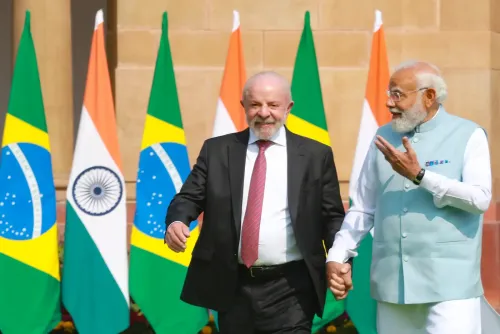
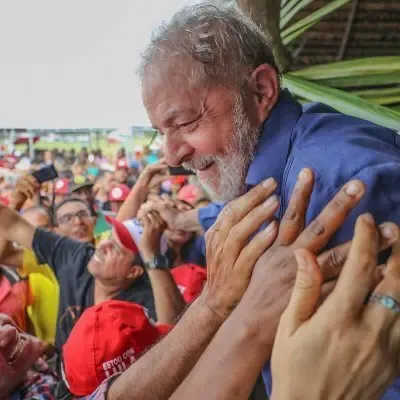
The election result that triggered the court order saw Lula stage a comeback victory, defeating Bolsonaro — who had led after the first round — to win a fourth presidential term. Born in October 1945 in northeastern Brazil, Lula rose from a poor rural family to become a trade union leader and a prominent voice against military rule in the early 1970s. In 1980, he co-founded the Workers' Party.
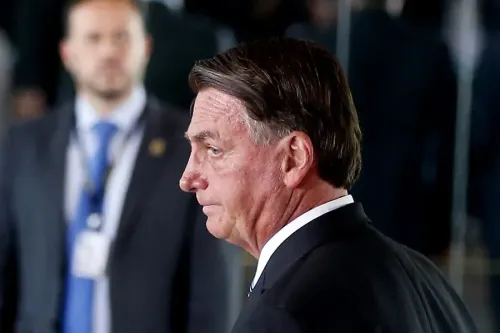
Lula first won the presidency in a 2002 landslide, becoming Brazil's first head of state from a working-class background. He was re-elected in 2006, with his flagship Bolsa Família cash transfer programme credited with lifting millions of Brazilians out of poverty. His political career was subsequently derailed by Operation Car Wash, the sweeping anti-corruption investigation launched in 2014 that led to his conviction and imprisonment — before Brazil's Supreme Federal Court annulled all corruption charges against him in March 2021. His 2022 return to power, defeating then-President Jair Bolsonaro, made him the first Brazilian president elected to three terms by popular vote.
Broader Implications
This is not the first time major tech platforms have faced scrutiny over their role in elections globally, but the explicit naming of Meta and X in a Supreme Court order marks a significant escalation in Brazil's approach to platform accountability. The investigation's scope — spanning algorithmic manipulation, foreign financing, and strategic interests in Brazil's natural resources — suggests authorities are treating this as a multi-layered threat rather than an isolated incident. The outcome of the probe could set a legal precedent with implications well beyond Brazil's borders.
Point of View
Suggesting that election meddling may have been instrumentalised to shape resource policy, not just politics. The Rockbridge Network thread also places the investigation in the context of a broader, coordinated global conservative funding architecture — one that has attracted regulatory attention in Europe and the US but rarely in the Global South. Whether Brazilian courts have the jurisdictional reach and technical capacity to compel disclosure from US-based platforms and groups will define how far this probe can actually go.
NationPress
28 Oct 2026
Frequently Asked Questions
Why has Brazil's Supreme Court ordered a probe into the presidential election?
Brazil's Supreme Federal Court issued the order after evidence emerged of alleged algorithmic manipulation on Meta and X platforms to benefit conservative candidate Flavio Bolsonaro and disadvantage President Lula, who won the runoff. Justice Flavio Dino cited an 'intensification in indications of foreign interference in the electoral process.'
Which companies and individuals are named in the investigation?
The probe names Meta — parent of WhatsApp, Facebook, and Instagram — and X, owned by Elon Musk. It also targets US-based conservative group Rockbridge Network and Brazilian businessmen Tallis Gomes and Pedro Sang, the latter reportedly serving as the group's CEO in Brazil.
Is foreign funding of Brazilian election campaigns illegal?
Yes. Foreign funding of political campaigns is prohibited under Brazilian electoral law. The probe will examine whether Bolsonaro's campaign received impermissible funds through links with the Rockbridge Network, a US-based group reportedly connected to the Republican Party.
What is Polymarket's role in the investigation?
The probe will examine the purchase of political advertising and election-related bets placed through Polymarket, a US-based prediction market platform, as part of a broader look at foreign financial flows into the Brazilian electoral process.
Who is Lula da Silva and how did he win a fourth term?
Luiz Inácio Lula da Silva is a veteran Brazilian leftist leader and co-founder of the Workers' Party, first elected president in 2002. After being convicted and later exonerated under Operation Car Wash, he defeated Jair Bolsonaro in 2022 and has now won a fourth term by defeating Flavio Bolsonaro in the latest runoff, despite Bolsonaro leading after the first round.