Is Poor Air Quality Driving CAQM to Seize EoL and BS-III Polluting Vehicles in NCR?
Synopsis
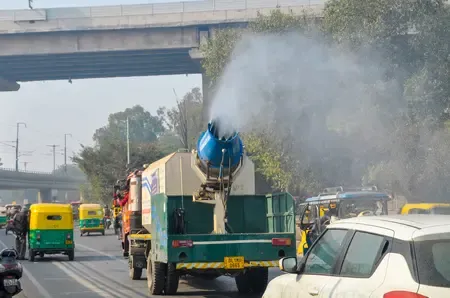
In a decisive move to combat pollution, the CAQM has ordered enforcement agencies to take strong action against outdated and polluting vehicles in NCR. The directive aims to improve air quality, reduce emissions, and promote the adoption of cleaner, zero-emission vehicles. This initiative is crucial for the region's environmental health.
Key Takeaways
CAQM mandates action against EoL and BS-III vehicles.
Delivery services can integrate BS-VI vehicles until 2026.
Supreme Court ruling influences enforcement actions.
Significant reduction in stubble burning incidents reported.
States to devise action plans for wheat residue management.
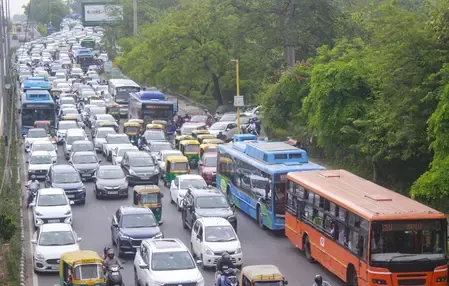
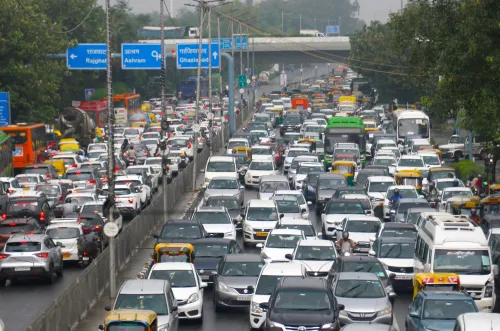
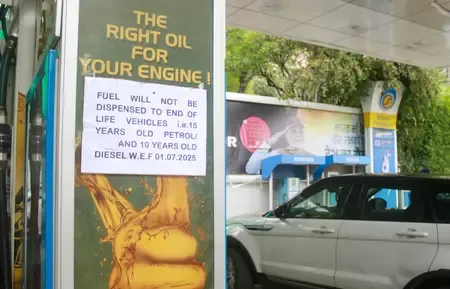
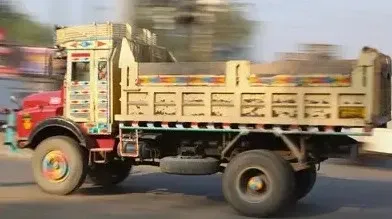
New Delhi, Dec 22 (NationPress) The Commission for Air Quality Management (CAQM) overseeing the NCR and surrounding regions has mandated enforcement agencies to implement strict measures against End-of-Life (EoL) and BS-III vehicles that do not meet current emission standards, as reported by an official.
The Commission has also approved the integration of BS-VI petrol two-wheelers into the existing fleets of delivery service providers and e-commerce companies until December 31, 2026, as stated in an announcement.
During a meeting led by Rajesh Verma, Chairperson of CAQM, it was reiterated that the induction of traditional Internal Combustion Engine (ICE) vehicles, including petrol and diesel units, will be prohibited for specified stakeholders beginning January 1, 2026. This is part of a larger initiative to promote the transition to zero-emission vehicles.
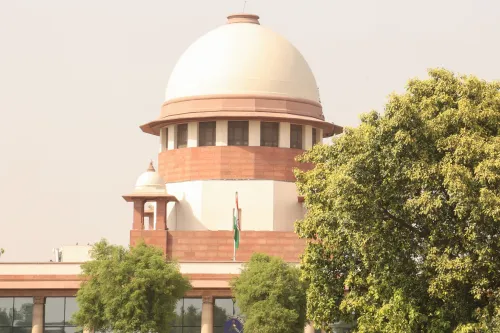
Regarding the enforcement of actions against EoL polluting vehicles, the Commission remarked, "Following the Supreme Court ruling dated December 17, 2025, protections against such actions remain for BS-IV and newer vehicles, but actions against the highly polluting BS-III and older vehicles are now allowed. Enforcement agencies are tasked with ensuring adherence to relevant directives."
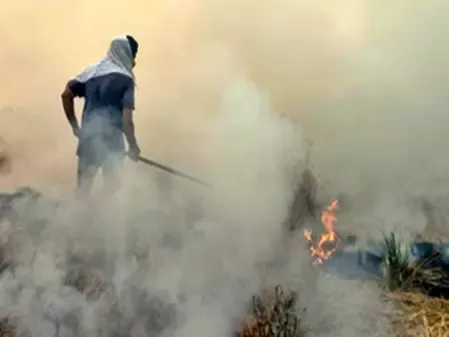
In its assessment of paddy stubble burning incidents in 2025, the Commission noted a remarkable decline attributed to enhanced monitoring and enforcement strategies, achieving about a 92% reduction in NCR compared to 2021.
"Additionally, states such as Punjab, Haryana, and Uttar Pradesh have been directed to formulate State Action Plans to monitor and enforce regulations against wheat residue burning for the 2026 harvest season, which will lead to the issuance of statutory directives," the CAQM statement mentioned.
The CAQM also evaluated the enforcement actions taken, including the status of industrial unit closures and resumptions by the Enforcement Task Force (ETF), along with the progress on complaints and prosecutions.
"The Commission emphasized the importance of persistent vigilance, coordinated enforcement, and effective implementation of statutory directions across all sectors, especially during winter," the statement concluded.
At the conclusion of the meeting, all agencies involved pledged to continuously review measures aimed at controlling air pollution and to take decisive action across various sectors, including under the Graded Response Action Plan (GRAP).
Point of View
The actions taken by the CAQM reflect a critical response to the ongoing air quality crisis affecting urban populations. The enforcement of stricter vehicle regulations is essential to mitigate pollution levels and promote sustainable practices. It is imperative that all stakeholders collaborate effectively to ensure the success of these initiatives.
NationPress
30 Sept 2026
Frequently Asked Questions
What is the CAQM's recent directive regarding vehicles?
The CAQM has directed enforcement agencies to take action against End-of-Life (EoL) and BS-III polluting vehicles to improve air quality in NCR.
What vehicles can delivery services introduce until 2026?
Delivery service providers can add BS-VI petrol two-wheelers to their fleets until December 31, 2026.
What is the significance of the Supreme Court ruling?
The Supreme Court ruling allows for enforcement actions against BS-III and older vehicles while protecting BS-IV and newer vehicles from such actions.
How effective have enforcement measures been against stubble burning?
There has been a 92% reduction in paddy stubble burning incidents in NCR, attributed to enhanced monitoring and enforcement.
What are the next steps for states regarding wheat residue burning?
States are required to prepare action plans for monitoring and enforcement against wheat residue burning for the 2026 harvest season.