Twisha Sharma death: CBI backs trial transfer from Bhopal, cites witness intimidation risk

Synopsis
The CBI has done something rare — it has formally sided with the victim's family in court. By telling the Supreme Court that a retired judge who is a co-accused could intimidate witnesses in the Twisha Sharma death case, the agency has all but made a judicial transfer from Bhopal to Delhi inevitable. The 19 November hearing is now the one to watch.
Key Takeaways
The CBI filed a counter-affidavit supporting transfer of the Twisha Sharma death case trial from Bhopal to Delhi .
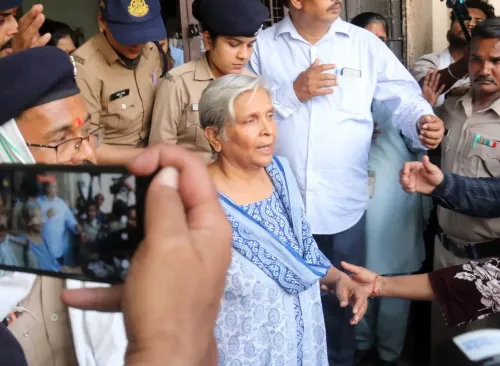
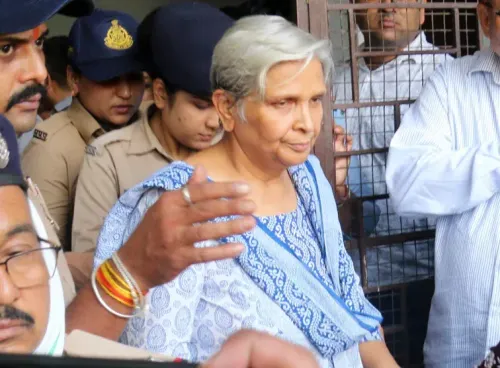
The agency stated that co-accused Giribala Singh , a retired Principal District and Sessions Judge, could influence proceedings and intimidate witnesses.
CBI alleged Giribala Singh obtained CCTV footage from a beauty parlour on 13 May 2026 , the day after Twisha's death, raising evidence-tampering concerns.
Twisha Sharma was found hanging at her matrimonial home in Bhopal on 12 May 2026 ; her husband Samarth Singh and mother-in-law Giribala Singh are accused.
A chargesheet was filed on 17 August 2026 ; the Supreme Court stayed the Bhopal trial on 16 October 2026 .
The transfer petition is next listed before the Supreme Court on 19 November 2026 .
The Central Bureau of Investigation (CBI) has formally backed the transfer of the criminal trial in the Twisha Sharma death case from Bhopal to Delhi, telling the Supreme Court that former judge Giribala Singh could influence proceedings and intimidate witnesses. The agency filed a counter-affidavit before the apex court on 30 October 2026, supporting the transfer petition filed by Twisha's father, Navnidhi Sharma.
CBI's Core Concern: An Influential Accused in Bhopal
In its affidavit, the CBI stated plainly: Giribala Singh, a retired Principal District and Sessions Judge, is an 'influential person' in Bhopal with the capacity to affect the fairness of trial proceedings. 'Respondent No. 2 Giribala Singh may influence the trial proceedings of the case and intimidate the witnesses of the case,' the CBI stated in its affidavit.
The agency underlined that at the time of the incident, Giribala Singh was serving as President of the District Consumer Disputes Redressal Commission, Bhopal — a position that, combined with her judicial career, gave her significant local clout. Her son, Samarth Singh, the deceased's husband and a co-accused, is a practising advocate in Bhopal, adding a further layer of concern about the fairness of local proceedings.
Evidence Tampering Allegations
The CBI went beyond the question of trial fairness, alleging that Giribala Singh interfered with evidence handling immediately after Twisha Sharma's death. According to the affidavit, the investigation established that she called a technician and obtained copies of CCTV footage relating to the relevant period.
Specifically, the CBI stated that on 13 May 2026 — the day after Twisha was found dead — Giribala Singh contacted the owner of Xpression Beauty Parlour to enquire about Twisha's visit the previous day and arranged for the relevant CCTV footage to be collected through certain persons. The agency said these circumstances reinforced concerns about her potential to tamper with evidence and witnesses during trial.
The Case: What Happened to Twisha Sharma
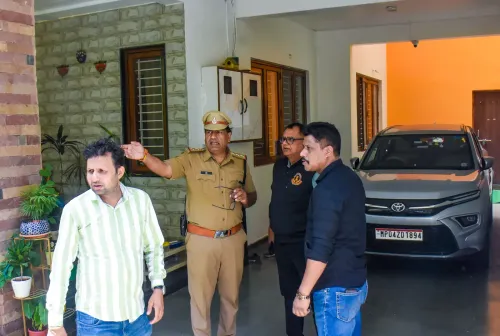
Twisha Sharma, a former model and actress, was found hanging at her matrimonial home in Bhopal on the night of 12 May 2026 and was declared brought dead at AIIMS Bhopal. An FIR was subsequently registered at Katara Hills police station against her husband Samarth Singh and mother-in-law Giribala Singh under the Bharatiya Nyaya Sanhita (BNS) and the Dowry Prohibition Act, alleging cruelty and harassment over dowry.
The Madhya Pradesh government transferred the investigation to the CBI, which re-registered the case on 25 May 2026 following the Supreme Court's suo motu cognisance. A chargesheet was filed on 17 August 2026 against both accused for offences under Sections 85, 108 and 3(5) of the BNS, with further investigation into dowry death and related aspects still ongoing.
Where the Trial Stands Now
The trial court had taken cognisance of the offences and proceedings had reached the stage of arguments on framing of charges, with the next hearing at the Bhopal court originally scheduled for 31 October 2026. However, the Supreme Court on 16 October 2026 stayed the ongoing Bhopal trial and issued notices to the CBI, Giribala Singh, and Samarth Singh on the transfer petition.
Twisha's father, Navnidhi Sharma, had sought transfer to a competent court in Delhi, expressing apprehension that his daughter would not receive a fair trial in Madhya Pradesh, citing the influence wielded by her mother-in-law and concerns over the initial investigation and bail proceedings.
On Friday, a bench comprising Chief Justice of India (CJI) Surya Kant and Justices Joymalya Bagchi and V. Mohana adjourned the matter. The transfer petition is tentatively listed for hearing on 19 November 2026, according to the Supreme Court's computerised case status portal.
What Happens Next
With the CBI formally endorsing the transfer — a significant development, given the agency is the investigating authority — the Supreme Court's decision on 19 November becomes pivotal. A transfer to Delhi would effectively remove the case from Giribala Singh's local sphere of influence and could accelerate the framing of charges. The court's eventual ruling will also test how the judiciary responds when a co-accused holds institutional ties to the very legal ecosystem in which a trial is set to unfold.
Point of View
Not merely rhetorical. The allegation that CCTV footage was sought the very day after the death, if proved, would suggest a degree of coordination that warrants more than a change of venue — it would raise questions about early-stage police inaction. The Supreme Court's handling of this case will be watched as a test of whether judicial accountability operates differently when the accused is a member of the legal fraternity.
NationPress
30 Oct 2026
Frequently Asked Questions
What is the Twisha Sharma death case?
Twisha Sharma, a former model and actress, was found hanging at her matrimonial home in Bhopal on 12 May 2026 and was declared dead at AIIMS Bhopal. Her husband Samarth Singh and mother-in-law Giribala Singh, a retired District Judge, were booked under the Bharatiya Nyaya Sanhita and the Dowry Prohibition Act for alleged cruelty and harassment over dowry.
Why is the CBI supporting the transfer of the trial from Bhopal to Delhi?
The CBI says co-accused Giribala Singh, a retired Principal District and Sessions Judge, is an influential figure in Bhopal who could intimidate witnesses and affect the fairness of trial proceedings. The agency also alleges she interfered with evidence — including CCTV footage — shortly after Twisha's death, compounding concerns about a fair local trial.
What evidence-tampering allegations has the CBI made against Giribala Singh?
According to the CBI's affidavit, Giribala Singh called a technician to obtain CCTV footage related to the period in question and, on 13 May 2026, contacted the owner of Xpression Beauty Parlour to enquire about Twisha's visit the previous day, arranging for the relevant footage to be collected through certain persons.
Where does the case currently stand in the Supreme Court?
The Supreme Court stayed the Bhopal trial on 16 October 2026 and issued notices to the CBI, Giribala Singh, and Samarth Singh. A bench of CJI Surya Kant and Justices Joymalya Bagchi and V. Mohana adjourned the matter on Friday; the transfer petition is tentatively listed for 19 November 2026.
What charges have been filed in the Twisha Sharma case?
The CBI filed a chargesheet on 17 August 2026 against Samarth Singh and Giribala Singh for offences under Sections 85, 108 and 3(5) of the Bharatiya Nyaya Sanhita. Further investigation into dowry death, dowry, and related aspects was described as continuing at the time of the affidavit.