Is the Centre Planning to Establish an Additional 97,000 MW Thermal Power Capacity by 2034-35?

Synopsis
In a significant move to meet the surging electricity demand, the Ministry of Power has announced plans to develop an additional 97,000 MW of thermal power capacity by 2034-35. This initiative, presented in Parliament, aims to bridge the gap between projected and existing power generation capabilities.
Key Takeaways
97,000 MW of additional thermal power capacity planned.
Projected demand to reach 3,07,000 MW by 2034-35 .
17,360 MW commissioned since April 2023.
61% anticipated Plant Load Factor by 2031-32 .
Cost influenced by technology and distance from coal mines.
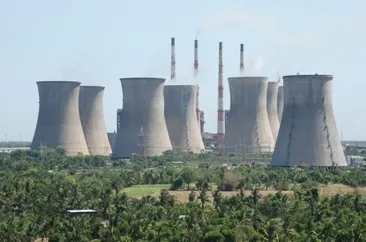
New Delhi, Feb 9 (NationPress) The Ministry of Power has outlined plans to establish an additional minimum of 97,000 MW of coal and lignite-based thermal power generation capacity across the nation, aiming to address the projected electricity demand, as communicated to Parliament on Monday.
Research conducted by the Central Electricity Authority (CEA) indicates that the thermal capacity requirement (coal and lignite) by 2034–35 is projected to be approximately 3,07,000 MW, compared to the installed capacity of 2,11,855 MW as of March 31, 2023.
This new capacity will play a crucial role in bridging the gap, explained Minister of State (MoS) for Power Shripad Naik in a written response in the Rajya Sabha.
In contrast to this requirement, thermal capacities of about 17,360 MW have already been commissioned between April 2023 and January 20, 2026.
Furthermore, 39,545 MW of thermal capacity (including 4,845 MW from stressed thermal power projects) is currently under construction. Contracts for 22,920 MW have been awarded and are set for construction. Additionally, 24,020 MW of coal and lignite-based candidate capacity has been identified, presently at various planning stages in the country, MoS Naik added.
The anticipated Plant Load Factor (PLF) for coal-based plants by 2031-32 is projected to be around 61 percent. However, the actual PLF will fluctuate based on numerous factors, including the rise in electricity demand and the successful implementation of coal-based and renewable energy capacities.
To ascertain the optimal mix of generation resources such as coal, hydro, solar, wind, storage, and nuclear, the CEA conducts generation expansion planning studies. These studies evaluate various parameters including capital costs, fuel costs, operations and maintenance costs, and useful life to inform expansion planning.
The generation expansion planning model conducts comparative analyses between new coal-based plants, solar, wind, and storage, taking into account cost differences, projected electricity demand, renewable energy generation profiles, fuel costs, and operational characteristics of various technologies.
The generation cost from coal-based plants is influenced by factors such as the plant's lifespan, its distance from coal mines, and the type of technology employed (sub-critical, super-critical, etc.).
The all-India Weighted Average Rate of Sale of Power (WARSP) for electricity generated from existing coal-based plants over the last three years fluctuates between Rs 4.36/kWh to 4.58/kWh, with the lowest tariff being about Rs 1.52/kWh.
The tariffs for new coal-based thermal power projects selected via the Tariff Based Competitive Bidding (TBCB) route range from Rs 5.38/KWh to 6.30/KWh, based on bidding outcomes from 2025.
In contrast, the tariff discovered for firm and dispatchable renewable energy (FDRE) tenders awarded by the Solar Energy Corporation of India in August 2024 is between Rs 4.98/kWh to 4.99/kWh.
While these tariff ranges may seem comparable, direct comparisons are inappropriate due to inherent differences related to operational characteristics, risk allocation, fuel cost structures, dispatch profiles, and contractual frameworks between coal-based thermal power and FDRE projects.
MoS Naik emphasized that both power types fulfill different system requirements and incorporate distinct cost components and performance obligations.
Point of View
It's imperative to recognize the government's proactive approach towards enhancing energy infrastructure. The proposed addition of **97,000 MW** of thermal power capacity not only signifies a response to rising electricity demands but also an opportunity for economic growth and energy security in India. This development aligns with national interests, paving the way for a more robust energy framework.
NationPress
1 Oct 2026
Frequently Asked Questions
What is the projected thermal power capacity by 2034-35?
The projected thermal power capacity requirement by 2034-35 is approximately **3,07,000 MW**.
How much thermal capacity has been commissioned since April 2023?
Around **17,360 MW** of thermal capacity has been commissioned from April 2023 until January 20, 2026.
What is the anticipated Plant Load Factor (PLF) for coal-based plants?
The anticipated Plant Load Factor (PLF) for coal-based plants by 2031-32 is estimated to be around **61 percent**.
What factors influence the cost of electricity from coal-based plants?
The cost of electricity from coal-based plants is influenced by the plant's lifespan, its distance from coal mines, and the type of technology used.
What are the tariff ranges for new coal-based thermal power projects?
The tariffs for new coal-based thermal power projects through the Tariff Based Competitive Bidding route range from **Rs 5.38/KWh** to **6.30/KWh**.