Chamarajanagar forest fire: 10 acres gutted in suspected poacher retaliation
Synopsis
Days after three suspected poachers were killed in a Forest Department encounter in Hanur, Karnataka, 10 acres of the Shilubepura forest range have been gutted in a suspected retaliatory fire — and gelatin explosives have reportedly been used against anti-poaching camps in the Cauvery Wildlife Sanctuary. With a magisterial enquiry due by 24 August and the SHRC already involved, the standoff between a large organised poaching network and forest officials is turning dangerous.
Key Takeaways
10 acres of the Shilubepura forest range , Chamarajanagar , were destroyed in a fire on 20 August , suspected to be deliberate.
Forest officials believe the blaze is retaliation for an encounter in the Hanur forest range in which three suspected poachers were killed in self-defence.
Gelatin explosives were reportedly used to target anti-poaching camps in the Cauvery Wildlife Sanctuary following the encounter.
A magisterial enquiry report into the encounter is due by 24 August ; the State Human Rights Commission (SHRC) has also launched a probe.
The Forest Department has recorded more than 3,200 poaching cases since 2011 in the region; the Karnataka government is considering stringent new measures.
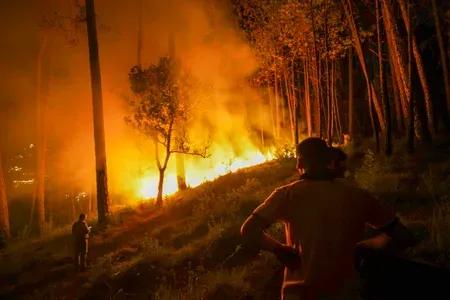
Around 10 acres of forest land in the Shilubepura forest range of Kollegal taluk, Chamarajanagar district, Karnataka, were destroyed in a fire on Thursday, 20 August, with forest officials suspecting the blaze was deliberately set as retaliation for a recent encounter in which three suspected poachers were killed by Forest Department personnel acting in self-defence. The incident has sharply escalated tensions in the region's ongoing anti-poaching operations.
The Suspected Retaliation
Officials believe the fire in the Shilubepura area was a calculated act intended to instil fear among forest personnel and disrupt anti-poaching activities in Chamarajanagar. Anti-poaching camps (APCs) in the area were also allegedly targeted around the same time. Notably, gelatin explosives were reportedly used to target APCs in the Cauvery Wildlife Sanctuary in the aftermath of the poacher encounter — a significant escalation in the nature of the attacks.
The Hanur Encounter That Triggered It
The chain of events traces back to an encounter in the Hanur forest range, where Forest Department personnel allegedly shot dead three suspected poachers after the hunters, according to officials, hid behind a boulder and opened fire at them. The department maintains the action was conducted in self-defence. The encounter has since drawn demands from Opposition parties and local groups for an independent, impartial investigation into the deaths.
Investigations Under Way
A magisterial enquiry into the Forest Department's action is under way, with the report expected to be submitted by 24 August. The State Human Rights Commission (SHRC) has also initiated a separate investigation into the incident. Forest officials are currently examining whether the fire and the attacks on anti-poaching camps are directly linked to the Hanur operation, and whether they form part of a coordinated intimidation campaign.
Scale of the Poaching Network
Following the encounter, the Forest Department has reportedly gathered intelligence on a large, organised network of poachers operating across Hanur and surrounding areas along the Karnataka-Tamil Nadu border. According to officials, these gangs allegedly supply wildlife meat and skins on demand, with orders reportedly traced to Bengaluru and other metropolitan cities. The department has compiled data on wildlife hunting cases dating back to 2011, with more than 3,200 poaching cases reportedly registered during that period.
Government Response
The Karnataka government is reportedly considering stringent measures to dismantle the poaching network operating in the region. The Forest Department has indicated it is planning decisive action against those identified as part of the network. Further details on the cause of the fire and any confirmed individual involvement are awaited as multiple investigations continue.
Point of View
200 poaching cases since 2011 without dismantling this network raises hard questions about enforcement capacity and inter-agency coordination along the Karnataka-Tamil Nadu border. The SHRC inquiry into the encounter is necessary and legitimate, but it must not become a tool to deter forest personnel from acting in genuine self-defence — a risk that the political temperature around this case already raises. The real accountability test is whether the Karnataka government's promised 'stringent measures' translate into prosecutions, or remain another administrative announcement.
NationPress
5 Oct 2026
Frequently Asked Questions
What caused the Chamarajanagar forest fire on 20 August?
Forest officials suspect the fire, which gutted around 10 acres in the Shilubepura forest range of Kollegal taluk, was deliberately set as retaliation for a recent encounter in which three suspected poachers were killed by Forest Department personnel in the Hanur forest range. Investigations are ongoing and no arrests have been confirmed.
What happened in the Hanur forest range encounter?
Forest Department personnel allegedly shot dead three suspected poachers during an operation in the Hanur forest range after the hunters reportedly hid behind a boulder and opened fire at them. The department maintains the action was taken in self-defence. The incident has triggered demands for an independent investigation.
What investigations are under way into the encounter and the fire?
A magisterial enquiry into the Forest Department's encounter is under way, with the report expected by 24 August. The State Human Rights Commission (SHRC) has also initiated a separate investigation. Forest officials are simultaneously probing the fire and the attacks on anti-poaching camps.
How large is the poaching network operating in the Chamarajanagar region?
According to information gathered by the Forest Department, an organised network of poachers operates across Hanur and surrounding areas along the Karnataka-Tamil Nadu border, allegedly supplying wildlife meat and skins to buyers in Bengaluru and other cities. More than 3,200 poaching cases have been registered in the region since 2011.
What action is the Karnataka government planning against poachers?
The Karnataka government is reportedly considering stringent measures to dismantle the poaching network in the Chamarajanagar region. The Forest Department has said it is planning decisive action against those identified through intelligence gathered after the Hanur encounter, though specific measures have not yet been announced.