Cheetah reintroduction in Gujarat's Banni grasslands raised at UNCCD CoP17
Synopsis
India's cheetah reintroduction programme is expanding beyond Kuno. The NTCA has cleared the transfer of four cheetahs to Gujarat's Banni — a 400-year-old pastoral landscape stewarded by the Maldharis — and the move was spotlighted at the global desertification summit in Mongolia as a model for community-led rangeland conservation.
Key Takeaways
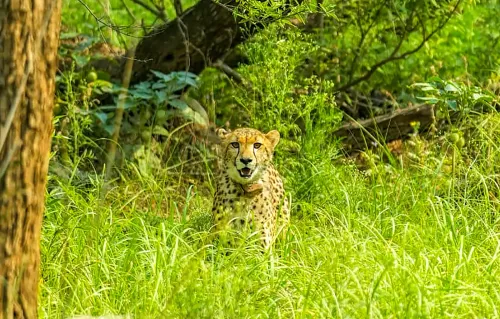
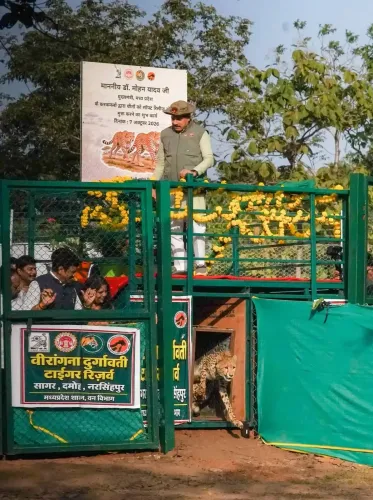
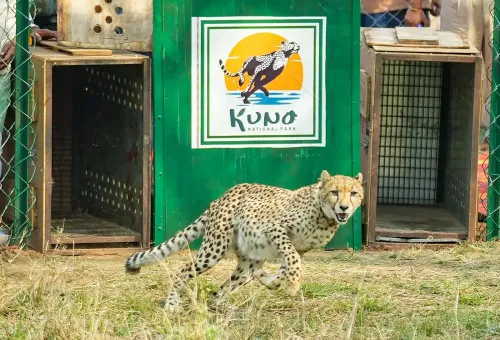
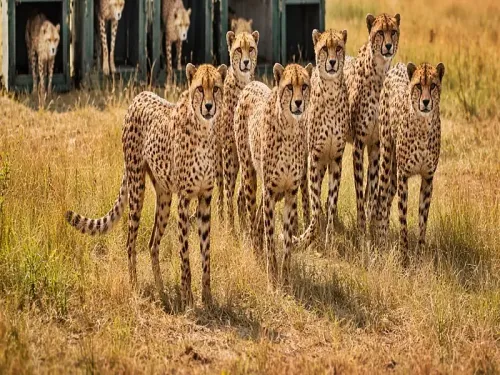
The NTCA has cleared the transfer of four cheetahs (two pairs) from Kuno National Park, Madhya Pradesh to Banni grasslands, Gujarat .
Banni hosts more than 60 grass species and is managed by the Maldhari pastoralist community across 19 panchayats for over 400 years .
An enclosure has been built and prey animals released at Banni ahead of the cheetahs' arrival.
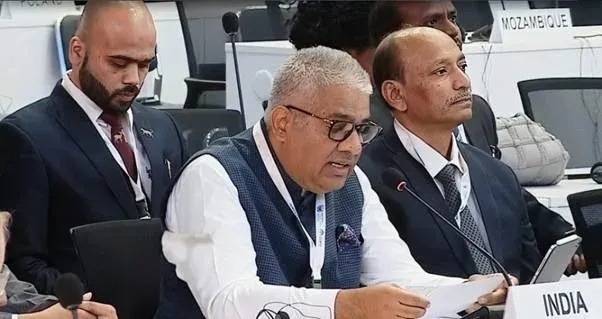
Union Minister Bhupender Yadav raised the initiative at UNCCD CoP17 in Ulaanbaatar, Mongolia , during a ministerial dialogue on rangeland restoration.
India cited 25,000 community-protected sacred groves covering 0.6 million hectares as models of pastoralist stewardship.
India called for dedicated financing for rangeland restoration and offered South-South cooperation on its conservation experience.
India's proposed reintroduction of cheetahs into the Banni grasslands of Gujarat was highlighted at the 17th Conference of Parties (CoP17) of the UN Convention to Combat Desertification (UNCCD), currently under way in Ulaanbaatar, Mongolia. The reference came as India made the case for recognising rangelands as critical ecosystems that sustain pastoralist communities, conserve biodiversity, and regulate water and carbon cycles.
The Banni Cheetah Plan
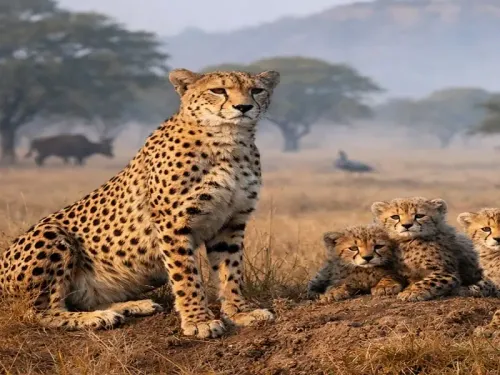
The National Tiger Conservation Authority (NTCA) has cleared the transfer of four cheetahs — two pairs — from Kuno National Park in Madhya Pradesh to the Banni grasslands, located on the northern fringe of the Great Rann of Kutch. An enclosure has already been constructed at the site, and prey animals have been released there in preparation for the big cats' arrival.
Banni supports more than 60 species of grass and is stewarded by the Maldharis — a pastoralist community spread across 19 panchayats whose buffaloes and Kankrej cattle have grazed these lands for over 400 years. Notably, the grasslands were once severely degraded by the spread of an invasive tree species; it was the Maldharis who led restoration efforts on the ground.
What India Said at CoP17
Addressing the ministerial dialogue on 'Restoration of Rangelands and the Well-being of Pastoralist Communities,' Union Minister for Environment, Forest and Climate Change Bhupender Yadav underscored India's approach of combining scientific planning with community participation. 'Successful restoration begins with pastoralists as custodians, not merely beneficiaries,' he said, adding that blending traditional knowledge with modern science can yield restoration that is 'ecologically sound, economically viable and socially inclusive.'
Yadav noted that India's rangelands span Himalayan pastures, Central Indian savannas, the arid Thar and Kachchh regions, and Southern sholas, collectively sustaining the country's vast livestock and human populations. Satellite-based Desertification and Land Degradation atlases, he said, provide a scientific basis for mapping these ecosystems and planning restoration.
Sacred Groves and Community Stewardship
Yadav cited the Orans of Rajasthan — sacred groves revered and protected by local communities — as a model of community stewardship. 'Around 25,000 such community-protected sacred groves, covering around 0.6 million hectares across the country, exemplify community stewardship while also securing pastoral land rights and conserving critical habitats, including those of the Great Indian Bustard,' he said. Many of these groves are protected under statutory provisions.
Carbon, Water, and the Finance Gap
The minister highlighted that deep-rooted grasses across India's approximately 10 million hectares of permanent pastures and grazing lands contribute to soil carbon storage, enhance water infiltration, and support groundwater recharge. As developing nations work toward Land Degradation Neutrality, Yadav called for enhanced access to finance, technology, and knowledge. 'India welcomes dedicated, accessible financing for rangeland restoration, and stands ready to share its experience and solutions through South-South cooperation,' he said.
The Banni cheetah transfer, if executed, would mark a significant expansion of India's cheetah reintroduction programme beyond Kuno, with the success of the Banni model potentially shaping how pastoralist-led conservation is scaled across the subcontinent.
Point of View
But the credibility of that signal depends entirely on what happens on the ground in Kachchh.
NationPress
10 Oct 2026
Frequently Asked Questions
Which cheetahs are being moved to Gujarat's Banni grasslands?
The NTCA has cleared the transfer of four cheetahs — two pairs — from Kuno National Park in Madhya Pradesh to the Banni grasslands in Gujarat's Kachchh region. An enclosure has already been built and prey animals released at the site.
What is the Banni grassland and why was it chosen?
Banni is a biodiverse grassland on the northern fringe of the Great Rann of Kutch, supporting more than 60 grass species and stewarded by the Maldhari pastoralist community for over 400 years. Its ecological diversity and existing community conservation framework made it a candidate for cheetah reintroduction.
What is UNCCD CoP17 and why did India raise the Banni project there?
The 17th Conference of Parties of the UN Convention to Combat Desertification is being held in Ulaanbaatar, Mongolia. India raised the Banni cheetah plan during a ministerial dialogue on rangeland restoration to illustrate how community-led conservation and biodiversity recovery can go hand in hand.
Who are the Maldharis and what role do they play in Banni?
The Maldharis are a pastoralist community spread across 19 panchayats in and around Banni whose buffaloes and Kankrej cattle have grazed the grasslands for more than 400 years. They were also instrumental in restoring Banni after an invasive tree species nearly destroyed the ecosystem.
What did India call for at UNCCD CoP17 regarding rangeland financing?
Union Minister Bhupender Yadav called for enhanced access to finance, technology, and knowledge for developing countries pursuing Land Degradation Neutrality. India specifically welcomed dedicated, accessible financing for rangeland restoration and offered to share its experience through South-South cooperation.