US Lawmakers Sound Alarm Over China's Influence in Europe
Synopsis
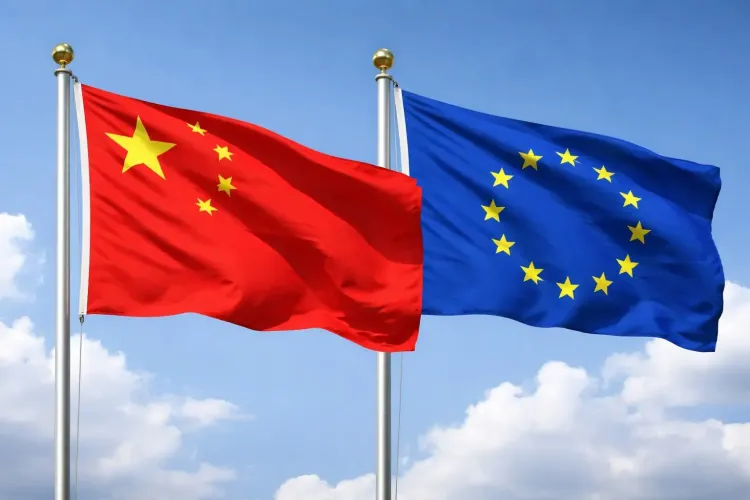
Concerns are mounting among US lawmakers and international leaders regarding China's expanding dominance in Europe. With tactics ranging from investment to covert pressure, experts urge the need for stronger US-Europe collaboration to counteract this growing threat.
Key Takeaways
China's influence in Europe is expanding rapidly.
Beijing employs both overt and covert tactics.
US lawmakers emphasize the need for coordinated action.
Lithuania's experience illustrates the risks of Chinese coercion.
Strategic dependencies on China may endanger European interests.
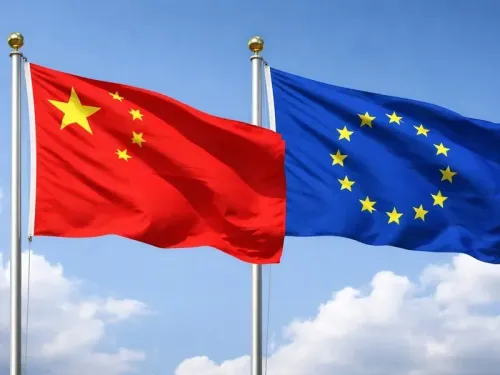
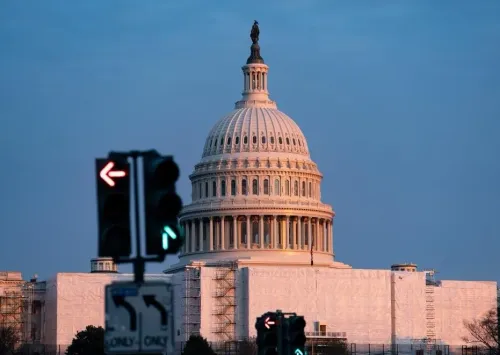
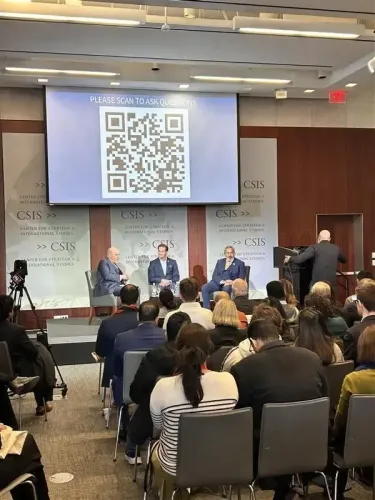
Washington, March 5 (NationPress) US legislators, international leaders, and specialists have expressed concern over China's growing influence in Europe. They assert that Beijing employs a mix of investment, coercion, and secretive strategies, advocating for enhanced collaboration between the US and Europe regarding technology, supply chains, and security.
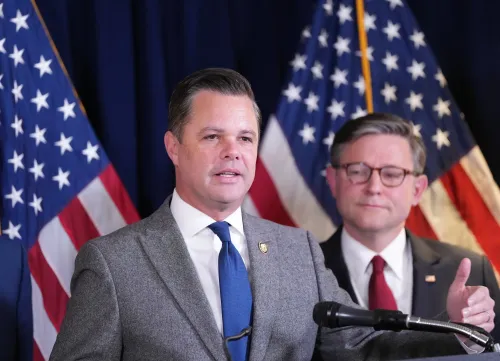
During a hearing titled “China’s Rising Influence in Europe” on Wednesday (local time), Congressman Jake Ellzey emphasized that Europe needs to consider more than just Russia. He noted that the region is confronted not only with the danger of Russia's war but also with the ongoing threat of China’s quest for dominance.
Ellzey remarked that China is deploying “a range of both overt and covert mechanisms” in Europe, establishing “beachheads to exert control over the continent.”
Lithuania's Vice Foreign Minister, Vidmantas Verbickas, detailed Beijing’s coercive tactics against his nation. He mentioned that Lithuania exited China’s “17 plus 1 format” in 2021, allowing for the “creation of a Taiwanese Representative office in Vilnius.”
Verbickas stated that China reacted with what he described as coercion, claiming, “Lithuania seemed to vanish from China’s customs systems.” He reported delays or denials in export permits and increasing pressure on multinational corporations.
“The consequences were immediate,” Verbickas stated. “In the initial months, exports originating from Lithuania to China plummeted by 99.7 percent, practically to nothing.”
He clarified that this was not merely a trade dispute. “This was not a commercial conflict,” he asserted. “It was a politically driven pressure aimed at influencing a sovereign policy choice.”
Senator Ruben Gallego raised alarm about technology disparities, noting that the West was “lethargic in its response” concerning 5G. He expressed concern that Europe continues to rely on infrastructure linked to Chinese suppliers, with the impending risk of “six G.”
Audrye Wong, a nonresident fellow at the American Enterprise Institute, highlighted that China's ambitions include “supporting allies and silencing opponents of the Chinese Communist Party.” She further stated that Beijing seeks “to undermine transatlantic unity and European solidarity through a divide-and-conquer approach.”
Wong indicated that China employs “both coercive means and incentives,” referencing the tactic of “weaponizing supply chains.” She noted that Beijing attempts to “gain support via corrupt investments, bribery, and other clandestine influence methods.”
She explained that China targets various domains, operating across “diplomatic, governmental, business, and public sectors,” intertwining “economic information propaganda.”
Wong warned that such efforts can erode democracies, suggesting that China executes “an overwhelming number of influence operations” and then engages in a “waiting game.” She characterized this as “not merely a national security concern” but as something that “undermines the legitimate functioning of free and open societies.”
Valbona Zeneli, a nonresident senior fellow at the American Enterprise Institute, mentioned that Europe has altered its stance on China. However, she cautioned that the European Union lacks unity. She described Europe’s China policy as “the outcome of a complicated negotiation” among EU institutions and “27 member states.”
Zeneli noted that China’s maneuvers in Europe are strategic. She indicated that its objectives include “acquiring advanced technologies, influencing global value chains, and establishing leverage in vital sectors.” She asserted that “this is not merely about commercial advantage; it is about strategic leverage.”
She remarked that the balance has shifted, with China accounting for “over one-fifth of EU imports” and Europe facing “a trade deficit surpassing $400 billion.” She highlighted that Europe’s dependence on Chinese resources creates “strategic vulnerabilities.”
Frequently Asked Questions
What tactics is China using to influence Europe?
China employs a combination of investment, pressure, and covert strategies to expand its influence in Europe.
How did Lithuania respond to China's pressure?
Lithuania withdrew from China's '17 plus 1 format' and established a Taiwanese Representative office in Vilnius, prompting coercive actions from Beijing.
What are the implications of China's influence in Europe?
China's influence could undermine transatlantic cooperation and European unity, posing a risk to democratic institutions.
Why is there a call for US-Europe coordination?
There is an urgent need for closer collaboration on technology, supply chains, and security to counter China's expanding influence.
What is the significance of the trade deficit with China?
Europe's trade deficit with China, exceeding $400 billion, highlights its dependency on Chinese imports, which poses strategic risks.