China's property crash leaves millions underwater as Xi stays silent
Synopsis
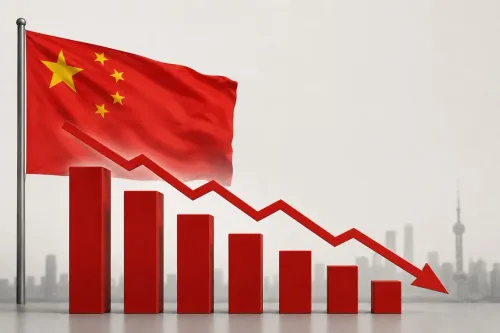
China's property bust is eroding the wealth of hundreds of millions of citizens who hold over 70% of their assets in housing — yet President Xi Jinping made no mention of the crisis during a recent Shanghai visit. With a 42% crash in new home sales, 90 million empty apartments, and officials suppressing private data, the silence from the top is becoming as alarming as the numbers themselves.
Key Takeaways
New home sales by China's top 100 builders fell 42 per cent year-on-year in October 2025 , according to China Real Estate Information .
Chinese officials reportedly ordered private data providers to stop publishing home sales figures after the collapse became public.
Roughly 90 million apartments across China are either empty or unfinished, according to a May report by The New York Times .
Harvard economist Kenneth Rogoff estimates real estate and related infrastructure account for roughly a third of China's demand over the long term.
Chinese citizens hold over 70 per cent of their wealth in housing, making the price collapse a direct hit to household consumption.
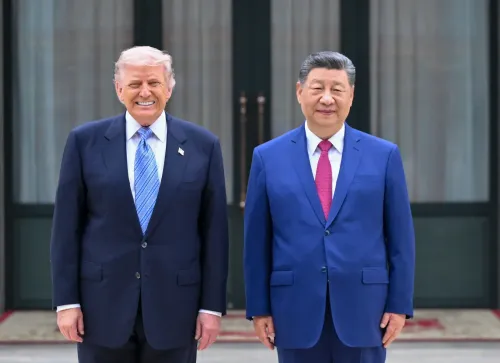
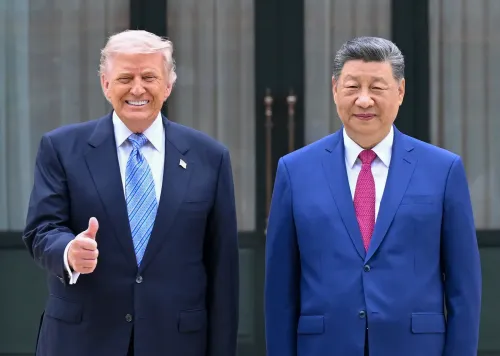
President Xi Jinping made no mention of the property crisis during a recent visit to Shanghai , according to analysis in The Diplomat .
China's real estate market is in the grip of a deepening crisis, with hundreds of millions of ordinary citizens watching their wealth erode — even as President Xi Jinping made no mention of the property bust during a recent visit to Shanghai, according to an analysis published in The Diplomat. The silence at the top has drawn sharp attention as the scale of the collapse becomes harder to ignore.
The Scale of the Collapse
New home sales by China's top 100 builders fell 42 per cent year-on-year in October 2025, according to estimates by China Real Estate Information. Following that disclosure, Chinese officials reportedly instructed private data providers to stop publishing home sales figures — a move flagged by German broadcaster Deutsche Welle (DW) and cited in The Diplomat's analysis.
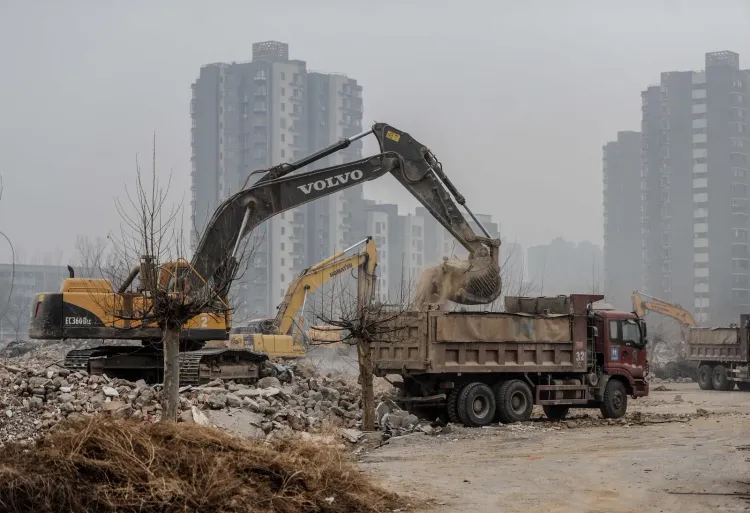
The national housing market continues to carry an enormous overhang. The New York Times reported in May that roughly 90 million apartments across China remain either empty or unfinished, even as prices in Shanghai have shown some signs of a partial rebound. Critics argue that localised recovery in tier-one cities masks a far grimmer picture nationally.
Why Property Matters So Much to Chinese Households
Professor Kenneth Rogoff of Harvard University, speaking on the Brookings Podcast on Economic Activity in April, laid out the structural stakes plainly. 'Real estate has been the cornerstone of the Chinese growth model, and if you include infrastructure which is closely related, it accounts for roughly a third of demand in China over a very long period,' he said.
Rogoff further noted that 'the collapse in housing prices is a huge collapse in wealth, because Chinese citizens hold over 70 per cent of their wealth in housing… the first order problem is that people feel a lot poorer and cut back their consumption accordingly.' That consumption pullback, economists warn, risks compounding an already slowing economy.
A Tragedy Decades in the Making
The Diplomat's analysis frames the crisis in historical terms, describing it as 'a tragedy for the hundreds of millions of Chinese buyers who have either lost their homes, or who are so far underwater with the loans that neither re-financing nor selling the property is a possibility.' Home ownership was only reinstated in China in the 1990s, meaning the bust has arrived within a single generation of the market opening up.
Property and closely linked infrastructure together drove China's growth engine for decades, alongside exports. The unwinding of that model now poses what analysts describe as a systemic risk to household financial health — not just to developers or financial institutions.
Government Silence and What Comes Next
Xi's decision not to address the property market during his Shanghai visit has reinforced perceptions that Beijing is reluctant to publicly acknowledge the depth of the crisis. The suppression of private sales data has further narrowed the information available to investors and households trying to assess their exposure.
With 90 million empty or unfinished units weighing on supply and consumer confidence fragile, analysts say a durable national recovery remains distant. The trajectory of China's property sector — and how much of its pain filters into broader economic demand — will be closely watched in the months ahead.
Point of View
The consumption drag is structural, not cyclical. Xi's silence in Shanghai suggests the leadership has no credible policy answer yet — and that absence of a credible answer is, in itself, a risk the market has not fully priced.
NationPress
18 Sept 2026
Frequently Asked Questions
How bad is China's property market crash?
New home sales by China's top 100 builders fell 42 per cent year-on-year in October 2025, according to China Real Estate Information estimates. Nationally, roughly 90 million apartments remain empty or unfinished, representing a massive supply overhang that is suppressing any broad price recovery.
Why does the property crash matter so much to ordinary Chinese citizens?
Chinese citizens hold over 70 per cent of their wealth in housing, according to Harvard economist Kenneth Rogoff. When home prices fall sharply, households feel significantly poorer and cut back on spending, which in turn drags on overall economic growth.
What did President Xi Jinping say about the property crisis during his Shanghai visit?
According to an analysis in The Diplomat, Xi Jinping made no mention of the property bust during his recent visit to Shanghai. His silence has been widely noted given the scale of the crisis affecting hundreds of millions of homeowners.
Why did Chinese officials suppress home sales data?
Following the disclosure of a 42 per cent year-on-year drop in new home sales in October 2025, Chinese officials reportedly instructed private data providers to stop publishing home sales figures, according to reporting by Deutsche Welle. The move has been interpreted as an attempt to limit public awareness of the market's deterioration.
Is there any recovery in China's housing market?
Property prices in Shanghai have shown some signs of a partial rebound, according to a May report by The New York Times. However, the national market continues to face enormous pressure from 90 million empty or unfinished apartments, and experts say a durable nationwide recovery remains distant.