How Does Kerala Celebrate Christmas with Faith and Diversity?
Synopsis
Discover how Christmas in Kerala transforms into a vibrant cultural celebration, reflecting the rich tapestry of faith and diversity, uniting people across different backgrounds. This year’s festivities carry a deeper meaning amidst challenges, showcasing Kerala's strength in unity.
Key Takeaways
Christmas in Kerala blends faith with cultural diversity.
The festival is celebrated by various Christian denominations.
Traditional foods play a significant role in the celebrations.
Christmas transcends religious boundaries in Kerala.
It has become a secular celebration embraced by all communities.
Thiruvananathapuram, Dec 25 (NationPress) Christmas in Kerala is celebrated with a warmth that extends beyond mere ritual, shaped by a Christian community that constitutes nearly 18% of the State's 3.30 crore population, and a social fabric that embraces the festival as part of its identity.
The festivities echo both faith and diversity—encompassing belief, tradition, and history—intertwined into daily life.
In Kerala, Christians are not a monolithic group.
The largest segment is made up of Catholics, who are divided among three distinct churches that all acknowledge the Pope.
This is followed by the Syrian Orthodox Church, based in Kottayam, which has deep historical roots in the region.
In addition, around five other major churches exist, each with unique liturgical practices, customs, and ecclesiastical structures.
This diversity is most prominently displayed during Christmas, when various traditions unite around a common message of faith and community.
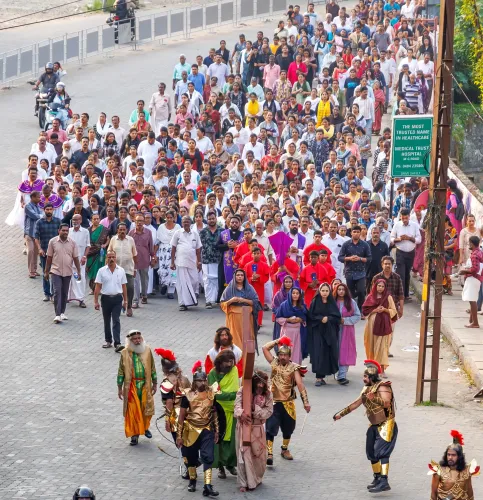
On Christmas Thursday, the day commences early, following the solemn midnight Mass. Churches throughout Kerala—from Fort Kochi and Varapuzha to Kottayam and the hill parishes of Idukki—open their doors to filled congregations.
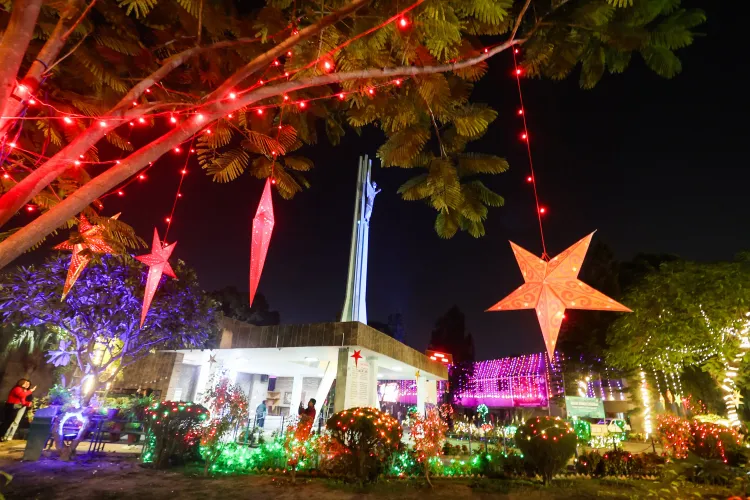
Whitewashed exteriors shimmer under soft lighting, nativity scenes are thoughtfully arranged, and choirs perform timeless Malayalam carols that have become inseparable from the season.
While the rituals may vary slightly across denominations, the spirit remains universal.
Beyond the churches, homes exhibit the festive spirit.
Star lanterns illuminate verandas, Christmas trees are adorned, and kitchens are abuzz with activity. Kerala’s Christmas cuisine—plum cakes steeped in tradition, achappam and kuzhalappam fried in batches, along with elaborate lunches—often merges denominational customs with local flavors.
Visitors are welcomed without prior notice, and plates are exchanged more readily than gifts. Public spaces reflect this openness.
Markets remain vibrant, beaches and town squares transform into informal gathering places, while cultural programs and charitable initiatives highlight the festival's social impact.
Christmas in Kerala has long transcended religious lines, emerging as a shared cultural symbol.
This year, like many others, the festival carries a reflective tone amidst economic and political challenges.
Nevertheless, Christmas provides a moment of pause—a reminder that Kerala’s strength lies in its capacity to celebrate differences while remaining united.
Here, Christmas exists not only in hymns and meals but in shared moments of quiet hope.
The significant change today is that Christmas, akin to other traditional festivals in Kerala, has become genuinely secular in its expression.
The sight of a shining Christmas star at a home’s entrance no longer signifies a Christian household exclusively.
Throughout towns and villages, homes of diverse faiths display stars as readily as lamps for Onam or lights for Vishu, regarding the festival as part of Kerala's shared cultural calendar rather than a marker of religious identity.
In this subtle, everyday manner, Christmas has transcended the confines of the Church, evolving into a season collectively embraced, reflecting the State's enduring practice of transforming faith-based celebrations into inclusive social traditions.
Point of View
I observe that Christmas in Kerala represents a unique blend of faith and cultural coexistence. This year, the festival stands as a testament to the resilience and unity of its people, transcending religious lines amidst societal challenges. The inclusive spirit of Christmas reflects Kerala's commitment to celebrating diversity while fostering a sense of community.
NationPress
19 Sept 2026
Frequently Asked Questions
What is the significance of Christmas in Kerala?
Christmas in Kerala represents not just a religious observance but a communal celebration that emphasizes unity, diversity, and the rich cultural fabric of the state.
How do different denominations celebrate Christmas in Kerala?
Different denominations in Kerala celebrate Christmas with unique liturgical practices and customs, yet they all converge around a common theme of faith and fellowship.
What traditional foods are associated with Christmas in Kerala?
Kerala's Christmas cuisine includes traditional plum cakes, achappam, kuzhalappam, and elaborate festive lunches that often combine various denominational customs with local flavors.
Is Christmas celebrated only by Christians in Kerala?
No, Christmas in Kerala has transcended religious boundaries, with people of different faiths participating in the festivities, treating it as part of the shared cultural calendar.
How has the celebration of Christmas changed over the years in Kerala?
The celebration of Christmas has evolved into a more secular expression in Kerala, with homes of various faiths displaying Christmas stars and decorations, reflecting a collective ownership of the festival.