CIA MKULTRA hearing: Congress probes mind-control experiments at universities, hospitals, prisons
Synopsis
Seventy years after the CIA launched MKULTRA, a US House task force heard testimony that the programme spanned at least 149 subprojects across 80-plus institutions — and that Congress was misled about its true scope in 1977. With the CIA now declassifying newly discovered files, the hearing signals the most serious legislative push yet to expose what witnesses called 'medical torture' sanctioned by the US government.
Key Takeaways
The House Oversight Task Force on Declassification held a hearing on 5 July examining the CIA's MKULTRA programme .
Historian Stephen Kinzer testified that MKULTRA comprised at least 149 subprojects across more than 80 institutions and 185 non-government researchers .
Task Force Chair Anna Paulina Luna alleged that CIA Director Richard Helms ordered destruction of MKULTRA files in 1973 , calling it 'criminal destruction of federal records.' The CIA is reportedly declassifying newly discovered MKULTRA records related to a covert forgery programme.
Investigative journalist Tom O'Neill alleged Congress was misled in 1977 when the CIA characterised MKULTRA as a failure.
Institutions named in testimony include Holmesburg Prison , Vacaville Prison , Lackland Air Force Base Hospital , and the Lexington Addiction Centre .
A US congressional hearing on 5 July renewed intense scrutiny of the CIA's Cold War-era MKULTRA programme, with lawmakers and expert witnesses alleging that the agency covertly used universities, hospitals, prisons, and other institutions across the United States to conduct mind-control experiments on unwitting human subjects — and concealed the full extent of those operations for decades.
Key Allegations at the Hearing
The House Oversight and Accountability Committee's Task Force on the Declassification of Federal Secrets heard testimony from historian Stephen Kinzer and investigative journalist Tom O'Neill, both of whom argued that critical aspects of the programme remain hidden because records were deliberately destroyed or remain heavily redacted.
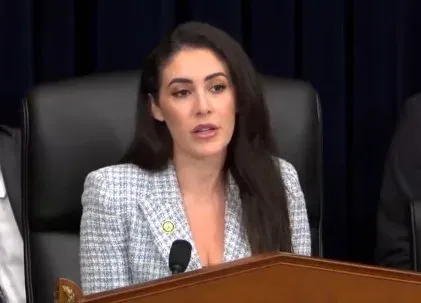
Task Force Chair Anna Paulina Luna opened proceedings with a stark characterisation of the programme. 'It was a deliberate, systematic governmental operation that subjected American citizens, prisoners, hospital patients, veterans, ordinary people to LSD, electroshock, hypnosis, sensory deprivation, psychological torture without their knowledge or consent,' she said.
Luna further alleged that then-CIA Director Richard Helms ordered the destruction of MKULTRA files before leaving office in 1973, describing the act as 'obstruction of justice' and 'criminal destruction of federal records.'
Newly Discovered CIA Records
Luna disclosed that she and Representative Eric Burlison had recently visited CIA headquarters after learning that additional MKULTRA records had been discovered. 'The CIA is currently in the process of declassifying newly found documentation,' she said, adding that the records relate to 'a forgery programme that was being housed under MKULTRA.'
This comes amid a broader push by the current Congress to force declassification of federal secrets spanning multiple agencies, of which MKULTRA is among the most historically sensitive files.
What the Witnesses Testified
Kinzer, author of Poisoner in Chief, testified that MKULTRA 'comprised at least 149 subprojects' involving 'more than 80 institutions' and '185 non-government researchers.' He described the programme as 'the most extreme experiments on human beings that have ever been carried out by a US government agency,' adding: 'By any standard, they qualify as medical torture.'
Kinzer urged the committee to pursue remaining classified files and remove redactions from those already released. 'Now 70 years have passed. That argument can no longer be valid,' he said.
O'Neill, author of Chaos, told lawmakers he believed previous congressional investigations had not received a complete account. 'I believe the agency misled Congress in 1977 when it characterised MKULTRA as a failure,' he said. His research reportedly uncovered correspondence between psychiatrist Louis Jolyon West and Sidney Gottlieb — the CIA scientist who led MKULTRA — discussing experiments involving LSD, hypnosis, and unwitting subjects.
According to O'Neill, documents he found described efforts to 'extract true information and implant false information in unwilling subjects' and to alter 'the attitudes and beliefs of previously loyal individuals.'
Institutions Named in Testimony
Lawmakers repeatedly questioned witnesses about allegations that universities, hospitals, prisons, and military facilities were used as sites for covert experiments through CIA-funded front organisations. O'Neill identified several institutions linked to research discussed at the hearing, including the Lexington Addiction Centre, Lackland Air Force Base Hospital, Holmesburg Prison, Vacaville Prison, and several universities.
Both witnesses called for renewed efforts to identify victims and release additional records. O'Neill noted that a promised federal investigation following the 1977 hearings never fully materialised.
Background: What MKULTRA Was
Project MKULTRA was launched by the CIA in 1953 during the Cold War to explore interrogation techniques, behavioural modification, and mind control. Public awareness of the programme emerged in the 1970s after investigations by the Church Committee and other congressional inquiries uncovered evidence of secret human experimentation. Many operational files were destroyed in 1973 on Helms's orders, leaving investigators to reconstruct the programme largely from surviving financial records that were accidentally preserved.
The hearing marks a renewed congressional effort to press for full declassification — and, witnesses argued, a long-overdue reckoning for victims who were never identified or compensated.
Point of View
It means the institutional cover-up outlasted the Cold War by five decades. The destruction of files by Helms in 1973 remains the original sin: it ensured that accountability would always be partial. What Congress has yet to confront is whether the legal and compensation frameworks for MKULTRA victims are adequate — both witnesses noted that a promised federal investigation never materialised, a failure of follow-through that deserves as much scrutiny as the programme itself.
NationPress
3 Oct 2026
Frequently Asked Questions
What is the CIA's MKULTRA programme?
MKULTRA was a covert CIA programme launched in 1953 during the Cold War to research interrogation techniques, behavioural modification, and mind control. It involved experiments on unwitting human subjects across at least 80 institutions, including universities, hospitals, and prisons, before public exposure in the 1970s.
Why is Congress holding hearings on MKULTRA now?
The House Oversight and Accountability Committee's Task Force on the Declassification of Federal Secrets convened the hearing on 5 July after learning that the CIA had discovered additional MKULTRA records that are now being declassified. Lawmakers and witnesses argue that the full scope of the programme has never been disclosed to Congress or the public.
What new MKULTRA records have been found?
Task Force Chair Anna Paulina Luna disclosed that the CIA is currently declassifying newly discovered MKULTRA documentation related to a covert forgery programme housed under MKULTRA. She and Representative Eric Burlison visited CIA headquarters after learning of the discovery.
Which institutions were named as MKULTRA sites?
Investigative journalist Tom O'Neill identified several locations linked to MKULTRA research, including the Lexington Addiction Centre, Lackland Air Force Base Hospital, Holmesburg Prison, Vacaville Prison, and several universities. Experiments were also reportedly conducted at overseas sites.
Were MKULTRA records destroyed, and by whom?
Many operational MKULTRA files were destroyed in 1973 on the orders of then-CIA Director Richard Helms before he left office. Task Force Chair Anna Paulina Luna characterised this as 'obstruction of justice.' Investigators have since relied largely on financial records that were accidentally preserved to reconstruct the programme.