Do Rahul Gandhi's Claims Stand Up? CIC Appointments Tell a Different Tale on SC, ST, OBC Representation
Synopsis
Can Rahul Gandhi's claims about SC and ST representation in the CIC withstand scrutiny? This article unveils the truth behind the recent appointments and addresses the allegations of exclusion in a crucial governmental body.
Key Takeaways
Five out of eight recommended names for the CIC are from disadvantaged communities.
The Union government maintains a commitment to diversity in appointments.
Historical context shows a lack of representation during previous administrations.
Concerns raised by Rahul Gandhi were addressed with factual data.
The CIC plays a crucial role in promoting transparency in governance.
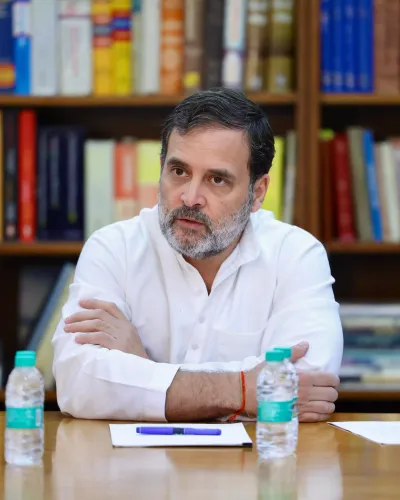
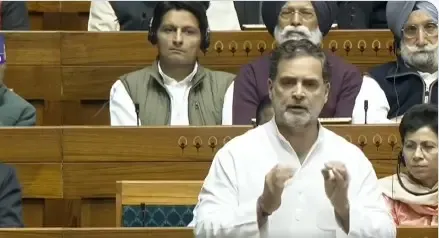
New Delhi, Dec 11 (NationPress) The Leader of Opposition (LoP) in Lok Sabha, Rahul Gandhi, recently asserted that there is an inadequate representation of Scheduled Castes (SCs) and Scheduled Tribes (STs) within the Central Information Commission (CIC). However, officials countered this claim on Thursday, stating that out of the eight names recommended for the transparency panel, five are from these disadvantaged groups.
The Union government, while considering the eight vacancies for Information Commissioners on Wednesday, recommended one candidate each from the SC, ST, Other Backward Classes (OBC), a minority group, and a woman, as per a government source.
“In total, five of the eight recommended candidates hail from disadvantaged backgrounds. Given this information, Rahul Gandhi's assertions lack validity,” stated a government official.
During the selection committee meeting for the Information Commissioners, Rahul Gandhi expressed his dissent, claiming that the shortlisted candidates did not represent the SC, ST, OBC, and Economically Backward Class (EBC) communities.
Sources report that the LoP alleged a “systematic pattern” of exclusion regarding appointments to constitutional and autonomous entities affecting SC, ST, OBC, EBC, and minority groups.
Union government officials dismissed these allegations, asserting that the facts present an alternative narrative.
The Central Information Commission was established in 2005. Between 2005 and 2014, during the tenure of the UPA government, no members from the SC/ST communities were appointed to the Commission. It was the NDA government that appointed Suresh Chandra, a member of the ST community, to the Commission in 2018,” the official added.
In 2020, Heeralal Samariya was named an Information Commissioner and became the first-ever Chief Information Commissioner from the SC community in 2023.
According to government insiders, the concerns raised by Rahul Gandhi during the selection committee were addressed expeditiously.
He was provided with data to dispel his doubts and counter his claims of a “systematic pattern” of exclusion of SC, ST, OBC, EBC, and minority communities from such appointments.
Point of View
It's essential to recognize that while claims can stir public sentiment, the facts must guide our understanding. The appointments to the CIC illustrate a commitment to diversity that counters allegations of systematic exclusion. It is crucial to focus on the data and ensure that all communities are adequately represented in our institutions.
NationPress
30 Sept 2026
Frequently Asked Questions
What is the Central Information Commission?
The Central Information Commission (CIC) is a statutory body established under the Right to Information Act, 2005, to oversee the implementation of the RTI Act and ensure transparency in government operations.
Who are the Scheduled Castes and Scheduled Tribes?
Scheduled Castes (SCs) and Scheduled Tribes (STs) are groups historically marginalized in India, recognized by the Constitution for affirmative action and reservations in education and employment.
What is the role of Information Commissioners?
Information Commissioners are responsible for ensuring the implementation of the Right to Information Act, addressing grievances regarding information access, and promoting transparency in government operations.
How are Information Commissioners appointed?
Information Commissioners are appointed based on recommendations made by a selection committee, which evaluates candidates based on their qualifications and experience.
What was Rahul Gandhi's specific claim?
Rahul Gandhi claimed that there was a systematic exclusion of SCs, STs, OBCs, EBCs, and minority communities from appointments in the CIC.