Congress Criticizes Government's Intent for Special Session on Women’s Reservation Bill
Synopsis
In a strong critique, Congress raises questions about the motives behind the government's special session on the Women’s Reservation Bill, alleging political manipulation. As the session approaches, the party demands transparency and broader consultation on key legislative issues.
Key Takeaways
Congress intensifies criticism of the government's motives behind the Women’s Reservation Bill amendments.
The special session is scheduled for April 16 to 18, raising concerns over its timing.
Calls for an all-party meeting reflect the need for broader consultation.
Implementation of the Women’s Reservation Bill remains delayed.
Political implications of the session coincide with key Assembly elections.
New Delhi, April 3 (NationPress) The Congress party has ramped up its criticism of the Central Government concerning the scheduled three-day special session of Parliament from April 16 to 18. They claim the government's motives behind proposing amendments to the Nari Shakti Vandan Adhiniyam—commonly known as the Women’s Reservation Bill—are dubious and politically charged.
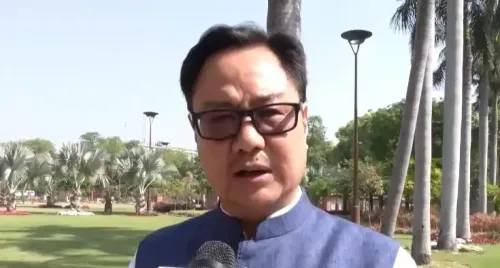
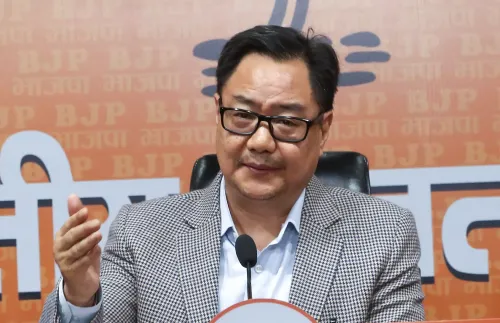
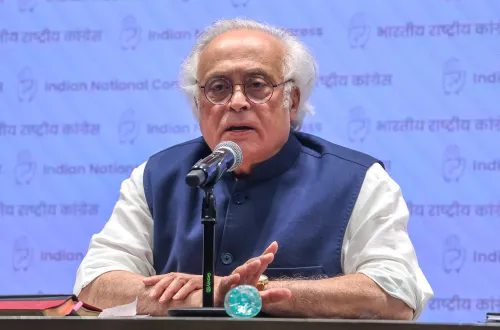
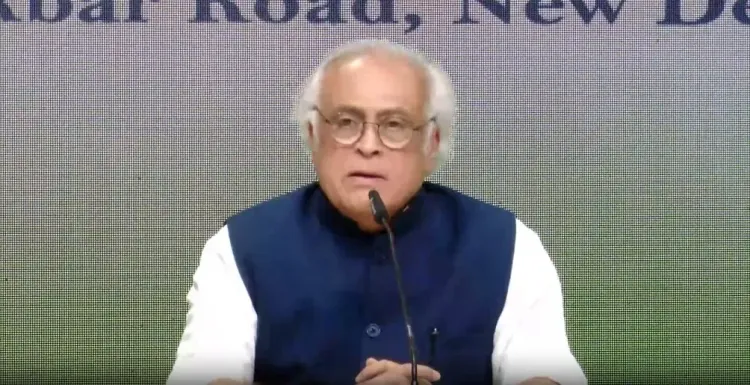
During a press briefing, Congress General Secretary for Communications, Jairam Ramesh, provided a comprehensive timeline of events, including correspondence between Union Minister Kiren Rijiju and Leader of Opposition in the Rajya Sabha, Mallikarjun Kharge. He contended that the government acted alone in calling for this session.
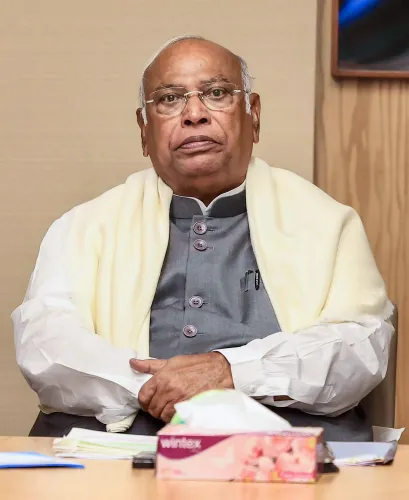
On March 16, Rijiju reached out to Kharge to discuss potential amendments to the Women’s Reservation law. Kharge replied the same day, pressing the government to organize an all-party meeting and submit a formal written proposal to facilitate a collaborative discussion among all involved parties.
Ramesh further stated that on March 24, opposition parties again addressed Rijiju, requesting that such a meeting occur after April 29, when the Election Commission’s Model Code of Conduct would be lifted. Despite these requests, the government moved forward with announcing the special session, he alleged.
The Congress leader reminded attendees that this law was enacted during a special session in September 2023, immediately following the opening of the new Parliament building. The legislation ensures a 33% reservation for women in the Lok Sabha and state assemblies but ties its implementation to the completion of both the census and delimitation processes.
Quoting Kharge’s comments from September 23, 2023, Ramesh remarked that the Congress had previously challenged the delay mechanisms embedded in the law. “Why can’t this be implemented immediately? There is no need to wait for delimitation and census,” Kharge questioned at that time.
Ramesh accused the government of failing to take tangible steps to activate the reservation even after 30 months, reinforcing the opposition's earlier claims that this delay was deliberate.
He also pointed out that while Rijiju's earlier letters focused solely on the Women’s Reservation law, it has now become apparent that the forthcoming special session will also address delimitation—a topic that was never discussed with opposition parties.
“This clearly indicates that within 30 months, the government intends to propose amendments to the Women’s Reservation Act in conjunction with a constitutional amendment regarding delimitation. These are significant matters that demand broader consultation,” Ramesh asserted.
In reference to another letter dated March 26, Ramesh noted that Rijiju again sought a meeting with Congress leaders to advance a constitutional amendment proposal. However, Kharge reiterated the call for a comprehensive all-party meeting after April 29.
The Congress leader claimed that despite this dialogue, the government had pre-determined the session's agenda and proceeded without reaching a consensus.
He raised concerns about the timing of the session, highlighting that it would occur during the enforcement of the Model Code of Conduct, just before key Assembly elections in states like West Bengal and Tamil Nadu.
When questioned about Congress's stance on amendments to the law, Ramesh confirmed that the party's position remains unchanged. He stated that in 2023, Kharge explicitly mentioned that the law should be enacted from the 2024 Lok Sabha elections onwards, ensuring representation for women from OBC communities.
“The discussion goes beyond merely supporting or opposing amendments. It revolves around intent, timing, and the government's unwillingness to implement what has already been legislated,” Ramesh concluded.
Point of View
Emphasizing the importance of collaboration in shaping significant legislative changes.
NationPress
14 Sept 2026
Frequently Asked Questions
What is the Women’s Reservation Bill?
The Women’s Reservation Bill aims to provide a 33% reservation for women in the Lok Sabha and state assemblies, linking its implementation to the completion of the census and delimitation processes.
Why is Congress questioning the special session?
Congress alleges that the government's intent behind the special session and proposed amendments is politically motivated and lacks genuine consultation with opposition parties.
What is the significance of the timing of the session?
The session's timing coincides with the enforcement of the Election Commission’s Model Code of Conduct and key upcoming Assembly elections, raising concerns about political strategy.
What do Congress leaders want regarding the Women’s Reservation Bill?
Congress leaders, including Kharge, have called for the immediate implementation of the law from the 2024 Lok Sabha elections, including provisions for OBC representation.
How has the government responded to the criticisms?
The government has not publicly addressed the specific allegations made by Congress regarding the motivations and timing of the special session.