Will the COP30 Leaders’ Summit in Brazil Unify Global Climate Action?
Synopsis
The COP30 Leaders’ Summit in Brazil is set to gather global leaders to address pressing climate issues. With high expectations for renewed commitments, this summit serves as a vital precursor to COP30, scheduled for later this month. Will this summit mark a turning point in climate action?
Key Takeaways
143 delegations participating at the summit.
57 heads of state and 39 ministers confirmed.
A focus on bridging the NDC ambition gap .
Introduction of the Tropical Forest Forever Facility .
Importance of financing and adaptation discussions.
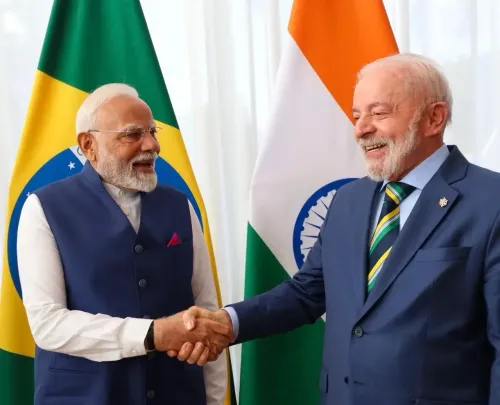
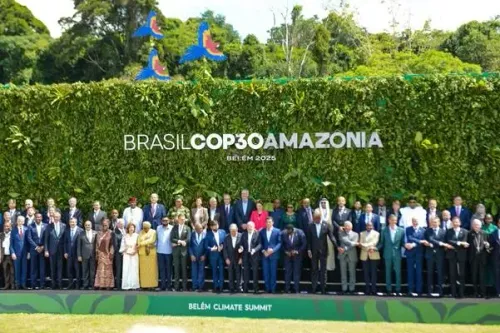
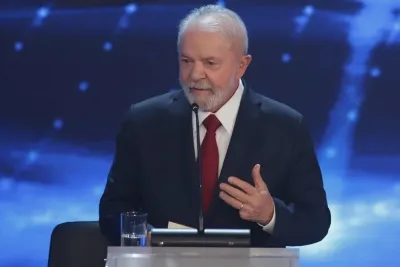
New Delhi, Nov 5 (NationPress) The COP30 Leaders’ Summit scheduled for November 6-7 will convene 143 confirmed delegations, including 57 heads of state and 39 ministers, as a prelude to COP30, which will take place from November 10-21 in Belém, Brazil. During this summit, Brazilian President Luiz Inacio Lula da Silva and UN Secretary-General Guterres will issue a high-level appeal for renewed global solidarity and decisive climate action.
Due to hotel shortages, the Leaders’ Summit is organized prior to the official commencement of the 30th Conference of the Parties (COP30) under the United Nations Framework Convention on Climate Change (UNFCCC).
President Luiz Inácio Lula da Silva will preside over the summit, which will see participation from leaders of the G77 group, representing a majority of developing nations, as well as representatives from the European Union.
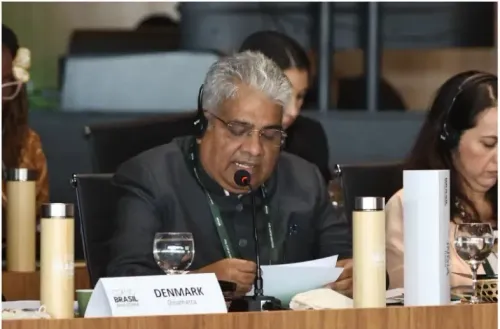
While Prime Minister Narendra Modi may not be present at COP30, Union Environment Minister Bhupender Yadav is set to lead the Indian delegation.
As global leaders gather, the summit aims to assess the viability of the commitments made under the Paris Agreement and the recent pledges from Dubai.
Discussions will focus on two critical issues: how to bridge the NDC ambition gap and how to restore confidence in climate finance amidst rising frustrations over delays and a lack of transparency in funding.
Belém will serve as a litmus test for transforming promises from Paris into tangible actions related to fossil fuels, finance, and forests.
The Brazilian Presidency has positioned COP30 as an ‘Implementation COP,’ releasing a series of letters that detail its objectives and vision for the summit, which includes proposals focused on forests, finance, and clean energy.
Prior to the summit, Brazil is hosting two events: the Local Leaders Forum in Rio de Janeiro (November 3-5), featuring mayors and subnational leaders, and the Business and Finance Forum in São Paulo, organized by Bloomberg Philanthropies.
Key topics anticipated include the transition towards sustainability. COP30 must take significant steps forward from the 2023 Global Stocktake (GST) decision made in Dubai, emphasizing a “just, orderly, and equitable transition away from fossil fuels”.
The primary challenge remains crafting a credible roadmap that advances this objective without exacerbating inequalities.
In Belém, negotiations about a Just Transition will need to yield clear guiding principles to ensure that all actions taken within this framework are equitable, inclusive, and aligned with human rights.
Forests will be pivotal in Brazil’s COP30 agenda, not just as carbon reservoirs but also as vital components for stability, biodiversity, and local economies.
Safeguarding them stands as one of the swiftest and most cost-effective strategies to reduce emissions: nature-based solutions could provide up to 37 percent of the global mitigation required by 2030.
Set to be launched during the Leaders’ Summit, the Brazilian Presidency's proposed Tropical Forest Forever Facility aims to mobilize $125 billion for forest conservation, with $25 billion sourced from initial sponsor capital.
This fund operates on a 10-year results-based payment model that links conservation efforts to financial returns. Brazil seeks political endorsement for the fund, anticipating future capital inflows.
Transparency, indigenous participation, and results-based funding will be vital tests of credibility in Belém and will determine the world’s ability to ensure that forests can thrive while providing financial benefits.
One major area of focus will be financing, as climate finance is expected to dominate discussions in Belém. This follows a commitment made at COP29 by developing nations to contribute at least $300 billion annually by 2035.
This year, nations are anticipated to endorse the Baku-to-Belém Roadmap, aimed at mobilizing $1.3 trillion annually by 2030. This roadmap must illustrate how public funds, private investments, and innovative sources, such as levies and reforms in multilateral banking, can bridge the gap between pledges and actual outcomes.
Adaptation is emerging as a critical benchmark for COP30, with negotiators tasked with establishing clearer targets for the Global Goal on Adaptation and ensuring reliable, accessible financing for the Adaptation and Loss and Damage Funds.
Over 100 nations have unveiled new climate plans, many for the first time including sectors like heavy industry and transport, yet implementation remains inconsistent.
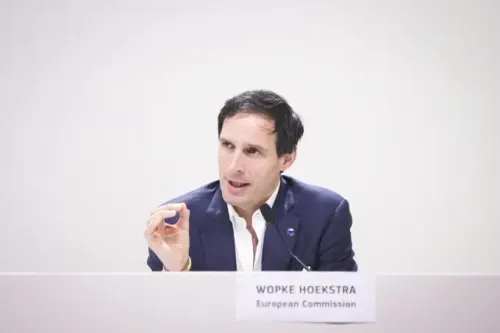
Concerns are growing due to a lack of specifics from major emitters such as India, Indonesia, and Korea, alongside repeated delays from the European Union. The recent ruling from the International Court of Justice has emphasized that governments have a legal obligation to protect citizens from climate-related harm, turning political pledges into matters of compliance.
Point of View
It is crucial to recognize the significance of the COP30 Leaders’ Summit. This event not only showcases the commitment of nations to tackle climate change but also emphasizes the urgent need for actionable solutions. Engaging in transparent dialogues and maintaining trust in climate finance are essential for achieving meaningful progress. Our focus must remain on ensuring accountability and fostering collaboration among countries.
NationPress
1 Oct 2026
Frequently Asked Questions
What is the purpose of the COP30 Leaders’ Summit?
The COP30 Leaders’ Summit aims to unite global leaders to discuss and reinforce commitments to address climate change, ensuring that pledges translate into actionable outcomes.
Who are the key participants in the summit?
The summit will feature 57 heads of state , 39 ministers , and representatives from various delegations, including leaders from the G77 group and the European Union.
What are the main topics of discussion at COP30?
Key discussions will focus on bridging the NDC ambition gap, restoring trust in climate finance, and ensuring equitable solutions for a just transition.
How is Brazil positioning COP30?
Brazil has framed COP30 as an ‘Implementation COP’ , aiming to emphasize actionable solutions regarding forests, finance, and clean energy.
What is the Tropical Forest Forever Facility?
The Tropical Forest Forever Facility is a proposed initiative aimed at mobilizing $125 billion for forest protection, linking conservation efforts to financial returns.