Is Making All Six Stanzas Mandatory a Forceful Move? Congress's Dalwai Responds
Synopsis
Congress leader Husain Dalwai speaks out against the Centre's decision to enforce the full rendition of Vande Mataram, labeling it as a deliberate and forceful act that contradicts prior acknowledgments of the national song. His remarks come amid ongoing political debates and newly issued government guidelines.
Key Takeaways
Dalwai criticizes the mandatory full rendition of Vande Mataram.
Concerns raised about targeting specific communities.
Historical recognition limited to the first stanza.
New guidelines set by the Union Home Ministry.
Importance of inclusivity in national identity.
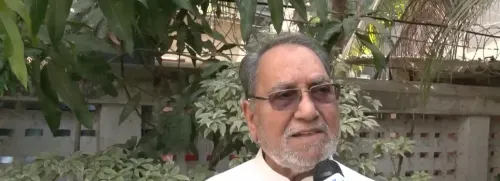
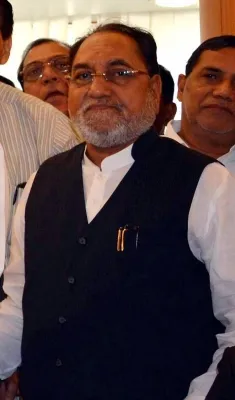
New Delhi, Feb 11 (NationPress) Congress leader Husain Dalwai on Wednesday condemned the government's decision to mandate the performance of the full six-stanza version of Vande Mataram at official events, labeling the action as "forceful" and asserting that it contradicts previous rulings regarding the national song's acknowledgment.
In response to the government's latest directive, Dalwai remarked, "This is forceful and wrong. It goes against the earlier decision. They do this deliberately…"
He elaborated, "The first stanza of Vande Mataram pertains to the nation, while the subsequent verses reference deities. Our country is secular… Muslims do not contest the first stanza of Vande Mataram. Thus, by mandating all six stanzas, there seems to be a deliberate attempt to target Muslims. This is intentional and incorrect."
Stressing the historical consensus around the initial verse, Dalwai continued, "Everyone acknowledges Vande Mataram, and it deserves respect, but only the first stanza has formal recognition. The committee responsible for this included Shyama Prasad Mukherjee and Maulana Azad, all of whom recognized it. However, the other five stanzas were not acknowledged."
The Congress leader's comments emerge amidst a political discourse regarding the Centre's newly issued comprehensive protocols governing the performance of Vande Mataram during official functions.
Earlier in the day, the Union Home Ministry released extensive guidelines formalizing the status and ceremonial significance of the national song at public and governmental events nationwide. These guidelines delineate how and when Vande Mataram should be executed and stipulate the expected decorum from participants, particularly concerning the National Anthem.
According to the new protocols, the complete official rendition of Vande Mataram, which consists of six stanzas and lasts about 3 minutes and 10 seconds, is to be performed or played during significant state events. These occasions include the raising of the national flag, formal arrivals and departures of the President and Governors at official functions, as well as before and after their scheduled speeches at such events.
The directive emphasizes the necessity for proper conduct during the performance, highlighting the importance of adherence at state and institutional gatherings.
Point of View
It is essential to present a balanced perspective on this issue. While the directive from the Centre aims to strengthen national pride, it raises concerns about inclusivity and respect for diverse beliefs within our secular framework. The discourse surrounding Vande Mataram should focus on unity rather than division.
NationPress
30 Sept 2026
Frequently Asked Questions
What is the new directive regarding Vande Mataram?
The Centre has mandated the complete performance of the six-stanza version of Vande Mataram at official events.
Why does Dalwai oppose this mandate?
Dalwai argues that it is a forceful act that contradicts previous acknowledgments of the national song and targets specific communities.
How has the government formalized the role of Vande Mataram?
The Union Home Ministry has issued guidelines detailing how and when Vande Mataram should be performed at state and public events.