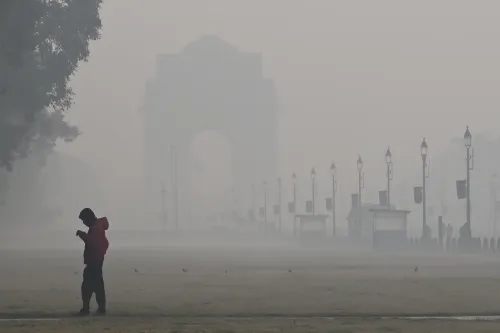
Is Delhi's Pollution Crisis Leading to the Closure of 16 Industrial Units in NCR?

Synopsis
In a decisive move, the CAQM has closed 16 industrial units in NCR due to severe air quality violations. This action underscores the urgent need for compliance with environmental regulations to combat Delhi's pollution crisis.
Key Takeaways
16 industrial units closed due to persistent violations.
Inspections revealed severe environmental breaches.
Non-compliance will lead to strict penalties.
All industries in NCR urged to comply with regulations.
Importance of maintaining air quality emphasized.
New Delhi, Jan 9 (NationPress) The Commission for Air Quality Management (CAQM) has mandated the shutdown of 16 industrial facilities across the National Capital Region (NCR) following thorough inspections that uncovered significant and ongoing infractions, as stated by an official.
Among these 16 units, one is situated in Uttar Pradesh (NCR), one in Rajasthan (NCR), while the other 14 are located in the Sonipat district of Haryana, according to the official.
The inspections were part of the Commission’s ongoing and intensified efforts to combat air pollution and enforce compliance with legal directives, as detailed in a statement from the Ministry of Environment, Forest and Climate Change.
The inspections uncovered a variety of serious environmental violations, such as the operation and establishment of units without the necessary Consent to Establish (CTE) and Consent to Operate (CTO), as required by law, as well as the absence or malfunction of Air Pollution Control Devices (APCDs), the statement reported.
Furthermore, CAQM teams found the use of unauthorized fuel, operations during restricted times under GRAP, non-compliance of diesel generator (DG) sets with regulatory standards, and visible emissions and smoke from industrial activities, according to the statement.
In numerous instances, the units were found to be operating in flagrant violation of existing laws, regulations, and environmental standards, it noted.
The CAQM has taken a firm stance on these violations, ordering the immediate closure of the errant units until they achieve compliance with all relevant laws and regulations, it stated.
The Commission emphasized that non-compliance will not be tolerated and that stringent enforcement actions, including closures and further penalties as dictated by law, will persist against non-compliant industrial units.
All industries operating within the NCR are once again urged to diligently follow the established environmental regulations, ensure the proper installation and functioning of APCDs, and maintain compliance at all times, the CAQM statement concluded.
Point of View
I find the CAQM's actions to be a necessary response to the escalating pollution crisis in Delhi. With public health at risk, it is imperative that industries adhere to environmental regulations. Our commitment to a cleaner, healthier environment must remain unwavering.
NationPress
3 Oct 2026
Frequently Asked Questions
What prompted the CAQM to close industrial units?
The CAQM closed these units due to serious violations of environmental regulations uncovered during inspections, including the lack of necessary permits and the use of unapproved fuels.
How many industrial units were affected?
A total of 16 industrial units were ordered to close across the National Capital Region.
What actions will be taken against non-compliant units?
The CAQM will implement strict enforcement actions, including closures and penalties until compliance with environmental regulations is achieved.
Where are these industrial units located?
The affected units include locations in Uttar Pradesh, Rajasthan, and primarily in Sonipat district of Haryana.
What is the CAQM's stance on future compliance?
The CAQM has reiterated that it will not tolerate non-compliance and will continue to enforce environmental laws rigorously.