Delhi CM Rekha Gupta tables CAG report, slams AAP's ₹80,798 crore budget lapses
Synopsis
Delhi CM Rekha Gupta used the Monsoon Session to table a long-delayed CAG report covering AAP's tenure, revealing that the previous government spent only ₹61,000 crore of an ₹80,798 crore budget — and allegedly returned central funds meant for Yamuna clean-up, Ayushman health coverage, and women's welfare. The report's tabling marks a significant political and accountability moment in post-election Delhi.
Key Takeaways
Delhi CM Rekha Gupta tabled the CAG Report No.
1 in the Delhi Legislative Assembly on 11 August 2026 during the Monsoon Session.
The report covers audit findings for Delhi government departments for 2022–23 , flagging irregularities in DSSSB , DSIIDC , GTB Hospital , Delhi Jal Board , and the e-procurement system .
The previous AAP government reportedly spent only ₹61,000 crore out of a ₹80,798 crore budget for 2024–25 .
AAP allegedly announced 32 schemes worth over ₹1,500 crore but failed to utilise sanctioned funds, and returned central funds for Yamuna clean-up and the Ayushman scheme .
GST refunds under the current BJP government reportedly doubled to ₹1,313 crore versus ₹695 crore under AAP in a comparable year.
The State Finances Audit Report (No.
2 of 2026) has been forwarded to departments for Action Taken Notes; the PAC will follow up.
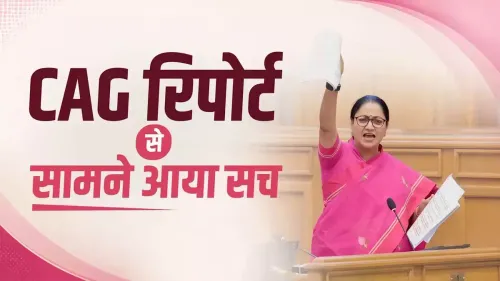
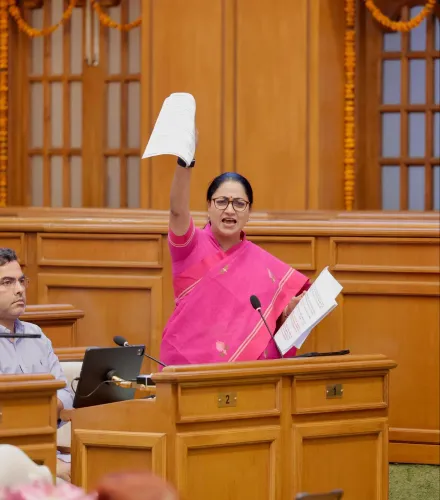
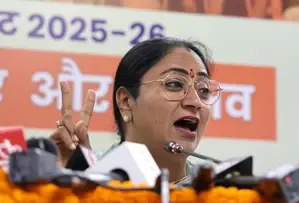
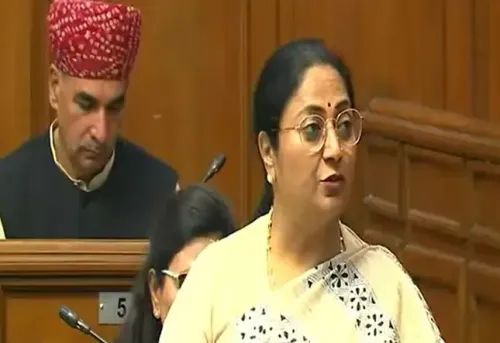
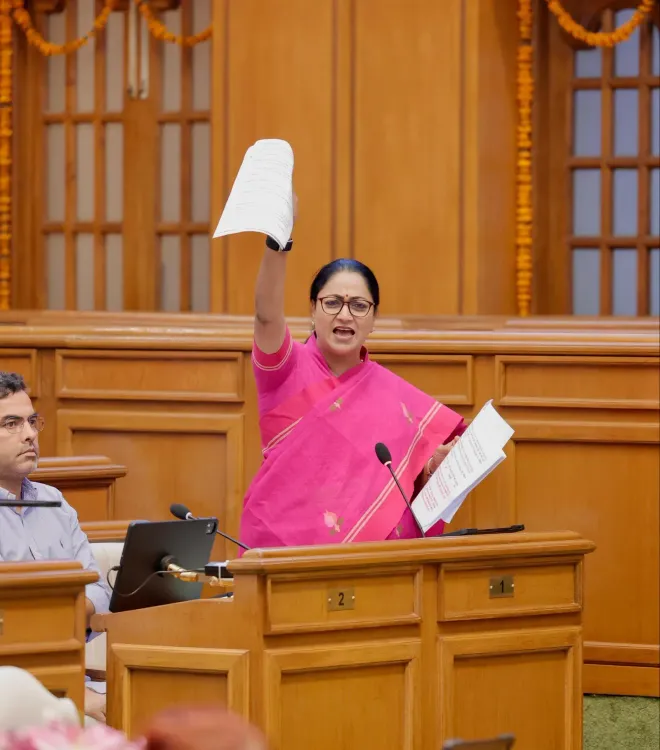
Delhi Chief Minister Rekha Gupta on Tuesday, 11 August 2026, tabled a Comptroller and Auditor General (CAG) report in the Delhi Legislative Assembly during its Monsoon Session, launching a sharp attack on the previous Aam Aadmi Party (AAP) government for alleged mismanagement of public funds and systemic financial indiscipline. Gupta declared that every rupee of public money would henceforth be deployed with full transparency and accountability.
Key Findings of the CAG Report
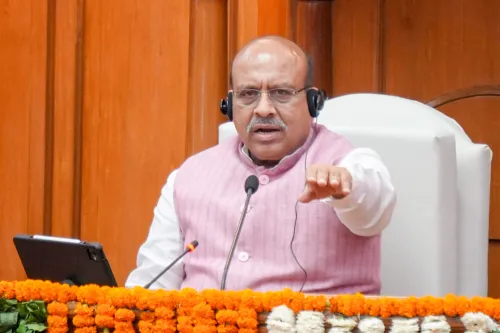
Speaker Vijender Gupta outlined that CAG Report No. 1 covers audit findings and observations relating to various Delhi government departments for the financial year 2022–23. The report flags revenue loss in stamp duty and registration fees, unnecessary expenditure by the Delhi Subordinate Services Selection Board (DSSSB), irregularities in the power sector subsidy policy, and shortcomings in the e-procurement system. It also examines payments at GTB Hospital, irregularities in DSIIDC, matters relating to the Public Works Department, construction of the new block at LNJP Hospital, the Delhi Transport Corporation, and the Delhi Jal Board.
The State Finances Audit Report (Report No. 2 of 2026) was also discussed in the session and is being forwarded to the concerned departments for Action Taken Notes. The Public Accounts Committee (PAC) will take further action on those notes thereafter.
Budget Utilisation Failures Under AAP
Chief Minister Gupta cited a stark figure at the centre of her critique: out of the ₹80,798 crore budget for 2024–25, the previous AAP government reportedly spent only ₹61,000 crore — leaving a significant portion undeployed. She attributed this to what she called a 'lack of intention to do public welfare.'
She further alleged that the AAP administration failed to utilise central government funds earmarked for cleaning the Yamuna river, combating air pollution, reducing garbage dumps, and improving roads. Additionally, she accused the previous government of announcing 32 schemes worth over ₹1,500 crore without adequately utilising the sanctioned funds.
Specific Allegations Against the AAP Government
Gupta levelled a series of specific charges against the AAP administration. She alleged the previous government delayed Delhi Metro expansion by withholding its share of funds, returned central allocations meant for the Ayushman health scheme, and ignored funds for a school of excellence and a transparent ration card system.
On GST refunds, she drew a direct comparison: 'They issued returns of just ₹695 crore in one year, whereas our government issued GST returns worth ₹1,313 crore in one year,' she said. She also accused the AAP government of repeatedly promising but never launching the Delhi Lakshmi Yojana — a monthly financial aid scheme of ₹1,000 for women — alleging announcements were timed around elections without follow-through.
Gupta also said the Public Accounts Committee (PAC) was rendered defunct under the AAP government, and that the CAG report — which she said should have been presented far earlier — was allegedly withheld from the public by the previous administration.
AAP's Record and the Political Context
'There was hardly any sector which did not suffer due to a scam. Whether it was a matter of floating a tender, formulating a policy or giving subsidy, there were scams in all their actions,' Gupta said, according to her address in the Assembly. She described the current Bharatiya Janata Party (BJP) government's role as corrective, using the metaphor: 'The termite in the system dates back to their era. The BJP government is now spraying pesticide to control the decay.'
This comes amid the BJP's broader political offensive against AAP following its victory in the Delhi Assembly elections. The tabling of the CAG report — covering the period when AAP was in power — gives the ruling party legislative ammunition to press accountability demands. Critics, however, may argue that the framing of the report's release is itself politically timed.
What Happens Next
The State Finances Audit Report has been forwarded to departments for their Action Taken Notes at the earliest, with the PAC set to follow up. The government's stated commitment to fiscal discipline and institutional accountability will be tested in the months ahead as these audit findings are acted upon — or contested — across departments.
Point of View
The numbers, if verified, are damning: an ₹80,798 crore budget with only ₹61,000 crore spent is not a rounding error, it is a structural failure of delivery. The real test is whether the Public Accounts Committee — dormant for years under AAP by Gupta's own account — is now allowed to function with genuine independence, or whether it becomes a partisan tribunal. Accountability institutions only restore credibility when they apply equally to all governments, past and present.
NationPress
26 Sept 2026
Frequently Asked Questions
What did the CAG report tabled in Delhi Assembly reveal?
The CAG Report No. 1, tabled on 11 August 2026, covers audit findings for Delhi government departments for 2022–23, flagging revenue losses in stamp duty and registration fees, irregularities in DSSSB, DSIIDC, GTB Hospital, the e-procurement system, Delhi Transport Corporation, and Delhi Jal Board. Chief Minister Rekha Gupta described it as a 'report card' exposing the AAP government's alleged misuse of public money.
How much of Delhi's 2024–25 budget did the AAP government spend?
According to Chief Minister Rekha Gupta, the AAP government spent only ₹61,000 crore out of a total budget of ₹80,798 crore for 2024–25. She attributed this to what she called a lack of intent to deliver public welfare.
What is the Delhi Lakshmi Yojana and why is it controversial?
The Delhi Lakshmi Yojana was a promised monthly financial aid scheme of ₹1,000 for women, announced by the AAP government. Chief Minister Gupta alleged that AAP repeatedly announced its launch around election cycles but never actually implemented it.
What is the Public Accounts Committee's role in this process?
The Public Accounts Committee (PAC) is the legislative body responsible for scrutinising CAG audit findings and following up on departmental action. Chief Minister Gupta alleged the PAC was rendered defunct under the AAP government. The State Finances Audit Report (No. 2 of 2026) has now been forwarded to departments for Action Taken Notes, with the PAC set to take further action.
How do GST refunds under the current Delhi government compare to AAP's tenure?
Chief Minister Gupta claimed the current BJP-led Delhi government issued GST refunds worth ₹1,313 crore in one year, compared to ₹695 crore issued by the AAP government in a comparable period — roughly double the amount.