NEET-UG 2026 paper leak: Delhi court charges 14 accused, trial from Nov 25
Synopsis
A Delhi Fast Track Court has charged all 14 accused in the NEET-UG 2026 paper leak case, with day-to-day trial set for 25 November — the first major legal reckoning under India's new anti-cheating law. The CBI's case rests on 360 witnesses, 422 documents, and an alleged inside job by NTA subject experts who hand-copied 135 Chemistry questions on paper slips.
Key Takeaways
A Delhi Fast Track Court framed charges against 14 accused in the NEET-UG 2026 paper leak case on 18 November 2026 .
Day-to-day trial will commence on 25 November 2026 ; all accused must appear on 21 November for formal charge framing.
The CBI chargesheet cites 360 witnesses , 422 documents , and 43 material objects .
Kulkarni allegedly hand-wrote all 135 Chemistry questions on paper slips and smuggled them out of the NTA office.
The original NEET-UG 2026 exam (held 3 May 2026 ) was cancelled; a re-examination was held on 21 June 2026 .
Charges have been framed under the BNS , the Prevention of Corruption Act , and the Public Examinations (Prevention of Unfair Means) Act, 2024 .
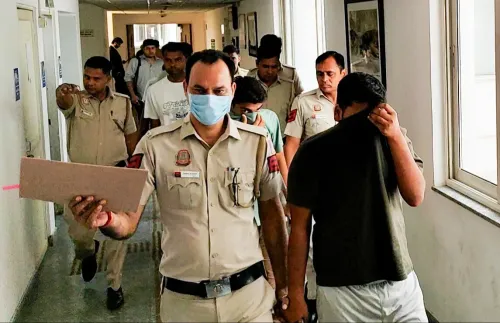
A specially designated Fast Track Court at the Rouse Avenue Courts Complex in New Delhi on Wednesday, 18 November 2026, framed charges against 14 accused in the NEET-UG 2026 question paper leak case, formally clearing the path for trial proceedings to begin. The court directed all accused to appear in person on 21 November for formal charge framing, with day-to-day trial set to commence on 25 November 2026.
Who Has Been Charged
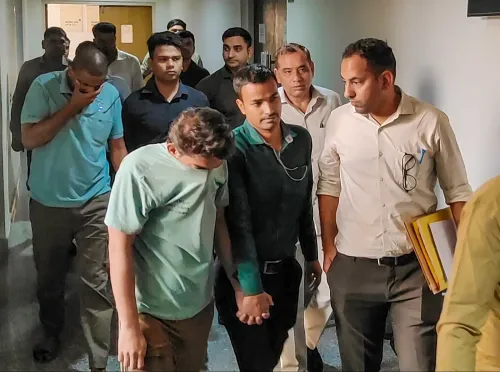
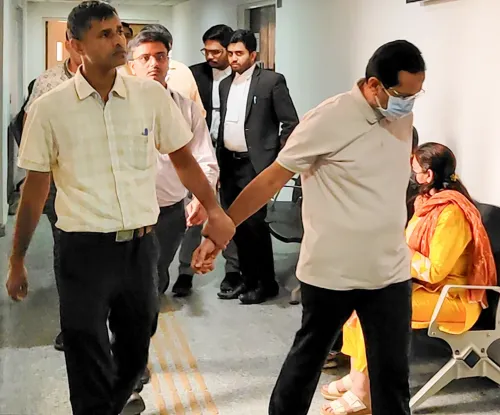
The 14 accused against whom charges have been framed include Yash Yadav, Mangilal Biwal, Dinesh Biwal, Vikas Biwal, Shubham Khairnar, Dhananjay Lokhande, Prahlad Kulkarni, Tejas Harshad Kumar, Dr Manoj Shirure, Shivraj Raghunath Motegaonkar, Manisha Waghmare, Manisha Mandhare, and Manisha Sanjay Hawaldar. The 14th accused, Sheshrao Bajrang Suryavanshi, was added after the Central Bureau of Investigation (CBI) filed a supplementary chargesheet against him in October 2026.
The accused face charges under multiple laws, including the Bharatiya Nyaya Sanhita (BNS), the Prevention of Corruption Act, and the Public Examinations (Prevention of Unfair Means) Act, 2024 — the last of which was specifically invoked by the Fast Track Court constituted to handle offences under that legislation.
How the Leak Allegedly Happened
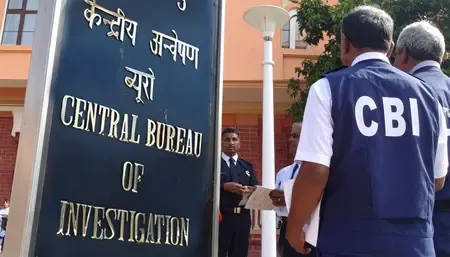
According to the CBI's chargesheet filed on 28 July 2026 against 13 accused, the question papers were allegedly leaked through a network involving National Testing Agency (NTA) subject experts, intermediaries, coaching operators, and others. The probe agency claimed that three NTA subject experts — entrusted with translating, back-translating, and proofreading question papers — exploited security lapses to remove confidential examination material from the NTA's Delhi office.
Notably, the CBI alleged that accused P.V. Kulkarni hand-wrote all 135 Chemistry questions, along with their answer options, on small slips of paper and concealed them while exiting the confidential section. The agency also flagged serious surveillance gaps: only 20-25 days of CCTV footage were available from the NTA office, and there was reportedly no dedicated control room to monitor the live feed from the confidential area.
The chargesheet cited 360 witnesses, 422 documents, and 43 material objects in support of the prosecution's case. Suryavanshi was allegedly linked to Khairnar, a career counsellor arrested in Nashik, Maharashtra, who is accused of circulating the question paper on social media.
Background: The Exam Cancelled, Then Re-held
The NEET-UG 2026 examination was originally held on 3 May 2026 but was subsequently cancelled following the paper leak controversy. The CBI registered the case on 12 May 2026 after a complaint from the Department of Higher Education under the Union Ministry of Education. A re-examination was conducted on 21 June 2026 under heightened security arrangements, affecting lakhs of medical aspirants across the country.
This comes amid persistent concerns about the integrity of large-scale competitive examinations in India — the NEET-UG 2026 controversy is among the most high-profile paper leak cases since the enactment of the Public Examinations (Prevention of Unfair Means) Act, 2024, which was specifically designed to deter and punish such offences.
What Happens Next
With day-to-day trial proceedings scheduled from 25 November 2026, the case will be heard on a fast-track basis given both its scale and the involvement of a dedicated court. The sheer volume of evidence — including hundreds of witnesses and documents — signals a lengthy, closely watched trial. Outcomes in this case could set a significant precedent for how India prosecutes examination fraud under its newly minted anti-cheating legislation.
Point of View
422 documents) suggests a trial that could stretch for years, raising questions about whether the new fast-track mechanism can deliver timely justice or simply expedite the early procedural stages. More fundamentally, the alleged inside-job angle — NTA subject experts hand-copying questions in a facility with barely three weeks of CCTV backup and no dedicated surveillance room — points to institutional negligence that no chargesheet alone can fix. Until the NTA's examination security architecture is structurally overhauled, prosecuting individuals risks being a corrective that treats symptoms while leaving the disease intact.
NationPress
18 Nov 2026
Frequently Asked Questions
What is the NEET-UG 2026 paper leak case?
The NEET-UG 2026 paper leak case involves the alleged theft and circulation of confidential question papers before the medical entrance exam held on 3 May 2026, which was subsequently cancelled. The CBI registered the case on 12 May 2026 and has charged 14 people, including NTA subject experts and intermediaries, with leaking and distributing the papers.
Who are the 14 accused charged by the Delhi Fast Track Court?
The 14 accused include Yash Yadav, Mangilal Biwal, Dinesh Biwal, Vikas Biwal, Shubham Khairnar, Dhananjay Lokhande, Prahlad Kulkarni, Tejas Harshad Kumar, Dr Manoj Shirure, Shivraj Raghunath Motegaonkar, Manisha Waghmare, Manisha Mandhare, Manisha Sanjay Hawaldar, and Sheshrao Bajrang Suryavanshi. Charges were framed by a specially constituted Fast Track Court in New Delhi on 18 November 2026.
When does the NEET-UG 2026 paper leak trial begin?
The day-to-day trial is scheduled to begin on 25 November 2026. All 14 accused have been directed to appear before the Fast Track Court on 21 November 2026 for formal charge framing.
How was the NEET-UG 2026 paper allegedly leaked?
According to the CBI, three NTA subject experts exploited security lapses at the NTA's Delhi office to remove confidential questions. One accused, P.V. Kulkarni, allegedly hand-wrote all 135 Chemistry questions on paper slips and concealed them while leaving the confidential section. The agency also flagged that only 20-25 days of CCTV footage were available and there was no dedicated control room monitoring the confidential area.
What happened to students who took the cancelled NEET-UG 2026 exam?
After the original NEET-UG 2026 exam held on 3 May 2026 was cancelled following the paper leak controversy, a re-examination was conducted on 21 June 2026 under heightened security measures. The disruption affected lakhs of medical aspirants across the country.