Delhi Haj Committee backs Modi's fuel push; pilgrims take Metro to IGI
Synopsis
In a rare instance of a religious body directly responding to a Prime Minister's policy appeal, the Delhi Haj Committee directed Haj pilgrims to swap buses for the Metro Airport Express on their way to IGI Airport — turning a routine departure into a public statement on fuel conservation and national solidarity.
Key Takeaways
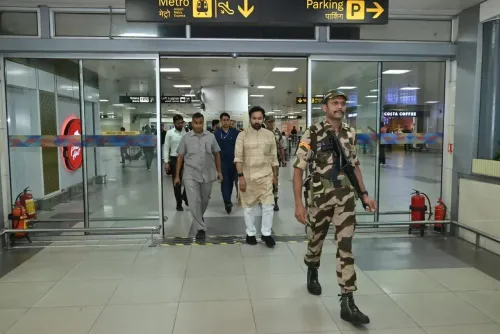
The Delhi State Haj Committee on 15 May directed Haj pilgrims to use the Delhi Metro Airport Express Line to reach IGI Airport Terminal-3 instead of buses or vehicle convoys.
The move was framed as direct support for Prime Minister Narendra Modi's appeal for fuel and energy conservation.
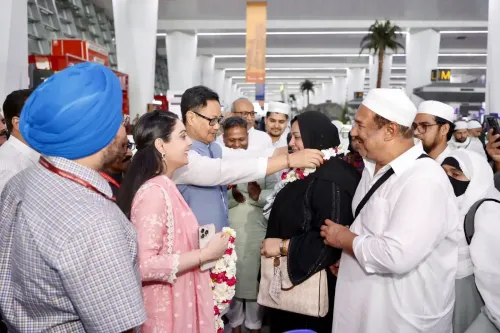
Chairperson Kausar Jahan interacted with pilgrims before departure and highlighted the global energy crisis as the backdrop for the initiative.
Multiple pilgrims publicly endorsed the change, citing both the PM's directive and the Haj Committee's leadership.
The Airport Express Line connects New Delhi station to Terminal-3 in approximately 20 minutes , offering a practical alternative for group travel.
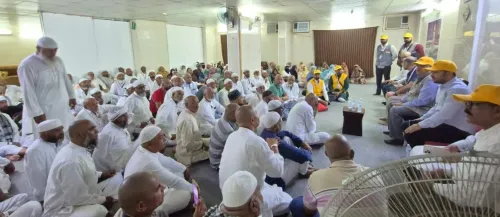
The Delhi State Haj Committee on Friday, 15 May directed Haj pilgrims departing for Saudi Arabia to use the Delhi Metro Airport Express Line instead of buses and vehicle convoys to reach Indira Gandhi International (IGI) Airport, in a move aligned with Prime Minister Narendra Modi's appeal for fuel conservation amid global energy concerns. Pilgrims travelled from New Delhi Metro Station to IGI Airport Terminal-3 via the Airport Express Line, marking what the committee described as a gesture of national participation in energy efficiency.
The Initiative and Its Rationale
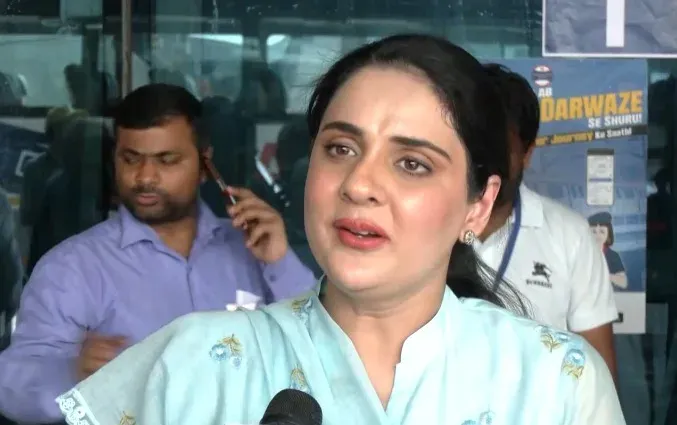
Delhi Haj Committee Chairperson Kausar Jahan interacted with pilgrims before their departure and underscored the importance of adopting sustainable travel practices. She noted that the world is navigating a phase of energy uncertainty, and that India has made deliberate efforts to shield its citizens from the worst of its effects.
'PM Modi has appealed to save fuel and energy. It is the responsibility of every Indian to follow it. As we all know, the world is passing through a phase of uncertainty and energy crisis, the effects of which are visible in every country. India is among those few countries that have tried to ensure that its impact does not affect the common man,' Jahan said.
She added that the committee's decision to encourage Metro travel over large vehicle convoys was taken 'in the interest of the nation' and in direct response to the Prime Minister's call.
Pilgrims Respond Positively
Several pilgrims welcomed the shift. One traveller noted that the new arrangement replaced the earlier practice of ferrying passengers to the airport in buses, calling it a meaningful change. 'Earlier, people were taken to the airport in buses. But now, we have received a new directive from the Prime Minister to save petrol. Following this, we will also walk in line with his initiative so that we can contribute to the progress of our country,' the pilgrim said.
Another pilgrim offered straightforward support: 'Whatever decision the Prime Minister has taken, we support it. We have decided to travel by metro.' A third confirmed the initiative was driven by the Haj Committee itself.
Broader Context: Fuel Conservation Push
Prime Minister Modi's appeal for fuel and energy conservation has gained traction across government bodies and civil society in recent weeks, set against the backdrop of volatile global oil markets and India's ongoing dependence on energy imports. The Delhi Haj Committee's move is among the more visible institutional responses to that appeal, drawing attention to public transport as both an eco-friendly and operationally efficient alternative for large group travel.
Notably, the Airport Express Line — a dedicated high-speed Metro corridor — connects New Delhi station to Terminal-3 in approximately 20 minutes, making it a practical option for pilgrims travelling with luggage. The committee's intervention also signals how religious and community bodies can serve as effective channels for public policy messaging.
What This Signals
The initiative is a small but symbolically significant step: it demonstrates cross-community support for a centrally driven conservation agenda and positions public transport as a viable, dignified alternative to convoy-style travel. Whether the practice is adopted for future Haj departures — and extended to other community travel arrangements — will determine its longer-term impact.
Point of View
Not a structural change in how large pilgrim groups are managed. The real question is whether the Haj Committee will institutionalise Metro travel for all future departures, and whether other state Haj committees follow suit. Without that, this risks being a symbolic photo-op rather than a replicable model for sustainable public transport use during mass religious travel.
NationPress
24 Sept 2026
Frequently Asked Questions
What did the Delhi Haj Committee do on 15 May 2025?
The Delhi State Haj Committee directed Haj pilgrims departing for Saudi Arabia to travel to IGI Airport via the Delhi Metro Airport Express Line instead of buses or vehicle convoys. The initiative was led by Chairperson Kausar Jahan and framed as support for PM Modi's fuel conservation appeal.
Why did the Delhi Haj Committee encourage Metro travel?
The committee cited Prime Minister Narendra Modi's appeal for fuel and energy conservation, set against global energy market volatility and India's dependence on energy imports. Chairperson Kausar Jahan called it every Indian's responsibility to respond to the PM's call.
Who is Kausar Jahan?
Kausar Jahan is the Chairperson of the Delhi State Haj Committee. She led the 15 May initiative and personally interacted with pilgrims before their departure to explain the rationale behind switching to Metro travel.
Which Metro route did the pilgrims use?
Pilgrims used the Delhi Metro Airport Express Line, travelling from New Delhi Metro Station to IGI Airport Terminal-3. The corridor covers the route in approximately 20 minutes.
How did pilgrims respond to the Metro travel directive?
Several pilgrims publicly welcomed the move, expressing support for PM Modi's fuel conservation initiative and acknowledging the Haj Committee's role in organising the change. Multiple travellers noted it as a shift from the earlier practice of bus convoys to the airport.