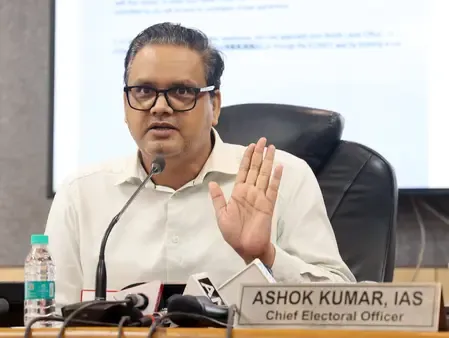
Delhi SIR 2025: CEO Ashok Kumar says political parties involved at every stage
Synopsis
Delhi’s Chief Electoral Officer has gone on record to say political parties will be looped in at every tier of the Special Intensive Revision — from booth-level agents to officer-level meetings. With the Supreme Court’s backing and a 30 June start date, the revision is shaping up as a closely watched test of electoral transparency in the capital.
Key Takeaways
Delhi’s Special Intensive Revision (SIR) of electoral rolls begins on 30 June 2025 .
Chief Electoral Officer Ashok Kumar confirmed political parties have representation at every tier, including Booth Level Agents (BLAs) at the BLO and ARO levels.
BLOs will make up to three visits to each household; voters can also submit enumeration forms online .
The Supreme Court has upheld the SIR process, which the Election Commission says is fully within the legal framework.
Special clarification videos have been prepared for migrants and women who moved to Delhi after marriage.
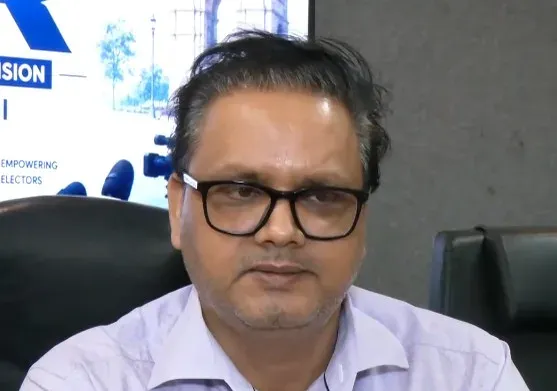
Delhi Chief Electoral Officer Ashok Kumar on Wednesday, 27 May 2025 affirmed that the upcoming Special Intensive Revision (SIR) of electoral rolls in the national capital will be conducted with full transparency, with political parties engaged at every stage of the process. The SIR is scheduled to commence in Delhi from 30 June 2025.
How Political Parties Are Involved
Kumar outlined a structured, multi-tier engagement mechanism for recognised political parties. “At the level of the Booth Level Officer (BLO), there are two Booth Level Agents (BLAs), and at the level of the Assistant Returning Officer, there is one Booth Level Agent. At our level, too, we conduct meetings with political parties,” he said.
Booth Level Agents are representatives formally appointed by recognised political parties during the electoral process. Kumar further noted that once the Electoral Registration Officer (ERO) issues a notice following draft publication, political parties will be informed of both the notice and its disposal — ensuring end-to-end visibility.
Supreme Court Verdict and Legal Framework
Welcoming the Supreme Court’s recent verdict on the SIR, Kumar stated that the entire process operates within an established legal framework. “The Election Commission has made its guidelines with full transparency. The involvement of political parties is clearly mentioned in the guidelines,” he said. This comes amid broader national scrutiny of electoral roll revision processes, with opposition parties in several states raising concerns about voter deletions.
The SIR Process on the Ground
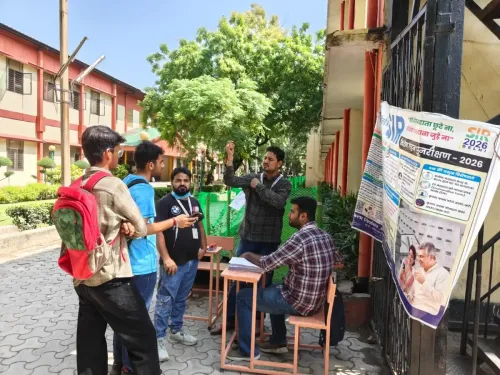
From 30 June, BLOs will conduct door-to-door visits across Delhi, distributing enumeration forms to voters for self-filling and submission. If a voter is unavailable during the first visit, BLOs are mandated to make a maximum of three attempts. Should the voter remain unreachable, the form will be left at the residence.
Voters also have the option to download and submit the enumeration form online. When forms are submitted physically, BLOs will countersign as an acknowledgement. The BLO’s name and contact number will be printed at the top of each form for voter assistance.
Support for Migrants and Women
Addressing a common pain point, Kumar said the Election Commission has prepared clarification videos to guide voters who migrated from other states or within Delhi on how to trace and link their details to parents or grandparents in electoral records. The guidance specifically covers women who relocated to Delhi after marriage — a segment historically prone to enrolment gaps. Additional videos will be produced if further concerns emerge during the revision exercise.
What Comes Next
With the ground process set to begin on 30 June 2025, the Delhi electoral machinery is now in a preparatory phase, training BLOs and activating party coordination channels. The revised electoral rolls will determine voter eligibility for the next round of elections in the capital, making accurate enrolment a high-stakes exercise for all stakeholders.
Point of View
Signalling that the process had already attracted legal and political friction. The three-visit rule and online submission option address genuine access concerns, but the real accountability test will be whether BLA appointments are actually made by all recognised parties or remain a paper provision. Electoral roll revisions in India have a history of inadvertent deletions that disproportionately affect migrant and lower-income voters; the clarification videos are a welcome step, but their reach in a city of Delhi’s scale and churn remains an open question.
NationPress
11 Oct 2026
Frequently Asked Questions
What is the Special Intensive Revision (SIR) of electoral rolls in Delhi?
The Special Intensive Revision (SIR) is a structured exercise by the Election Commission to update and verify Delhi’s electoral rolls. It begins on 30 June 2025, with Booth Level Officers visiting homes to distribute and collect enumeration forms from registered voters.
How are political parties involved in Delhi’s SIR process?
Recognised political parties can appoint Booth Level Agents (BLAs) at the BLO and Assistant Returning Officer levels. The Chief Electoral Officer also holds meetings with party representatives and ensures they are informed when Electoral Registration Officer notices are issued and disposed of.
What happens if a voter is not at home during the BLO’s visit?
BLOs are required to make a maximum of three visits to a voter’s residence. If the voter remains unavailable after all three attempts, the enumeration form is left at the residence. Voters can also download and submit the form online.
What support is available for migrants and women who moved to Delhi after marriage?
The Election Commission has produced clarification videos to help voters who migrated from other states or within Delhi link their records to those of parents or grandparents. Specific guidance is also available for women who relocated to Delhi after marriage and need to update their enrolment details.
Has the Supreme Court approved the SIR process?
Yes. Delhi CEO Ashok Kumar welcomed the Supreme Court’s verdict on the SIR, stating that the process is conducted entirely within the legal framework and that the Election Commission’s guidelines were framed with full transparency.