Why is Delhi-NCR's Air Quality Deteriorating Again?

Synopsis
In the wake of a brief improvement, Delhi's air quality has again plunged into the 'very poor' category with the AQI crossing 300. Political leaders, including Rahul Gandhi, are pressing for urgent action as air pollution remains a critical health issue. What actions will be taken to address this growing concern?
Key Takeaways
The AQI in Delhi has crossed 300, indicating a drop in air quality.
Areas like Anand Vihar and ITO are categorized as 'very poor'.
Political leaders are calling for urgent action on air pollution.
Public health remains a significant concern due to high pollution levels.
Continuous monitoring is essential to address air quality issues.
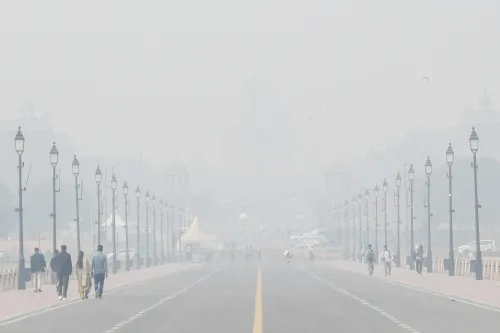
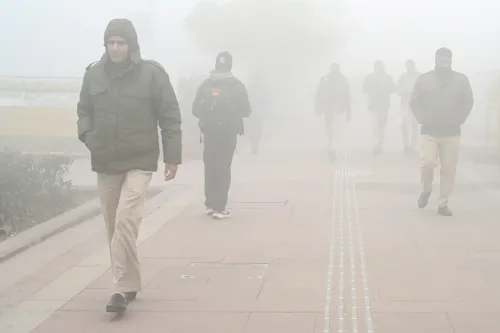
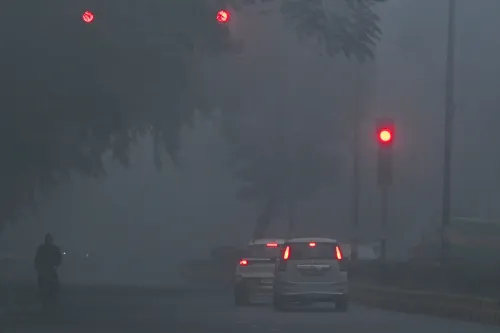
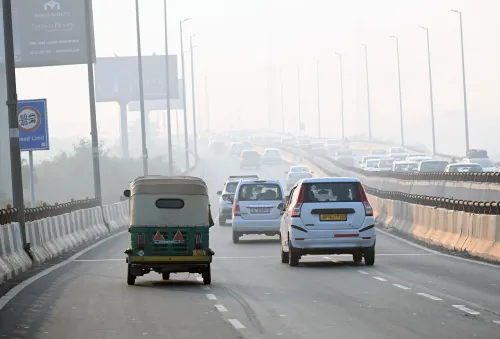
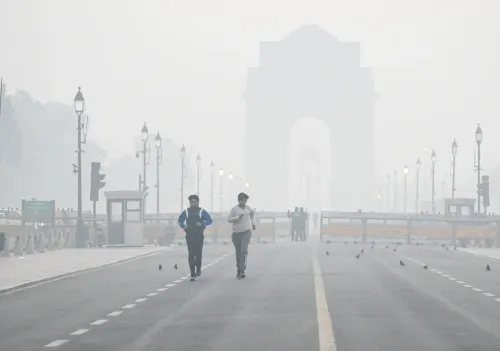
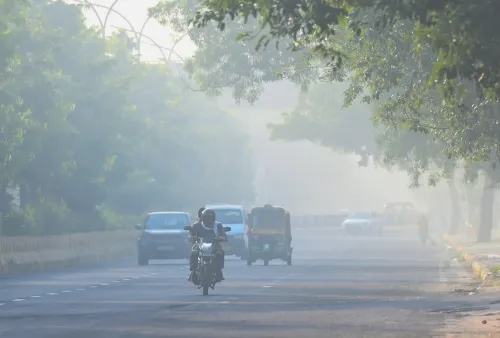
New Delhi, Dec 1 (NationPress) Once again, the air quality in Delhi has taken a turn for the worse on Monday, with the Air Quality Index (AQI) creeping towards the “very poor” category. This deterioration follows a brief respite where strong winds managed to shift the AQI from 'very poor' to 'poor' for the first time in 16 days.
At 7 a.m., the AQI surpassed the 300 threshold, remaining in the “poor” category as the national capital was enveloped in a thick layer of fog and smoke, according to the Central Pollution Control Board (CPCB).
Data from the CPCB indicates that Anand Vihar recorded an AQI of 325, while ITO also registered 325, both firmly categorizing these areas as 'very poor'. On the other hand, areas around India Gate and Kartavya Path showed slightly more favorable readings, with AQI levels recorded at 267, which falls under the 'poor' category.
As outlined by CPCB guidelines, an AQI reading between 0-50 is labeled 'good', 51-100 is 'satisfactory', 101-200 is 'moderate', 201-300 is 'poor', 301-400 is 'very poor', and levels between 401-500 are classified as 'severe.'
On Sunday, the capital saw a slight improvement as the AQI dipped to 279, marking the second-lowest reading in November, following an AQI of 202 recorded on November 5, according to the CPCB’s Sameer app.
Despite this temporary relief, around 22 out of 39 monitoring stations continued to report air quality within the “very poor” zone. Between November 24 and 29, the city's average AQI ranged from 327 to 382, before decreasing to 305 on Saturday and further to 279 on Sunday morning.
As the Parliament Winter Session kicks off on Monday, air pollution is anticipated to be a significant topic of discussion among Opposition parties. Rahul Gandhi, the Leader of the Opposition in Lok Sabha, had called for a comprehensive debate on the issue, challenging Prime Minister Narendra Modi on his silence regarding what he referred to as a “health emergency.”
Gandhi also engaged with a group of women at his residence concerning the deteriorating air quality in the capital. He later shared the interaction via a video on X, urging the Prime Minister to act swiftly.
“Every mother I meet expresses the same concern: her child is growing up breathing toxic air. They are fatigued, frightened, and frustrated. Modi ji, India’s children are gasping for breath in front of us. How can you maintain silence? Why does your government show no urgency, plan, or accountability?” he posted.
Point of View
It is imperative to highlight the ongoing air quality crisis in Delhi. The recurring fluctuations in the Air Quality Index underscore a pressing public health concern that requires immediate attention from policymakers. Engaging in open dialogue and demanding accountability are critical steps towards finding viable solutions for the residents of our capital.
NationPress
26 Sept 2026
Frequently Asked Questions
What is the current AQI level in Delhi?
As of December 1, the AQI in Delhi has crossed 300, categorizing it as 'poor' but nearing 'very poor'.
What areas are most affected by poor air quality?
Areas like Anand Vihar and ITO have recorded AQI levels of 325, which falls in the 'very poor' category.
What are the health implications of high AQI?
An AQI above 300 can lead to serious health issues, particularly for vulnerable groups such as children and the elderly.
What actions are being taken to address air pollution in Delhi?
Political leaders are calling for urgent discussions and actions to tackle the escalating air pollution crisis.
How does the AQI scale work?
The AQI is measured on a scale from 0 to 500, with higher values indicating worse air quality and increased health risks.