Nepal's Deputy Speaker Declares Boycott on Dowry Weddings
Synopsis
Rubi Kumari Thakur, Nepal's youngest Deputy Speaker, has pledged to avoid weddings that involve dowry transactions. Her bold stance aims to combat the entrenched dowry system linked to domestic violence, particularly in the Madhesi community. Thakur urges society to adopt dowry-free marriage practices for equality and dignity.
Key Takeaways
Rubi Kumari Thakur is the youngest Deputy Speaker in Nepal's history.
She vows to boycott weddings involving dowry transactions .
Thakur's stance aims to challenge the dowry system linked to domestic violence.
She calls for dowry-free marriages to promote equality and dignity.
The dowry practice persists despite legal prohibitions in Nepal.
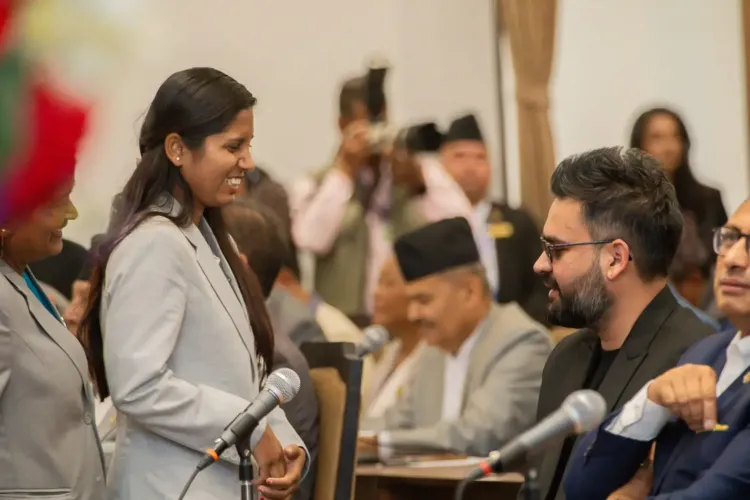
Kathmandu, April 16 (NationPress) - The recently appointed Deputy Speaker of Nepal's House of Representatives, Rubi Kumari Thakur, has declared her intention to abstain from any weddings that involve dowry transactions.
At just 26 years old, Thakur was elected Deputy Speaker on April 9, marking a significant generational shift in the nation's political landscape. She secured her position in the lower house through the proportional representation system, representing the Shram Sanskriti Party, a newly established political entity.
Upon her election as a lawmaker, Thakur committed to advocating against the dowry system, which has been linked to domestic violence, especially within the Madhesi community of Madhes Province, her home region.
“I have been receiving numerous wedding invitations lately. However, I have yet to see a clear indication of ‘dowry-free marriages’ on any of them. This suggests that our society has not entirely liberated itself from the harmful practice of dowry,” she expressed in a Facebook post. “Participating in or endorsing dowry transactions in marriages is not only socially unacceptable but also legally punishable. Such practices undermine women's dignity, equality, and rights,” she emphasized.
Thakur further conveyed that she would refrain from attending weddings that include dowry transactions, encouraging everyone to support marriages that promote equality and dignity. “I strongly urge you to incorporate a clear message in wedding invitations that states: ‘Dowry-free marriage; giving or accepting dowry is both a social and legal offense.’”
Her statements arise amidst ongoing concerns regarding the persistence of dowry customs, despite legal prohibitions and increasing awareness initiatives.
According to data from Nepal Police, there were 10 complaints regarding dowry in the fiscal year 2023–24, with seven of these reported in Madhes Province, where the practice is most entrenched among the Madhesi community, although it spans various socio-economic groups. Typically, only incidents involving violence are reported due to the widespread nature of the practice.
In 2017, Nepal enacted stricter laws against dowry payments in marriage under the Penal Code (Act) 2074. This practice is recognized as a key factor contributing to domestic violence in Nepal and is a driving force behind child marriage, as younger girls often require lower dowries, promoting early marriage.
Point of View
Rubi Kumari Thakur's stance against dowry underscores a critical social issue in Nepal. Her commitment to promote dowry-free marriages demonstrates a proactive approach to empowering women and addressing systemic inequalities. This initiative reflects a broader societal need for reform in traditions that hinder gender equality.
NationPress
5 Oct 2026
Frequently Asked Questions
Who is Rubi Kumari Thakur?
Rubi Kumari Thakur is the newly elected Deputy Speaker of Nepal's House of Representatives, known for being the youngest person to assume this role.
What is her stance on dowry?
Thakur has publicly announced her refusal to participate in any weddings that involve dowry transactions, advocating for dowry-free marriages.
Why is the dowry system a concern in Nepal?
The dowry system is linked to domestic violence and is particularly problematic in the Madhesi community, despite legal prohibitions.
What did Thakur propose regarding wedding invitations?
Thakur urged couples to clearly state 'dowry-free marriage; giving and taking dowry is a social and legal offense' on their wedding invitations.
What legislative measures exist against dowry in Nepal?
In 2017, Nepal strengthened its laws against dowry payments through the Penal Code (Act) 2074, recognizing its role in domestic violence and child marriage.