Celebrating Akshaya Tritiya: Devotees Unite at Ganga Ghats for Sacred Dips and Charity
Synopsis
On Akshaya Tritiya, devotees throng the Ganga ghats in Ghazipur, Uttar Pradesh, for sacred dips and charitable offerings, marking a day rich in tradition and spirituality. The festival symbolizes prosperity and the beginning of auspicious activities.
Key Takeaways
Akshaya Tritiya is a major festival representing prosperity.
Devotees engage in holy dips in the Ganga River.
Charitable acts are a central part of the celebrations.
Women actively participate in preparing offerings.
The day marks the birth of Parashurama , an incarnation of Lord Vishnu.
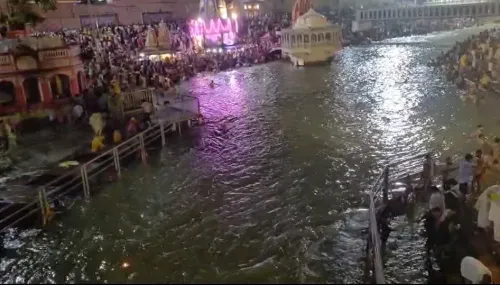
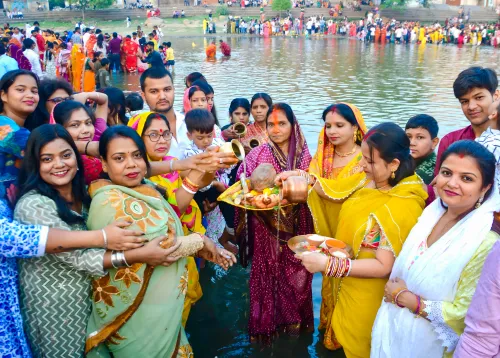
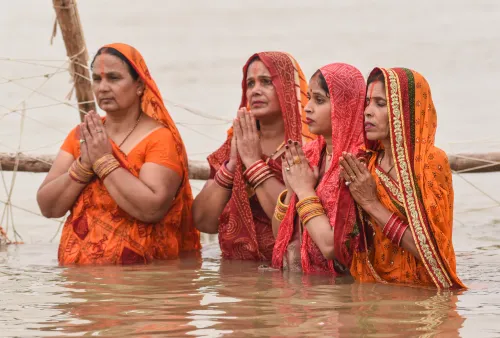
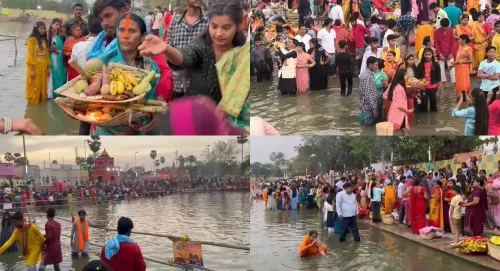
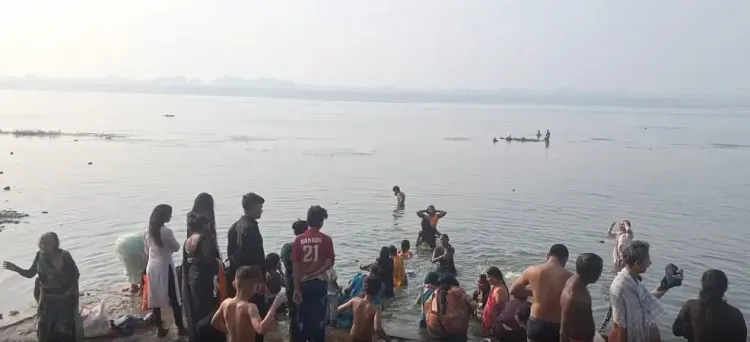
Ghazipur, April 20 (NationPress) On the revered occasion of Akshaya Tritiya, faithful devotees congregated at the banks of the Ganga in Ghazipur, Uttar Pradesh, on Monday to partake in sacred dips and engage in charitable acts, showcasing their profound faith and tradition.
Celebrated nationwide, Akshaya Tritiya holds significant importance in Hindu culture. This major festival occurs on the third day (Tritiya) of the Shukla Paksha (waxing phase of the moon) in the Vaishakh month. It is widely perceived as a day that ushers in infinite prosperity and positive outcomes. According to spiritual customs, this day is deemed the commencement of all auspicious ventures. People across various regions celebrated Akshaya Tritiya on April 20.
This day also resonates with the earthly forms of Lord Vishnu’s incarnations, Nara-Narayana and Parashurama, making it spiritually meaningful for devotees. According to tradition, no sacred ritual is regarded as fulfilled without a holy dip in the Ganga River. Reflecting this conviction, the ghats in Ghazipur were alive with devotees from early morning, all partaking in ritual bathing and charitable deeds.
In rural settings, numerous unique traditions are observed on this day. Many devotees vow (manotis) to offer sarees and food items like puris to Maa Ganga. Women, in particular, were actively engaged in these rituals, preparing puris and halwa at the ghats and presenting sarees as a symbol of devotion. The ambiance was filled with spiritual energy, devotional chants, and a sense of community.
Traditionally, Akshaya Tritiya is considered so propitious that activities such as weddings, Griha Pravesh (housewarming rituals), shopping, and the initiation of new projects can occur without seeking a specific muhurat (auspicious timing). It is also believed that performing rituals like havan, worship, and daan (donation) on this day provides immense spiritual rewards.
This belief has also triggered increased market activity, especially in the acquisition of gold and jewelry, a long-standing custom associated with the festival. Local markets were adorned and bustling with customers, enhancing the festive atmosphere.
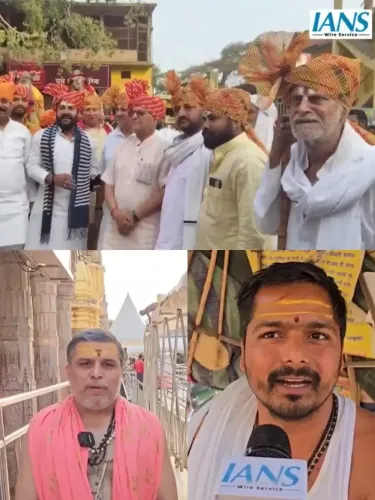
A devotee, Shankar Pandey, mentioned that although there are three main Sankrantis (solar transitions) each year, Akshaya Tritiya is also viewed as an equally significant and auspicious occasion. He noted that many individuals regard it as the perfect moment to initiate new endeavors and make critical life choices.
It is also believed that following this day, the intensity of summer begins to escalate. With this in mind, devotees who take a holy dip in the Ganga also contribute items that help alleviate the heat. Common donations include earthen pots, handheld fans, and other essential items, typically given to Brahmins as part of the tradition.
The festival of Akshaya Tritiya possesses deep religious significance. According to mythological beliefs, the outcomes of virtuous actions performed on this day are Akshaya, meaning they are everlasting.
Parashurama, the sixth incarnation of Lord Vishnu, is said to have been born on this day; thus, the Parashurama Jayanti is celebrated accordingly. Additionally, according to other legends, Akshaya Tritiya marks the initiation of the Treta Yuga, and during the Mahabharata era, the Pandavas received the Akshaya Patra on this day.
Point of View
We recognize Akshaya Tritiya as a vibrant reflection of faith and tradition in Indian culture. The gathering of devotees at the Ganga ghats showcases the enduring significance of this festival, which symbolizes prosperity and the initiation of new ventures. It is a day that unites communities in devotion and charity.
NationPress
23 Sept 2026
Frequently Asked Questions
What is the significance of Akshaya Tritiya?
Akshaya Tritiya is regarded as a highly auspicious day in Hindu culture, believed to bring unending prosperity and mark the beginning of favorable ventures.
What rituals are performed on Akshaya Tritiya?
Devotees partake in holy dips in the Ganga, perform charitable acts, and engage in rituals like offering sarees and food to Maa Ganga.
Why is Parashurama Jayanti celebrated on this day?
It is believed that Parashurama, the sixth incarnation of Lord Vishnu, was born on Akshaya Tritiya, leading to the celebration of Parashurama Jayanti.
What are common offerings made by devotees?
Common offerings include earthen pots, hand-held fans, and food items, typically donated to Brahmins to alleviate heat during the summer.
Why is this festival significant for starting new ventures?
Akshaya Tritiya is considered a day when starting new ventures is highly favorable, as it is believed to invite success and prosperity.