Is DMK's Challenge to the ECI's Voter List Order Justified?
Synopsis
In an unprecedented move, Tamil Nadu's ruling DMK has taken a stand against the ECI’s directive for a Special Intensive Revision of electoral rolls. The party's petition, arguing the order is unconstitutional, raises critical concerns about the potential disenfranchisement of voters and the integrity of democracy. What implications could this have for upcoming elections?
Key Takeaways
DMK petitions Supreme Court against ECI's order.
Concerns raised about voter disenfranchisement .
ECI's decision challenged as unconstitutional .
Previous electoral roll revision deemed sufficient .
Potential widespread exclusion of voters highlighted.
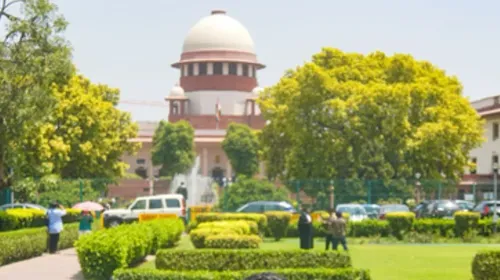
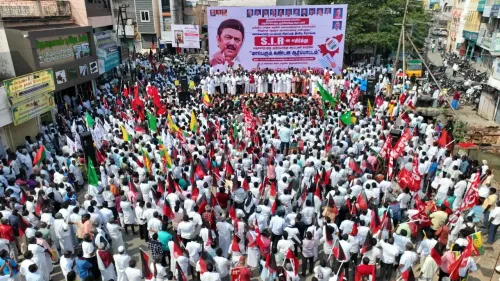
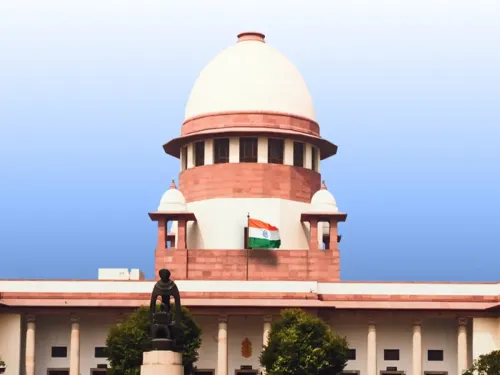
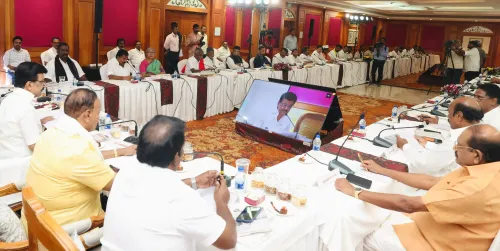
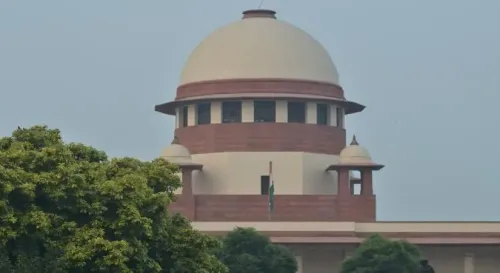
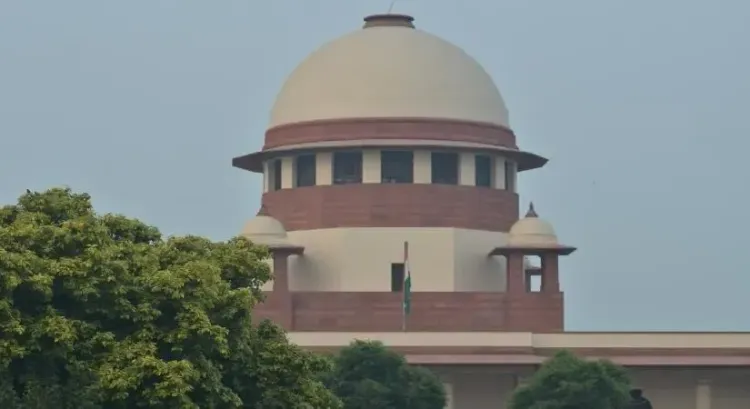
New Delhi, Nov 3 (NationPress) The ruling party of Tamil Nadu, the Dravida Munnetra Kazhagam (DMK), has approached the Supreme Court, contesting the Election Commission of India’s (ECI) directive for a Special Intensive Revision (SIR) of the electoral rolls within the state. The writ petition, submitted by party leader and former Rajya Sabha MP R.S. Bharathi, described the action as "arbitrary, unreasonable, and in violation of the Constitution."
This plea, submitted under Article 32 of the Constitution, seeks to annul the ECI’s order from October 27, which broadened the SIR initiative—originally begun in Bihar in June—to several states, including Tamil Nadu, Gujarat, Kerala, and Uttar Pradesh.
The petition asserts that "If the SIR orders are not overturned, they will unjustly disenfranchise millions of voters from choosing their representatives, thus jeopardizing free and fair elections and democracy in the nation, fundamental aspects of the Constitution."
Furthermore, it claims the ECI’s decision contravenes Articles 14, 19, 21, 325, and 326 of the Constitution as well as the stipulations of the Representation of the People Act, 1950, and the Registration of Electors Rules, 1960.
The petition characterized the exercise as "a colorable exercise of power," arguing that the SIR effectively functions as a "de facto National Register of Citizens (NRC)" by imposing "citizenship-like burdens of proof" on registered voters.
According to the plea, "The Respondent (Election Commission of India) lacks the authority to evaluate the citizenship of individuals… By enforcing citizenship-like proof requirements, the SIR seems to be acting outside its legal mandate, effectively operating as a de facto NRC."
The petition also mentioned that Tamil Nadu had already conducted a Special Summary Revision of its electoral rolls in January 2025, which was deemed "adequate and suitable for the upcoming Assembly elections."
It contended that initiating a fresh verification is "unnecessary, arbitrary, and devoid of statutory basis."
Additionally, the petition highlighted purported issues in Bihar’s ongoing SIR process, where "65.2 lakh current electors were removed" from the rolls. "Taking Bihar as a precedent, it is clear that there will likely be widespread exclusion of voters in Tamil Nadu as well," the plea concluded.
Calling for judicial intervention, the petition implored the Supreme Court to annul the ECI’s directive from October 27 as unconstitutional.
Point of View
The ongoing legal battle between the DMK and the Election Commission underscores the delicate balance between electoral integrity and administrative power. The implications of this case extend far beyond Tamil Nadu, potentially affecting democratic processes nationwide. It's crucial to uphold the principles of free elections while ensuring that all administrative actions are constitutionally valid.
NationPress
27 Sept 2026
Frequently Asked Questions
What is the DMK's main concern regarding the ECI's order?
The DMK is primarily concerned that the Special Intensive Revision (SIR) of electoral rolls could disenfranchise millions of voters, undermining the principles of free and fair elections.
What legal basis is the DMK using to challenge the ECI's directive?
The DMK's challenge is based on Article 32 of the Constitution, arguing that the ECI's directive is arbitrary and unconstitutional, violating several articles of the Constitution.
Has Tamil Nadu already conducted a revision of its electoral rolls?
Yes, Tamil Nadu completed a Special Summary Revision of its electoral rolls in January 2025, which the DMK claims is adequate for the upcoming Assembly elections.