DMK forms 10-member reform panel after 2026 Tamil Nadu poll defeat
Synopsis
After losing Tamil Nadu's 2026 Assembly elections and five years of power, the DMK is not waiting to regroup — it has assembled a 10-member advisory committee drawn from its senior ranks to redesign the party from the ground up, backed by on-the-ground feedback from 19 field study teams that fanned out across the state post-defeat.
Key Takeaways
DMK constituted a 10-member advisory committee on 1 July to recommend sweeping structural reforms after its 2026 Tamil Nadu Assembly election defeat.
Stalin announced the panel, which includes senior leaders such as Thangam Thennarasu , Geetha Jeevan , and A.R.
The committee will recommend a uniform organisational structure from branch-level units to party headquarters.
Prior to this, the DMK had deployed 19 field study teams comprising 38 senior functionaries to assess reasons for the electoral loss across the state.
The reforms target stronger grassroots units, better internal coordination, and expanded public outreach ahead of future elections.
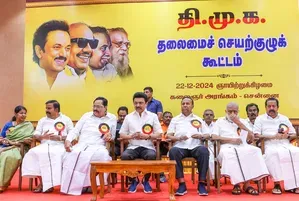
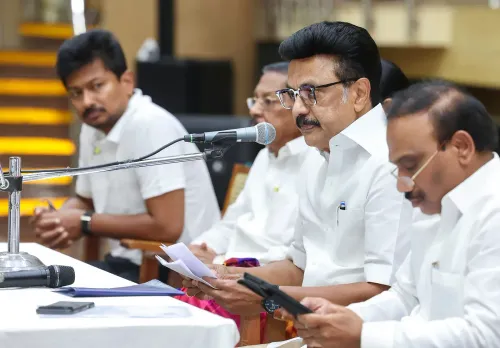
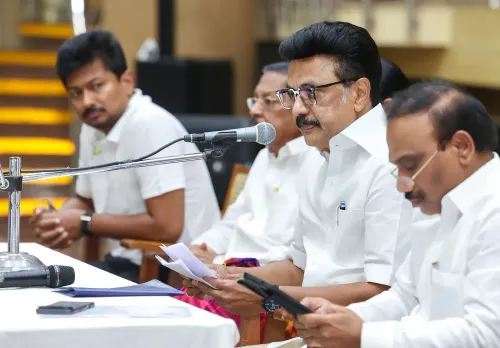
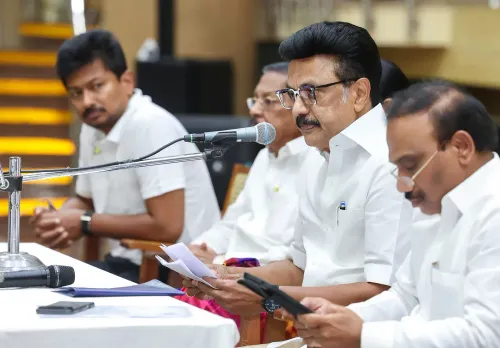
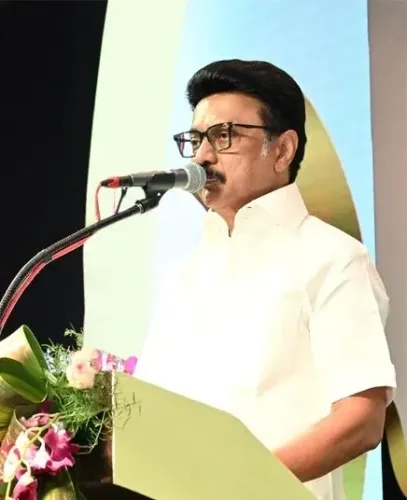
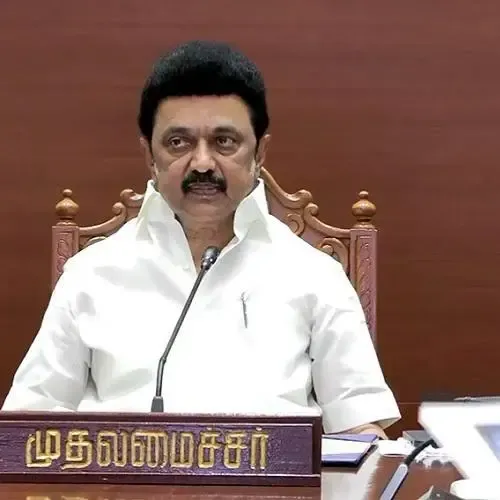
The Dravida Munnetra Kazhagam (DMK) has constituted a 10-member advisory committee to recommend sweeping structural reforms across the party, marking its first major organisational exercise since losing power in the 2026 Tamil Nadu Assembly elections. The move signals a concerted effort by the party leadership to rebuild its organisation and reconnect with voters after a defeat that ended five years of DMK governance in the state.
The Advisory Committee
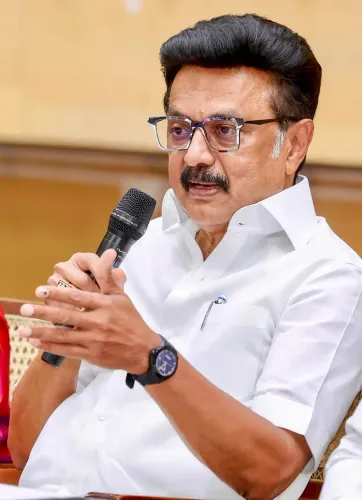
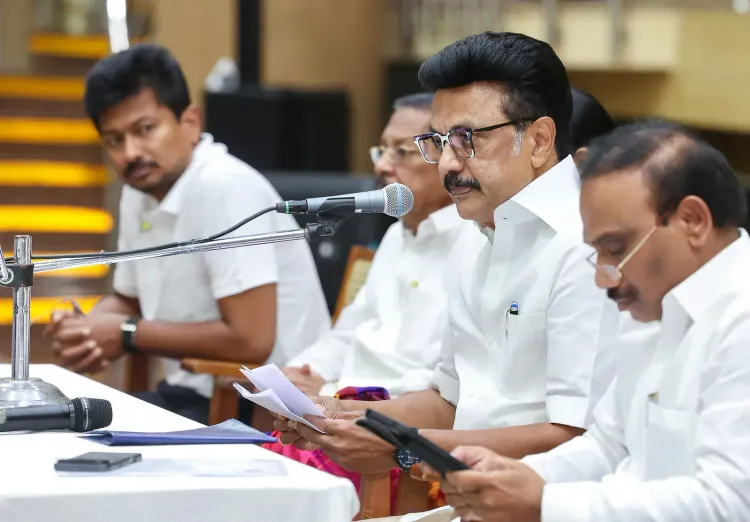
DMK President M.K. Stalin announced the formation of the panel on 1 July, comprising senior leaders Thangam Thennarasu, Geetha Jeevan, A.R. Chakrapani, S.S. Sivasankar, Tamilarasi Ravikumar, M.M. Abdulla, I. Paranthamen, S. Murasoli, Ezhilan Naganathan, and S.K.P. Karuna. The committee has been tasked with recommending a uniform organisational structure spanning from grassroots branch units all the way up to the party headquarters.
What the Reforms Aim to Address
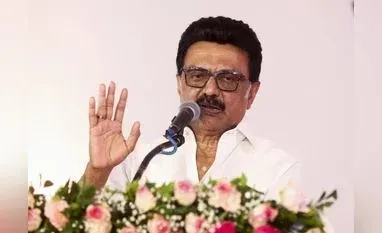
According to Stalin, the restructuring is part of a broader process of organisational renewal aimed at correcting shortcomings identified during the party's post-election review. The proposed reforms are expected to streamline functioning, improve coordination between different tiers of the organisation, and strengthen the DMK's connection with both workers and the general public.
The exercise will also focus on bolstering grassroots units, enhancing internal coordination, and expanding public outreach — areas that reportedly emerged as vulnerabilities during the 2026 campaign.
Groundwork: The 19 Field Study Teams
The advisory committee's mandate builds directly on an extensive post-election assessment that the DMK leadership initiated soon after the 2026 results. The party had constituted 19 field study teams comprising 38 senior functionaries, who travelled across Tamil Nadu, interacting with district units, cadre, and local leaders to collect feedback on the reasons behind the electoral defeat and the organisational weaknesses that surfaced during the campaign.
The recommendations gathered by those teams have now formed the foundational basis for the newly constituted advisory committee, which will use them to prepare a road map for comprehensive structural reforms.
What Comes Next
Party leaders indicated the committee will examine the existing organisational framework at every level and suggest measures to make the DMK more efficient, responsive, and better equipped to meet future political challenges. The outcome of this exercise is expected to shape the party's structure and strategy as it prepares for the next electoral cycle in Tamil Nadu.
Point of View
A review, a road map. What sets this exercise apart, at least structurally, is the sequencing: field teams first, advisory panel second, suggesting the leadership is at least trying to ground reforms in cadre-level feedback rather than top-down diktat. The harder question is whether the committee's recommendations will actually alter power dynamics within the organisation or merely redraw an org chart. Regional parties in India have a long history of post-defeat introspection that changes little on the ground. For the DMK, the real test will come at the booth level — whether a restructured party translates into a re-energised cadre, or whether the 2026 defeat reflects deeper shifts in Tamil Nadu's voter calculus that no committee can fix.
NationPress
29 Sept 2026
Frequently Asked Questions
Why has the DMK formed a 10-member advisory committee?
The DMK constituted the 10-member advisory committee to recommend comprehensive structural reforms after the party lost power in the 2026 Tamil Nadu Assembly elections, ending five years in government. The panel is tasked with redesigning the party's organisational structure from grassroots branch units to headquarters.
Who are the members of the DMK advisory committee?
The committee comprises senior party leaders Thangam Thennarasu, Geetha Jeevan, A.R. Chakrapani, S.S. Sivasankar, Tamilarasi Ravikumar, M.M. Abdulla, I. Paranthamen, S. Murasoli, Ezhilan Naganathan, and S.K.P. Karuna, as announced by DMK President M.K. Stalin.
What were the 19 field study teams that the DMK deployed?
Soon after the 2026 election results, the DMK leadership constituted 19 field study teams comprising 38 senior functionaries who travelled across Tamil Nadu to gather feedback from district units, cadre, and local leaders on the reasons behind the party's defeat. Their findings now form the basis for the advisory committee's reform road map.
What reforms is the DMK advisory committee expected to recommend?
The committee is expected to recommend a uniform organisational structure across all party tiers, measures to streamline functioning and improve coordination, and steps to strengthen grassroots units and public outreach. The aim is to make the DMK more efficient and better prepared for future electoral contests.
How long was the DMK in power before the 2026 defeat?
The DMK had been in power in Tamil Nadu for five years before losing the 2026 Assembly elections, after which the party initiated an extensive review of its organisation and electoral strategy.