DMK overhaul after poll defeat: Chennai focus, 4-seat clusters planned
Synopsis
After losing ground in Chennai — including M.K. Stalin's own Kolathur seat — the DMK is redrawing its organisational map. The plan to cluster four Assembly constituencies under each senior leader signals a structural rethink, not just a personnel shuffle, as the party races to rebuild before local body elections.
Key Takeaways
The DMK will restructure its organisation after the Tamil Nadu Assembly session concludes, focusing on Chennai and neighbouring districts.
Senior leaders including former Ministers P.K.
Subramanian , and T.M.
Anbarasan are expected to be given charge of clusters of four Assembly constituencies each .
The overhaul follows a statewide review ordered by DMK President M.K.
Stalin after the party's Assembly election setback.
Stalin lost his own Kolathur constituency , long regarded as a party stronghold, highlighting the scale of the urban reversal.
The restructuring aims to strengthen booth-level mechanisms ahead of the forthcoming local body elections .
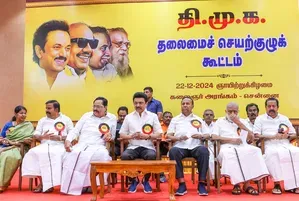
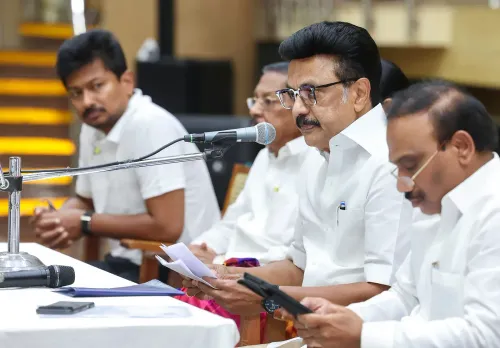
The Dravida Munnetra Kazhagam (DMK) is set to launch a sweeping organisational restructuring once the ongoing Tamil Nadu Assembly session concludes, as the party moves to rebuild its grassroots network following a disappointing performance in the recent state Assembly elections. The overhaul will centre on Chennai and its neighbouring districts, where the party suffered its most significant reverses.
What the Restructuring Involves
According to party sources, the proposed changes will consolidate Chennai's organisational units into larger clusters, with senior leaders likely to be assigned charge of four Assembly constituencies each. This is a departure from the current structure, where the capital city is divided into comparatively smaller organisational districts — unlike many other Tamil Nadu districts that already operate on a two-constituency unit model.
At present, some district secretaries and senior functionaries in Chennai already oversee five or six constituencies. The revised framework is intended to clearly define responsibilities and sharpen election management ahead of the forthcoming local body elections.
Senior Leaders in Line for Larger Roles
Several prominent Chennai-based leaders — including former Ministers P.K. Sekarbabu, Ma. Subramanian, and T.M. Anbarasan — are reportedly being considered for expanded supervisory roles covering multiple constituencies. The move is designed to streamline administration and ensure more effective coordination at the booth and ward levels, particularly in urban pockets where the DMK underperformed.
The Review That Triggered the Shake-Up
The restructuring follows a statewide review initiated by DMK President M.K. Stalin in the wake of the Assembly election results. Party-appointed committees assessed constituency-level challenges, campaign shortcomings, and shifting voter perceptions across the state. Their findings reportedly underscored the need for stronger booth-level mechanisms, especially in urban centres.
Notably, Chennai emerged as the most concerning region in the review. The party suffered several major defeats in the city, including Stalin's own loss in the Kolathur constituency — long considered a DMK stronghold — a result that underscored the depth of the urban challenge facing the party.
What Comes Next
The DMK leadership is expected to implement the restructuring soon after the Assembly session ends. The objective, according to party insiders, is to revitalise the organisation and position it for competitive performance in the local body elections and beyond. Whether the structural changes translate into on-ground gains will depend on how effectively the party addresses the voter-perception gaps that the review committees identified.
Point of View
A constituency synonymous with the Stalin family's political identity, is a signal that the party's grassroots connect in Chennai has eroded beyond what a routine reshuffle can fix. Clustering four constituencies under a single senior leader may improve coordination on paper, but the deeper question is whether the party can address the voter-perception gaps — on governance delivery and urban issues — that the review committees reportedly surfaced. Structural fixes without a policy or communication reset risk becoming administrative theatre ahead of local body polls.
NationPress
19 Sept 2026
Frequently Asked Questions
Why is the DMK restructuring its organisation?
The DMK is restructuring after a disappointing performance in the recent Tamil Nadu Assembly elections, particularly in Chennai, where the party suffered several major defeats including DMK President M.K. Stalin's loss in the Kolathur constituency. A statewide review by party-appointed committees identified weaknesses in booth-level coordination and urban voter outreach.
What changes are being proposed in Chennai's party structure?
Under the proposed plan, senior DMK leaders in Chennai will be assigned charge of clusters of four Assembly constituencies each, consolidating the city's currently smaller organisational units. This is intended to improve coordination and election management ahead of local body polls.
Which senior leaders are expected to get expanded roles?
Former Ministers P.K. Sekarbabu, Ma. Subramanian, and T.M. Anbarasan are among the senior Chennai-based leaders reportedly being considered for larger supervisory responsibilities covering multiple Assembly constituencies.
When will the DMK restructuring take effect?
The party leadership is expected to implement the restructuring soon after the ongoing Tamil Nadu Assembly session concludes. The immediate goal is to prepare the organisation for the forthcoming local body elections.
How significant was the DMK's defeat in Chennai?
Chennai was the most concerning region for the DMK in the Assembly elections. The party lost several seats in the city, and M.K. Stalin himself was defeated in Kolathur — a constituency long considered a party stronghold — underscoring the scale of the urban setback.