DMK accuses Tamil Nadu govt of renaming Stalin's Free Breakfast Scheme
Synopsis
As Tamil Nadu CM Vijay expanded the Free Breakfast Scheme to cover middle school students, the DMK fired back — accusing him of renaming an initiative originally launched by M.K. Stalin to deny the former chief minister credit. The spat is a sharp reminder that in Tamil Nadu politics, welfare schemes are as much about electoral memory as about school nutrition.
Key Takeaways
Joseph Vijay expanded the Free Breakfast Scheme to students in Classes 6 to 8 on 22 September 2026 , up from the earlier coverage of Classes 1 to 5.
DMK spokesperson T.K.S.
Elangovan alleged that the scheme was originally introduced by former CM M.K.
Stalin and that its name was changed by the Vijay government to deny him credit.
Elangovan accused the TVK government of political inexperience, claiming ministers made dismissive remarks to constituents over grievances.
A cabinet minister allegedly told citizens who approached him: ‘Did you vote for me?
You had voted only for Vijay’ — the minister was not named.
Elangovan also commented on the India-New Zealand Free Trade Agreement (effective 20 October ), calling it a positive but straightforward bilateral trade exchange.
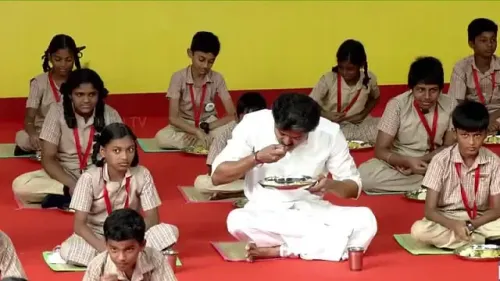
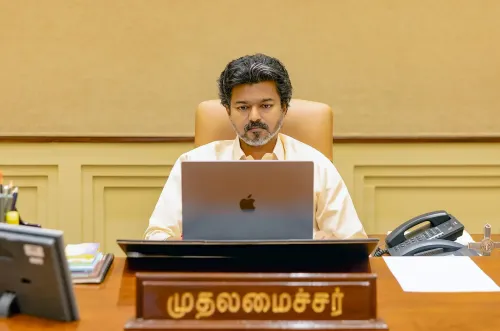
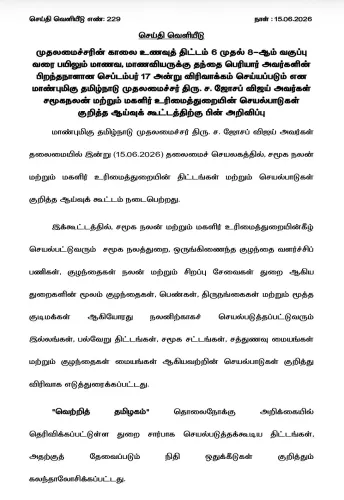
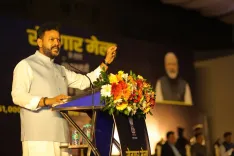
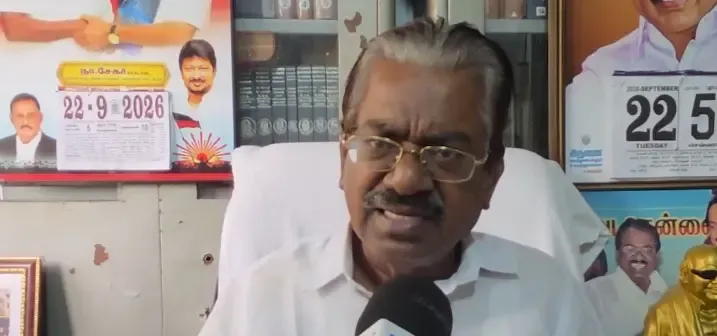
DMK spokesperson T.K.S. Elangovan on Tuesday, 22 September 2026 alleged that Tamil Nadu Chief Minister C. Joseph Vijay renamed the state's Free Breakfast Scheme to deny credit to former Chief Minister M.K. Stalin, who originally launched the programme. The accusation came as Vijay formally expanded the scheme — extending free morning meals to students in Classes 6 to 8, in addition to the existing coverage for Classes 1 to 5 — at a Government Middle School in Chennai.
The Accusation Against TVK Government
Elangovan was direct in his charge. “It was a scheme introduced by M.K. Stalin when we were in power. He has changed the name because he does not want to give credit to Stalin,” the DMK spokesperson said. He argued that the programme had earned national and international recognition under its original framing, claiming that “many countries also followed suit and introduced morning breakfast schemes for children” after Stalin launched it.
The claim positions the scheme expansion as a political appropriation — an attempt by Vijay’s Tamilaga Vettri Kazhagam (TVK) government to absorb the credit for a welfare initiative the DMK regards as its own legacy.
DMK Takes Aim at TVK's Political Inexperience
Beyond the naming dispute, Elangovan levelled broader criticism at the TVK’s conduct in office. “TVK don’t know politics. When their MLAs speak, they kill Tamil. When their Ministers speak, they blabber something. They don’t care about what the people will think,” he said.
He also cited what he described as a specific instance of ministerial insensitivity. According to Elangovan, a cabinet minister reportedly told constituents who approached him with a grievance: “Did you vote for me? You had voted only for Vijay.” Elangovan characterised the remark as evidence of a government unwilling to serve voters who did not directly support the minister in question. The minister was not named in his remarks.
Scheme Expansion: What Changes on the Ground
The practical scope of the expansion is significant. The Free Breakfast Scheme now reaches government school students through the middle school years, covering ages roughly between 11 and 14. Welfare economists and child nutrition advocates have long argued that mid-morning hunger is a key driver of classroom dropout and attention deficits — making the upper-primary expansion an educationally relevant move, regardless of which party claims credit for it.
Notably, the scheme's continuation and expansion under a new government also reflects a broader cross-party consensus on school nutrition in Tamil Nadu, even if the political narrative around it remains contested.
Elangovan on India-New Zealand Free Trade Agreement
In a separate remark during the same interaction, Elangovan also commented on the India-New Zealand Free Trade Agreement, which is set to come into force on 20 October. He described it as “a good thing for the country,” characterising it as a straightforward bilateral trade exchange. “Whatever products are made in New Zealand, India will buy, and whatever products are made in India, New Zealand will buy. That’s a normal thing,” he said, drawing a distinction between trade agreements and industrial investment pacts.
Political Context
This is not the first time a welfare scheme's authorship has become a flashpoint in Tamil Nadu politics. Credit disputes over flagship programmes have been a recurring feature of the state’s competitive political landscape, where social welfare delivery is a key electoral currency. The DMK, currently in opposition at the state level, has a strong incentive to contest any narrative that credits the TVK government for programmes the party views as part of its own governance legacy under Stalin.
How Vijay’s government responds to the naming controversy — and whether it formally acknowledges the scheme’s origins — will be watched closely as the TVK works to establish its administrative identity.
Point of View
Making even genuine policy continuity look like political theft. Elangovan's broadside is partly defensive — DMK needs to remain relevant in opposition by protecting its welfare legacy — but the unnamed minister anecdote, if verified, points to a real accountability gap in how TVK representatives engage constituents. Credit disputes rarely move voters on their own, but they do shape long-term perception of competence and authenticity. The more consequential question is whether the scheme expansion is resourced and monitored for impact — something neither side has addressed.
NationPress
22 Sept 2026
Frequently Asked Questions
What is the Free Breakfast Scheme controversy in Tamil Nadu?
DMK spokesperson T.K.S. Elangovan alleged on 22 September 2026 that Tamil Nadu CM C. Joseph Vijay renamed the state's Free Breakfast Scheme to erase credit from former CM M.K. Stalin, who originally launched it. The controversy erupted as Vijay expanded the scheme to cover students in Classes 6 to 8.
Who originally launched the Tamil Nadu Free Breakfast Scheme?
According to the DMK, former Chief Minister M.K. Stalin introduced the Free Breakfast Scheme during his tenure in power. The party claims the programme gained national and international recognition under Stalin's government.
What does the expanded Free Breakfast Scheme now cover?
The scheme now provides free morning meals to government school students from Classes 1 to 8. Previously, coverage was limited to students in Classes 1 to 5; the expansion adds Classes 6, 7, and 8.
What other criticism did the DMK level at the TVK government?
DMK's Elangovan accused TVK of political inexperience and cited an instance where a cabinet minister allegedly told aggrieved citizens that he would not help them because they had not voted for him personally. The minister was not named.
What did DMK say about the India-New Zealand Free Trade Agreement?
Elangovan described the India-New Zealand Free Trade Agreement — set to take effect on 20 October — as a positive and routine bilateral trade arrangement, noting it differs from industrial investment agreements as it involves mutual exchange of goods rather than capital inflows.