ED raids 5 premises in Bengaluru counterfeit Pfizer medicines racket, freezes accounts
Synopsis
Generic bulk drugs were allegedly repackaged in a Bidadi farmhouse and sold to hospitals as branded Pfizer antibiotics — and the trail reportedly reached multiple pharmaceutical distributors before detection. The ED has now frozen accounts and seized digital records, but the full scope of the supply network that may have reached hospital wards remains under investigation.
Key Takeaways
The ED, Bengaluru raided five premises on 2 November 2026 in a counterfeit medicines money-laundering case under the PMLA, 2002 .
Prashanth allegedly ran a repackaging operation at a farmhouse near Bidadi , relabelling generic drugs as Pfizer antibiotics Zavicefta and Emblaveo .
The counterfeit products were allegedly distributed via DM Pharmaceuticals and Krupa Healthcare , reportedly mixed with genuine medicines to avoid detection.
The ED froze bank accounts of Veeresh Kumar containing approximately ₹9 lakh and seized digital devices and documents.
The case stems from an 18 August 2026 joint raid at CK Tandya village , Bengaluru South, where accused were found storing drugs without valid licences.
Further investigation is ongoing; no arrests under the PMLA probe have been publicly confirmed.
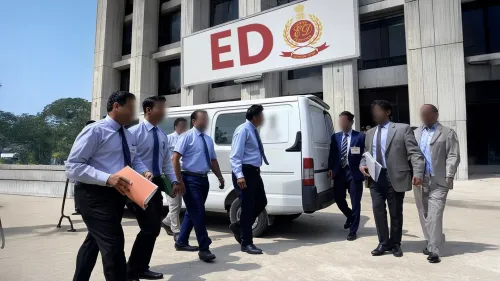
The Enforcement Directorate (ED), Bengaluru, has conducted search and seizure operations at five premises linked to individuals and entities allegedly involved in a counterfeit medicines racket, as part of an ongoing money-laundering investigation under the Prevention of Money Laundering Act (PMLA), 2002. The searches, carried out on 2 November 2026, targeted persons connected to a case in which generic drugs were allegedly repackaged and fraudulently labelled as expensive Pfizer antibiotics.
How the Racket Was Uncovered
The case originated from a joint raid by the Drug Controlling Authority and police on 18 August 2026 at a residential property in CK Tandya village, Bengaluru South. Accused persons were allegedly found storing pharmaceutical drugs without valid licences or permits and replacing labels on the stored medicines. The offences were registered under Section 318(4) of the Bharatiya Nyaya Sanhita, 2023, and Section 63 of the Copyright Act, 1957 — both scheduled offences under the PMLA — prompting the ED to register Enforcement Case Information Report No. ECIR/BGZO/45/2026.
The Alleged Operation: From Farmhouse to Hospital Supply
According to the ED's investigation, accused R. Prashanth allegedly arranged a farmhouse near Bidadi for the manufacture, repackaging, and relabelling of medicines without any mandatory drug licence or permit. Cheap bulk pharmaceutical formulations sourced from manufacturing centres across various states were allegedly repackaged into new vials and fraudulently relabelled as expensive Pfizer antibiotics, specifically Zavicefta and Emblaveo — though the vials reportedly contained only generic medicines.
The counterfeit products were allegedly distributed through DM Pharmaceuticals and supplied to Krupa Healthcare. Krupa Healthcare then allegedly forwarded the products to other pharmaceutical entities and hospitals, reportedly mixing them with genuine medicines to evade detection. This supply chain, if proven, represents a significant public health risk, as hospitals may have unknowingly administered substandard antibiotics to patients.
Seizures and Frozen Accounts
During the search operations conducted under Section 17 of the PMLA, the ED froze bank accounts belonging to Veeresh Kumar containing approximately ₹9 lakh. Digital devices, financial records, and what officials described as incriminating documents belonging to multiple persons were also seized. The searches were linked to FIR No. 0266/2026, dated 18 August 2026, registered at Tavarekere Police Station in Bengaluru South, Karnataka.
Investigation Ongoing
The ED confirmed that further investigation into the case is underway. Authorities have not yet disclosed whether any arrests have been made in connection with the money-laundering probe. This action is part of a broader enforcement focus on pharmaceutical fraud, which critics argue poses an acute risk in a country where drug supply chains involve multiple intermediaries with limited oversight.
Point of View
Passing through at least two intermediary entities before reaching hospitals, exposes how thin the oversight layer between manufacturer and patient can be in India's pharmaceutical supply ecosystem. The ₹9 lakh frozen so far is a modest figure relative to the potential scale of a racket spanning multiple states; the real question is how far up — or downstream — the money trail goes. Regulators should treat this as a stress test of the existing drug licence verification architecture, not just a criminal prosecution.
NationPress
2 Nov 2026
Frequently Asked Questions
What is the Bengaluru counterfeit medicines case raided by the ED?
The ED raided five premises on 2 November 2026 linked to a racket in which generic pharmaceutical formulations were allegedly repackaged and fraudulently relabelled as expensive Pfizer antibiotics — Zavicefta and Emblaveo — without any drug licence or permit. The case is being investigated under the Prevention of Money Laundering Act, 2002.
Who are the key accused named in the ED investigation?
The ED has named R. Prashanth as the person who allegedly arranged a farmhouse near Bidadi for manufacturing and repackaging the counterfeit drugs. Bank accounts of Veeresh Kumar were frozen during the raids. Entities DM Pharmaceuticals and Krupa Healthcare are also named in the alleged supply chain.
How did the fake medicines allegedly reach hospitals?
According to the ED, counterfeit products were distributed through DM Pharmaceuticals to Krupa Healthcare, which then allegedly supplied them to other pharmaceutical entities and hospitals. Investigators allege the fakes were mixed with genuine medicines to avoid detection.
What has the ED seized or frozen so far?
The ED froze bank accounts belonging to Veeresh Kumar containing approximately ₹9 lakh. It also seized digital devices, financial records, and documents described as incriminating from multiple persons during the five-premises search operation.
What laws have been invoked in this case?
The original FIR (No. 0266/2026, dated 18 August 2026) covers offences under Section 318(4) of the Bharatiya Nyaya Sanhita, 2023 and Section 63 of the Copyright Act, 1957 — both scheduled offences under the PMLA. The ED subsequently registered ECIR No. ECIR/BGZO/45/2026 to probe the money-laundering angle.