Equity Indices Remain Steady Amid Middle East Tensions
Synopsis
In the early trading session on March 16, Mumbai's benchmark equity indices showed resilience despite opening lower, reflecting cautious investor sentiment amidst rising geopolitical tensions in the Middle East. This article explores market movements and key factors influencing investor behavior.
Key Takeaways
Equity indices remained flat despite initial declines.
Investor caution stems from rising tensions in the Middle East.
Nifty FMCG sector leads gains, while major companies like Infosys faced losses.
Technical indicators suggest key support and resistance levels for Nifty 50.
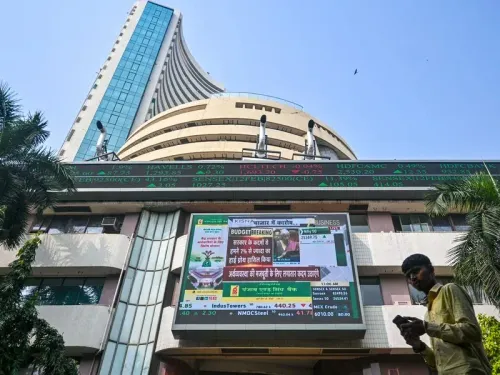
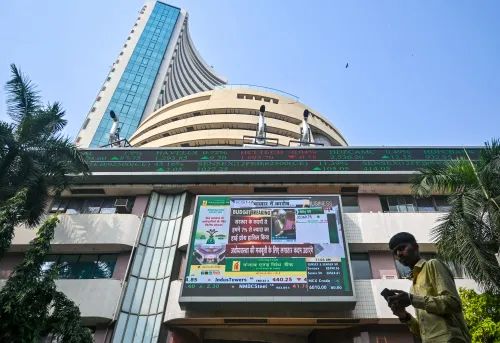
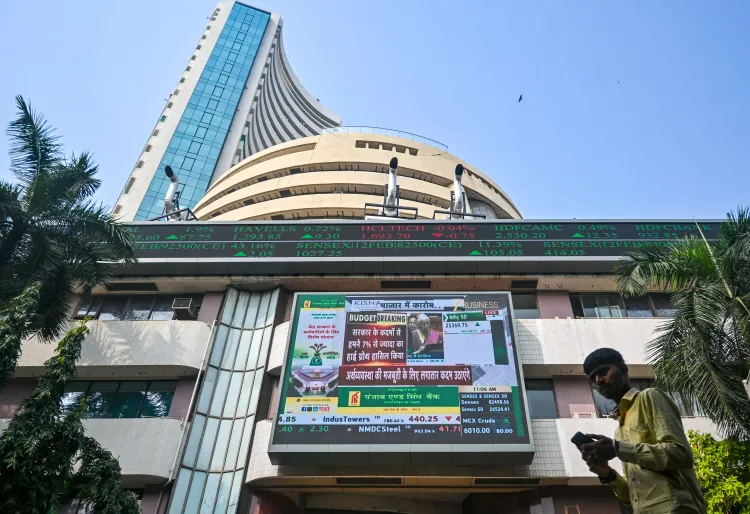
Mumbai, March 16 (NationPress) The primary equity indices started the week on a weaker note on Monday but quickly stabilized in early dealings as investors exercised caution due to rising geopolitical tensions in the Middle East.
The 30-share index began 148 points or 0.19 percent down at 74,415, compared to the previous close. However, it soon recovered and traded almost flat at 74,611, up approximately 50 points in the early session.
In parallel, the Nifty index opened with little movement at 23,116, gaining 35 points or 0.15 percent from Friday's closing figures, while investors monitored the ongoing conflicts involving Iran, Israel, and the United States.
Prominent laggards included Infosys, alongside Asian Paints, Maruti Suzuki, Wipro, and Mahindra & Mahindra, which also faced declines.
The market sentiment remained tenuous, driven by worries over the escalating conflict in West Asia, recent tanker attacks in the Gulf, and potential disruptions in the crucial Strait of Hormuz, a vital global oil supply route.
By sector, Nifty FMCG led the gainers, rising 0.51 percent to 48,166.70. Nifty Pharma increased by 0.27 percent, while Nifty Metal saw a 0.19 percent uptick. In contrast, Nifty Chemicals dipped 0.24 percent to 26,256.10.
Market analysts indicated that domestic indices might open slightly stronger, bolstered by GIFT Nifty, which was trading at around 23,248, reflecting an increase of nearly 49 points or 0.21 percent, suggesting a mild recovery after recent declines.
From a technical standpoint, analysts identified 23,000-23,100 as immediate support for Nifty 50, with 23,400-23,500 acting as a potential resistance zone in the near term.
Foreign institutional investors continued their trend of selling, marking the 11th consecutive session on March 13, offloading equities valued at over Rs 10,000 crore, while domestic institutional investors provided a counterbalance with purchases nearing Rs 10,000 crore, helping to stabilize the market.
Experts observed that investor sentiment remains cautious due to rising crude prices, a weakening rupee, and ongoing geopolitical tensions.
Since the recent escalation in the Middle East, markets have experienced increased volatility, with Brent crude prices climbing toward the $90-$100 per barrel range, raising inflation concerns and fears of supply disruptions.
Furthermore, analysts believe that a decisive breach above the 23,300-23,500 range could spark short covering, potentially pushing the index toward 23,800-24,000. Conversely, a drop below the 23,000 level might extend losses toward the 22,800-22,700 support range.
Point of View
The steady performance of the equity indices amid these tensions suggests resilience within the market. This cautious optimism, however, reflects broader economic implications that need to be monitored closely.
NationPress
26 Sept 2026
Frequently Asked Questions
What caused the equity indices to open lower?
The equity indices opened lower due to escalating geopolitical tensions in the Middle East, which made investors cautious.
Which sectors performed well during early trade?
The Nifty FMCG sector emerged as the top gainer, rising by 0.51 percent, while Nifty Pharma and Nifty Metal also saw positive movement.
What technical levels are important for Nifty 50?
Analysts note that immediate support for Nifty 50 lies between 23,000 and 23,100, while resistance is observed between 23,400 and 23,500.