Market Volatility: Sensex and Nifty React Amid West Asia Unrest

Synopsis
On March 17, Mumbai’s stock market opened positively but soon faced volatility due to tensions in West Asia. Analysts predict that uncertainty will continue, influenced by geopolitical factors and macroeconomic conditions.
Key Takeaways
Market opened positively influenced by Asian and US cues.
Volatility emerged due to geopolitical tensions in West Asia.
IT stocks led losses, while media and real estate showed gains.
Analysts warn of potential inflation risks if oil prices rise.
Investors should stay alert to market resistance levels .
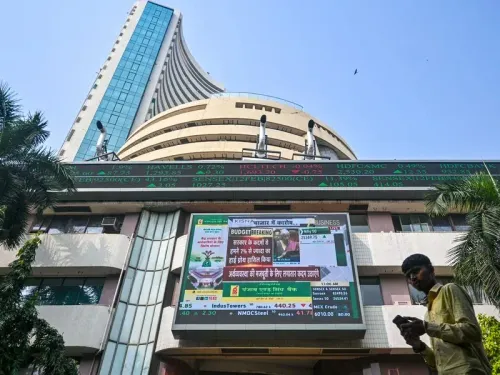
Mumbai, March 17 (NationPress) The domestic stock market benchmarks began the day on a positive note for the second straight session on Tuesday, influenced by favorable signals from both the Asian and US markets. However, the situation quickly shifted as the markets exhibited volatility due to escalating tensions in West Asia.
The Sensex began the day up by 323.82 points or 0.42 percent at 75,826.68 compared to its previous close, while the Nifty opened at 23,493.20, gaining 85 points or 0.36 percent.
Yet, these initial gains were fleeting. The 30-share Sensex fell to 75,422.73, a decline of 80.12 points or 0.10 percent, while the Nifty traded lower at 23,389.15, down by 20 points or 0.08 percent during early trading.
In terms of sector performance, IT stocks took the lead in losses, with the Nifty IT index dropping by 0.83 percent. Other sectors like auto, mid-small IT & telecom, public sector banks, FMCG, and oil & gas also faced declines.
On the brighter side, the media, real estate, and consumer durables sectors managed to record modest gains, climbing up to 0.24 percent.
Market analysts predict continued volatility, driven by a cautious sentiment resulting from geopolitical issues and global macroeconomic challenges.
“The Indian equity market is anticipated to stay volatile, marked by a cautious sentiment due to evolving global factors and geopolitical issues,” stated Ponmudi R, CEO of Enrich Money.
Aakash Shah from Choice Equity Broking noted that the markets are experiencing a technical rebound following recent downturns, aided by short covering and value purchases.
“The Nifty is nearing a significant resistance area around the 23,500–23,600 range, while immediate support is identified near 23,250–23,300,” he mentioned, adding that a sustained breakthrough above this resistance could lead to further gains.
Meanwhile, Asian markets exhibited bullish trends, with Japan’s Nikkei 225, Hong Kong’s Hang Seng, and South Korea’s KOSPI rising by as much as 3 percent.
From a macroeconomic standpoint, analysts warn that inflation risks remain high, especially if crude oil prices see a rebound.
Point of View
The stock market's fluctuations highlight the interconnectedness of global events and domestic financial performance. Investors should remain vigilant and informed, especially given the geopolitical tensions that are influencing market stability.
NationPress
3 Oct 2026
Frequently Asked Questions
What caused the volatility in the stock market?
The volatility was primarily due to rising tensions in West Asia, impacting investor sentiment and market stability.
How did the Sensex and Nifty perform today?
The Sensex opened higher but later declined, while the Nifty also experienced a drop despite initial gains.
What sectors are performing well or poorly?
IT stocks led the losses, while sectors like media, real estate, and consumer durables showed modest gains.
What are analysts predicting for the market?
Analysts expect continued volatility due to geopolitical developments and macroeconomic conditions.
What should investors watch for in the upcoming sessions?
Investors should monitor resistance levels in the Nifty and remain cautious of geopolitical factors affecting market trends.