CM Majhi marks World Photography Day, salutes Odisha's visual storytellers
Synopsis
Odisha Chief Minister Mohan Charan Majhi marked World Photography Day on 19 August 2026 by honouring photographers who document the state's people, places, and cultural heritage, calling a photograph 'a timeless reflection' of Odisha's identity.
Key Takeaways
Mohan Charan Majhi , Chief Minister of Odisha, posted a World Photography Day tribute on 19 August 2026 .
He described photography as 'a timeless reflection of our people, places, culture and emotions.' World Photography Day marks the 1839 announcement of the daguerreotype process by France.
Odisha's visual assets — temples, wetlands, tribal culture — are central to the state's heritage tourism strategy.
The post carries no new policy announcement; it reinforces the BJP administration's cultural-promotion posture.
Watch for follow-up tourism department campaigns or photography exhibitions tied to the occasion.
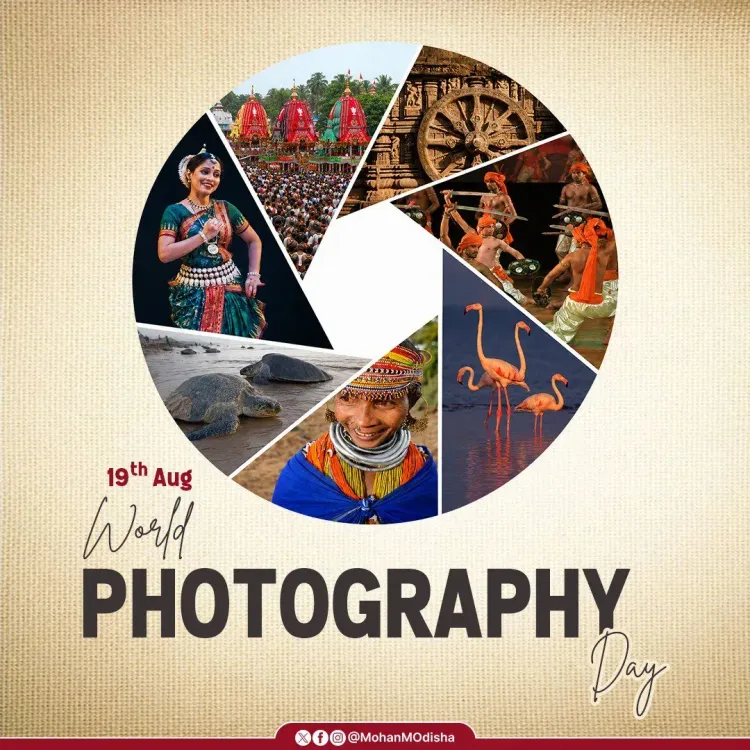
Every monsoon mist over the Chilika Lake, every face at the Rath Yatra, every tribal dance frozen mid-step — Odisha Chief Minister Mohan Charan Majhi on Wednesday, 19 August 2026 used World Photography Day to remind the world that the state's story is best told through a lens.
Posting on X, the Chief Minister wrote: 'A photograph is more than a frame; it is a timeless reflection of our people, places, culture and emotions.' He called on citizens to celebrate the photographers who capture Odisha's beauty, heritage, and inspiring stories — 'one moment at a time.'
Why 19 August carries a photographer's weight
World Photography Day falls annually on 19 August, marking the date in 1839 when France officially gifted the daguerreotype process to the world — the birth certificate of modern photography. Over nearly two centuries, the medium has evolved from silver-coated copper plates to smartphone sensors, but its power to freeze a human truth remains unchanged.
For a state as visually rich as Odisha — home to the Konark Sun Temple, the Chilika Lake wetlands, Puri's ancient ghats, and some of India's most vibrant tribal communities — photography is not just art. It is economic currency, feeding the tourism pipeline that successive state governments have invested in.
Odisha's visual identity and the BJP administration's cultural pitch
Since Majhi assumed office in 2024, the BJP-led administration in Bhubaneswar has continued — and in some registers amplified — the state's long-standing strategy of deploying cultural imagery to drive heritage tourism. Odisha's temples, beaches, and tribal festivals have been consistent anchors of state-level tourism campaigns across administrations.
This post carries no new policy announcement, but it does something subtler: it positions the Chief Minister as a custodian of the state's visual narrative, and it signals to the photography and tourism communities that official attention remains on them.
The real question now is whether the sentiment translates into action — a state photography exhibition, a tourism department campaign, or grants for documentary photographers working in Odisha's more remote districts. That is the watch list.
Point of View
Where visual tourism is a genuine economic pillar, the gesture carries slightly more weight than a routine greeting. The BJP administration, still consolidating its identity in a state it wrested from long BJD rule in 2024, benefits from being seen as a steward of Odisha's distinct cultural identity rather than merely a Delhi-facing political project. Whether the rhetoric converts into funded photography initiatives will be the real measure.
NationPress
19 Aug 2026
Frequently Asked Questions
Why did Odisha CM Mohan Majhi post about World Photography Day?
Majhi posted on 19 August 2026 to mark World Photography Day , celebrating photographers who document Odisha's heritage, culture, and landscapes. The post is part of a broader state-level cultural promotion effort.
When is World Photography Day and why is it celebrated on 19 August?
World Photography Day is observed every year on 19 August , the date in 1839 when France officially made the daguerreotype photographic process freely available to the world.
What is Odisha known for in terms of photography and tourism?
Odisha is celebrated for the Konark Sun Temple , Puri 's Rath Yatra, Chilika Lake , and vibrant tribal communities — making it one of India's richest destinations for heritage and documentary photography.
Who is Mohan Charan Majhi?
Mohan Charan Majhi is the Chief Minister of Odisha and a BJP leader who assumed office in 2024 after the party's victory in the state assembly elections.
Did Odisha announce any new photography scheme or campaign on World Photography Day 2026?
No new scheme or policy was announced in this post. The Chief Minister's message was a tribute to photographers; any follow-up campaign from the state tourism department is yet to be announced.