Why Are Farmers Protesting in Paris Against the EU-Mercosur FTA?
Synopsis
Farmers in France are making headlines as they drive tractors into central Paris, protesting the EU's proposed Mercosur Free Trade Agreement. Their actions, which saw them bypass police blockades to reach landmarks like the Eiffel Tower, reflect deep concerns about the potential impact on their livelihoods. Will the government heed their demands?
Key Takeaways
Farmers protested in Paris against the EU-Mercosur FTA.
The protest involved around 100 tractors and bypassed police barriers.
Concerns about livelihood impacts on local agriculture were highlighted.
Government officials are divided on the trade deal's benefits.
The protest reflects ongoing tensions in agricultural policy .
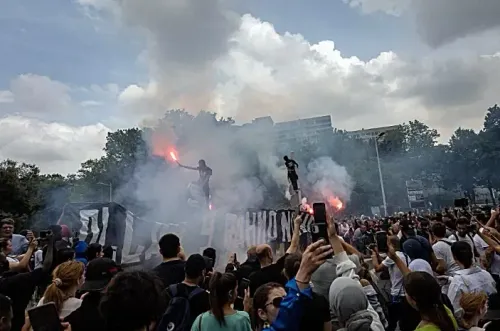
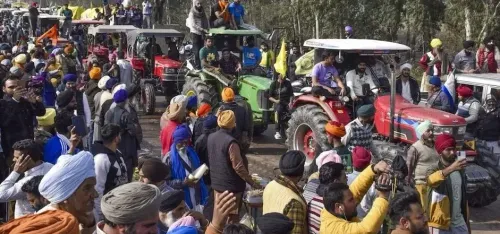
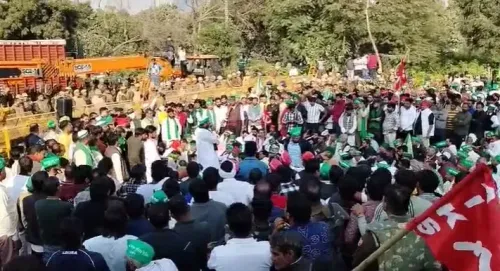
On January 8, Farmers in France made a bold statement by driving approximately 100 tractors into central Paris to express their opposition to the European Union's plan to finalize the Mercosur Free Trade Agreement (FTA) with South American countries. The demonstrators managed to navigate around police barricades, reaching iconic landmarks such as the Eiffel Tower.
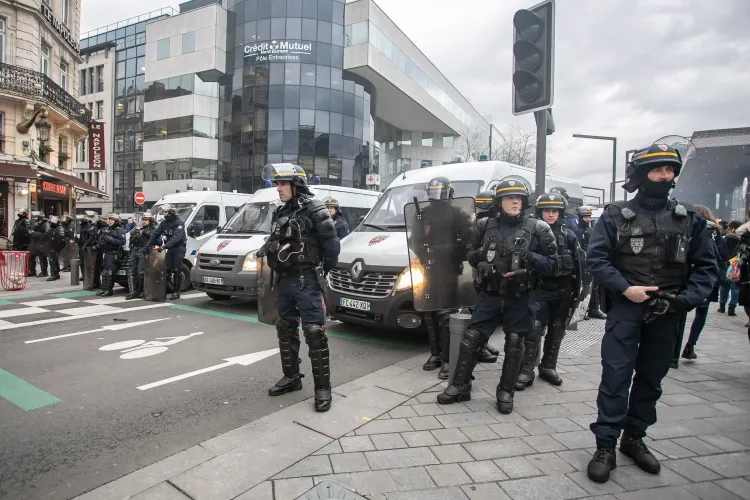
The French Interior Ministry reported that around 20 tractors made it into the city center, with some parked near the Arc de Triomphe while others protested in front of the Eiffel Tower, as noted by Euro News. Authorities indicated that the protestors “bypassed and forced their way” through police defenses, although many tractors were halted at major traffic routes at the city's boundaries.
In the aftermath, the A13 motorway was closed in the direction of Paris starting at 5:53 am (local time). This protest was orchestrated by the Rural Coordination union to compel the French government to reconsider its stance against the trade deal involving Uruguay, Paraguay, Brazil, Argentina, and Bolivia. French farmers argue that this agreement poses a significant threat to their livelihoods.
Additionally, farmers have expressed frustration over government-sanctioned sanitary measures designed to address lumpy skin disease in cattle. On Wednesday, about 40 agricultural vehicles obstructed access to the DPA oil depot in Bassens starting at 10 pm (local time).
Euro News further reported that the EU has recently resumed internal discussions about the trade agreement, with a potential signing in Paraguay anticipated next week. During a recent statement, French Agriculture Minister Annie Genevard reiterated France's dissent regarding the agreement, emphasizing that the pact jeopardizes production in sectors including chicken, beef, sugar, ethanol, and honey.
Conversely, Italian Foreign Minister Antonio Tajani remarked that an EU trade agreement with Mercosur would yield “substantial advantages.” He praised the EU's new initiatives aimed at supporting farmers as EU agriculture ministers engaged in crucial discussions ahead of a vote on the agreement expected later this week, according to France 24.
Tajani stated, “Italy has consistently maintained its position,” advocating for the deal while stressing the importance of addressing the agricultural sector's legitimate concerns to ensure market access with adequate protections for vulnerable production sectors.
Point of View
It is essential to recognize the farmers' legitimate concerns regarding the EU-Mercosur FTA. This protest highlights the tension between trade agreements and local agricultural interests. While the government may see economic benefits, it must also consider the potential harm to farmers' livelihoods and the sustainability of local agriculture.
NationPress
19 Sept 2026
Frequently Asked Questions
What is the Mercosur Free Trade Agreement?
The Mercosur Free Trade Agreement is a trade deal proposed between the European Union and South American countries, including Argentina, Brazil, Paraguay, and Uruguay, aimed at reducing tariffs and increasing trade.
Why are farmers protesting?
Farmers are protesting against the Mercosur FTA because they believe it will negatively impact their livelihoods by exposing them to increased competition from imported agricultural products.
What actions did the farmers take during the protest?
Farmers drove approximately 100 tractors into central Paris, bypassing police blockades to demonstrate at significant locations like the Eiffel Tower and the Arc de Triomphe.
What are the government's concerns about the trade deal?
The French government has expressed concerns that the trade deal could undermine local agricultural sectors, particularly in areas like chicken, beef, sugar, and ethanol production.
What did the Italian Foreign Minister say about the agreement?
The Italian Foreign Minister, Antonio Tajani, stated that the EU-Mercosur agreement would bring substantial benefits and emphasized the importance of addressing farmers' concerns to safeguard vulnerable production sectors.